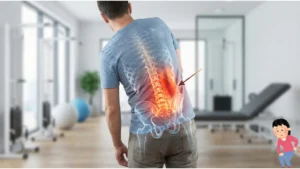
Follow your model’s safety instructions. Start at a speed you can control, stop the belt before stepping off or changing the setup, and pause walking for tasks that distract you.
Expert Review: This article includes clinical insights from Dr. Vivek Arora, a physical therapist (physiotherapist) with 20+ years of experience.
If your back starts hurting while you use a walking pad, consider how long you have been walking, what else you are doing and whether you feel steady. Other conditions can cause symptoms during walking, too.
Try one safe, reversible adjustment at a time. If pain increases, stop the belt and reconsider the activity.
Key takeaways
- Changing your session length or workstation layout may help if using the pad reliably brings on pain.
- Typing or looking at a screen can divide your attention and change how you walk. Pause the belt for focused tasks.
- Adjust the desk for your height when standing on the stopped pad, in the shoes you will use.
- Start at a comfortable speed you can control. Follow the device instructions and stop if you feel unsteady.
- New or worsening weakness, numbness or radiating leg pain needs attention. See the urgent and emergency guidance below.
Why does a walking pad cause lower back pain?
Walking on a moving belt while working differs from ordinary walking. Belt dimensions, distractions, balance and time on the pad can change the experience.
A pad does not reveal why your back hurts. Note whether walking away from the desk, a shorter session or a different activity feels easier.
What changes on a walking pad
- Check whether the belt gives you enough room to walk comfortably. Try an alternative if you cannot stay steady.
- Pause the belt for tasks that require attention, such as focused typing or reading.
- Use a speed that feels steady and suits the model. Avoid trying to match an outdoor pace if it makes balance or stopping difficult.
- The deck changes your height relative to the desk. Adjust the workstation with the belt stopped.
- Break up longer sessions if they cause fatigue or discomfort.
Common setup problems to look for
- Check that you do not have to reach for the keyboard.
- If you need a rail for balance, use equipment designed with appropriate support. A desk is not a substitute for a safety rail.
- If your attention is divided or your walking feels less steady, stop the belt before continuing the task.
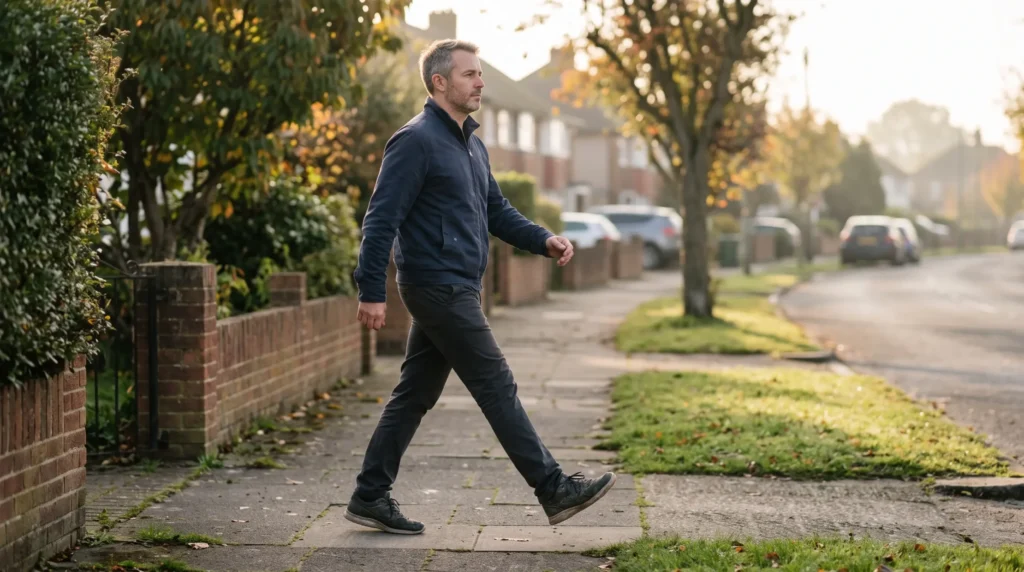
If outdoor walking is more comfortable, it can be an alternative. Mention repeatable symptoms, especially heavy, painful or tingling legs, to a clinician.
Three walking pad beliefs worth dropping
- More time on the pad is optional. Shorter sessions may suit you better.
- Use a comfortable position that lets you keep control. A rigid posture is unnecessary.
- A walking pad can add movement during the day. Use other activities if they better suit your fitness goals, balance or symptoms.
What should you pay attention to when your back aches?
Note when symptoms start, what you were doing and whether they settle after stopping. These observations can help identify changes to try or guide an assessment.
| What you notice | What to check | What to do |
|---|---|---|
| Back ache as the session goes on | How long you have walked and whether the task makes you reach | Stop and try a shorter session or another activity |
| Neck or upper back discomfort | Screen and work surface position | Adjust the setup with the belt stopped |
| One-sided back or buttock ache | Whether you shift, reach or feel unsteady | Stop the belt if you feel unsteady. Seek assessment if the pain persists. |
| Groin or front-of-hip pain | Effect of walking and other activities | Seek assessment if it persists or affects how you walk |
| Heavy or tingling legs | When they start and what relieves them | Arrange assessment. Follow urgent advice for new weakness or emergency signs. |
Back and hip symptoms can overlap. See the guide to back and hip pain.
Ongoing leg heaviness or pain with walking can occur with spinal narrowing or reduced circulation. Arrange assessment if this keeps happening. See the guide to walking with sciatica.
When is walking pad back pain a sign of something serious?
Stop using the pad and seek care if you notice the signs below.
- Get emergency care now for new trouble passing or controlling urine, loss of bowel control or sensation, saddle numbness, new sciatica in both legs, or severe or worsening weakness or numbness in both legs.
- A foot that starts dropping, catching or dragging, or new or worsening leg weakness, needs prompt assessment. Stop using the pad.
- Call local emergency services for chest pain with severe breathlessness, faintness or pain spreading to the arm or jaw, or for sudden severe back or abdominal pain. Stop using the pad immediately.
- Seek urgent assessment for back pain with fever, chills or feeling very unwell, especially after an infection or procedure.
- Contact a clinician promptly for new persistent back pain with unexplained weight loss or a history of cancer.
- Seek urgent care for severe pain after a fall, especially with osteoporosis or long-term steroid use. Call emergency services after major injury or if you cannot move safely.
Seek care if any of these apply
- Pain is getting worse, continues despite using the pad less or stops you from doing everyday activities.
- You develop leg pain, numbness or tingling that persists or is worsening.
- Pain repeatedly wakes you.
A clinician can check if the symptoms have a cause that needs treatment beyond changing the workstation.
Should you get a scan for walking pad back pain?
Routine imaging is usually unnecessary for uncomplicated back pain. Ask a clinician about imaging if warning signs are present or it could change care.
From middle age onward, scans also commonly show disc bulges and arthritis in people without pain, which can make walking feel dangerous when it is not. This guide to the jargon on a typical low back X-ray report puts that language in context.
From the Clinic: Dr. Arora’s Expert Insight
Mention which tasks you do while walking and how long you are on the pad before symptoms begin.
If you feel unsteady while typing, use the desk with the belt stopped and use the pad for walking separately.
The safest usable speed varies with the person, device and task. Ease off or stop if you lose a steady rhythm or cannot concentrate on walking.
How can you set up your walking pad safely?
Make adjustments with the belt stopped. Check that the desk and screen are in a comfortable position and that you can reach the device’s controls safely.
The walking pad setup checklist
- With the belt stopped, note how much the deck raises your standing position.
- Adjust the desk so you can reach it comfortably without bearing weight through it.
- Position the screen where you can use it comfortably. Stop the belt if screen use draws your attention away from walking.
- Check there is space around the pad and you can stand and walk where the manufacturer recommends.
- Start at a low, comfortable speed according to the device instructions. Stay within a range you can control.
- Follow the manufacturer’s advice on footwear. Closed, stable footwear is a practical choice if permitted.
- Use a level surface and keep cables, children and pets away from the moving belt. Stop the belt fully before getting on or off. Use the safety key if your device has one.
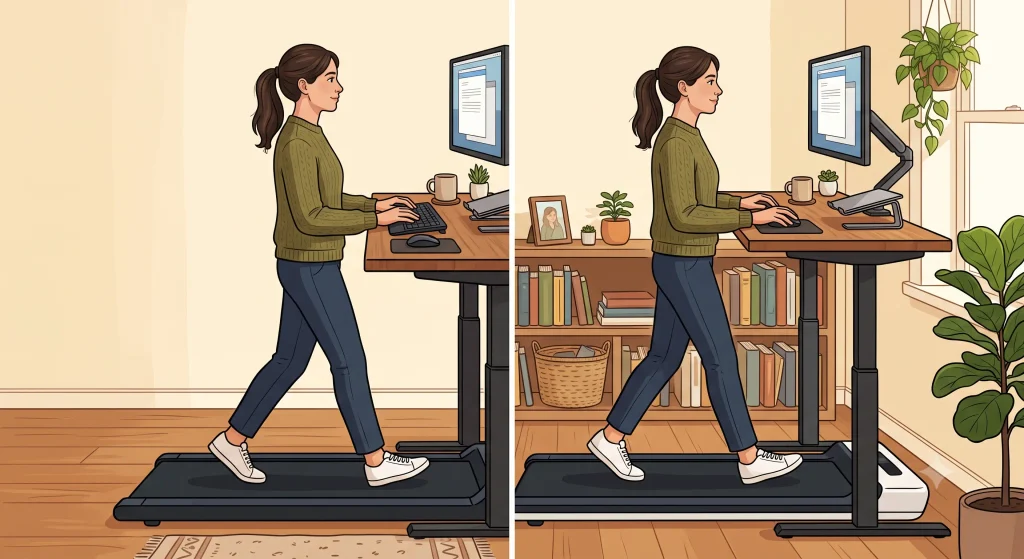
The illustration shows desk and screen placement. Stop the belt before typing or doing work that takes your attention away from walking.
What speed should you use?
The appropriate speed depends on the model, your balance and what else you are doing.
| Task | Belt use | Why |
|---|---|---|
| Focused typing or writing | Stop the belt | Keep your attention on the task without a moving surface |
| Reading or detailed screen work | Stop if the task takes attention from walking | Screen use can affect balance and awareness |
| Talking or listening | Walk only if you remain steady and alert | Stop if the activity distracts you |
| Walking only | Start at a low, comfortable speed within the device limits | Keep control and change speed only as safe under the instructions |
What to check while you use it
If you want to review your setup, appraise it with the belt stopped. Avoid operating a phone while on a moving belt.
- Can you reach the controls without losing balance?
- Can you use the desk comfortably with the belt stopped?
- Does the belt give you enough space for a comfortable stride?
- Do you stay steady without reaching for the desk?
- Can you keep your attention on walking?
Stop and adjust the setup or choose another way to walk if you feel unsteady.
What can you do if pain starts?
Stop the belt, step off when it is stationary and see how ordinary movement feels. Seek care for the warning signs above.
What to do today
- Shorten or pause pad use if it keeps provoking symptoms.
- Try a comfortable walk on a stable surface if you can do it safely.
- Vary sitting, standing and movement during the day when practical.
- Use a comfortable resting position or gentle movement if it helps.
- Note whether symptoms continue away from the walking pad or return during other tasks.
Heat or a cold pack can ease symptoms; here is how to choose between a cold pack and a heat wrap.
How long and how fast should you walk on a walking pad?
Start with a brief comfortable session if you can walk safely. Increase only when you can manage the current activity comfortably.
Pain intensity alone cannot establish whether an activity is safe. Stop for new leg symptoms, unsteadiness or a worsening flare.
| Stage | Session length | Frequency | What to do | What to review |
|---|---|---|---|---|
| Try comfortable walking | Short enough to remain comfortable | Adjust to your day | Walk without a distracting task | Check balance, symptoms and ability to stop |
| Build tolerance | Increase if previous sessions are manageable | Leave time to recover | Change one part of the session at a time | Check for symptom increases |
| Fit walking into work | Choose time that suits your tasks | Use breaks as needed | Pause the belt when attention is divided | Review steadiness and how you feel after |
| Maintain a useful routine | Use a length you can sustain comfortably | Individual timing | Alternate with sitting, standing or other walking | Reassess if symptoms persist or worsen |
When might you return to regular use?
Try regular use only if symptoms have settled enough for safe walking and you can use the pad without losing balance.
- Begin with a brief session focused on walking.
- Try adding time only if you feel steady and symptoms stay manageable.
- Continue to stop for tasks requiring focused attention.
Seek reassessment if pain keeps returning or walking becomes harder.
Which exercises might help you stay active?
General exercise can support movement and strength. These are options to discuss or try when suitable for your symptoms.
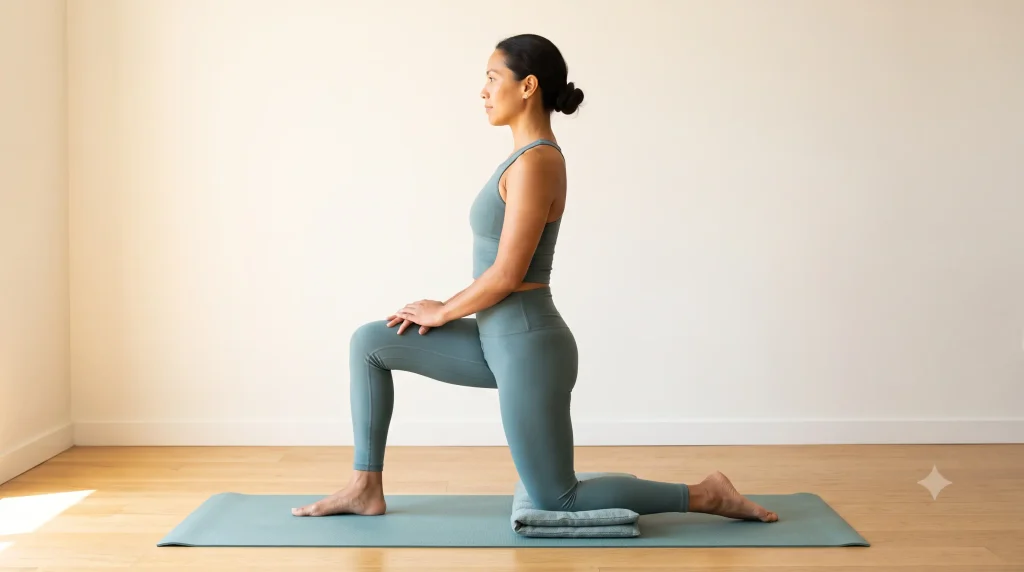
- A supported hip flexor stretch may feel comfortable. Ease off for sharp pain or leg symptoms.
- A bridge is one possible strengthening exercise.
- A side-lying leg lift is another option if comfortable.
- Gentle trunk rotation can be tried within a comfortable range.
- Try carrying a manageable object if it suits your goals and balance. Use stable ground rather than the moving belt.
Walking pad do’s and don’ts
| Do | Don’t |
|---|---|
| Adjust the desk and screen with the belt stopped | Keep walking if the setup forces you to reach or watch your feet constantly |
| Stop the belt for focused work | Use a desk as a balance rail |
| Change position or take breaks when helpful | Continue while distracted or unsteady |
| Choose another walk if it feels safer or more comfortable | Walk through new weakness, numbness or worsening leg pain |
What if walking pad lower back pain is not improving?
Arrange an assessment if symptoms persist, worsen or interfere with normal walking and daily activities. Seek care sooner for the warning signs above.
A clinician can decide whether a specific condition needs further assessment or specialist care.
Can a walking pad actually help lower back pain?
A pad is one way to add walking if it suits your balance and symptoms. There is limited direct evidence that it treats back pain.
In the WalkBack trial, individualized walking and education delayed recurrence of activity-limiting low back pain in adults who had recently recovered. The research did not test under-desk treadmills as treatment for an active flare.
A Cochrane review found limited, low- or very-low-certainty evidence that workplace interventions to increase standing or walking reduced musculoskeletal symptoms. The evidence does not establish a benefit from a specific pad setup.
Fixing walking pad lower back pain: where to start
Check that your pad is safe to use and that you can walk comfortably without distraction. If symptoms persist, seek assessment instead of continuing to change the setup.
If pain travels into the leg or a red flag appears, skip the tinkering and get assessed.
Frequently asked questions
1. Is a walking pad bad for your back?
A walking pad can be one way to add movement if you can use it safely. A session can hurt for several reasons. Adjust or stop if symptoms worsen or you cannot walk steadily.
2. Should I hold on to my desk while walking on a walking pad?
A desk is not a safety rail. If you need a handrail or external support to feel steady, choose suitable equipment or a safer way to walk.
3. Is it better to walk barefoot or in shoes on a walking pad?
Follow your model’s guidance and use stable footwear if appropriate. Do not rely on a fixed session length to decide which footwear is safe.
4. Can a walking pad cause sciatica or a slipped disc?
Walking can bring on leg symptoms for several reasons. A new flare does not show that a disc has herniated. Get assessed for persistent leg symptoms or new weakness.
5. Will walking through the pain on my walking pad cause permanent damage?
A painful session cannot tell whether any structure is injured. Stop for new or worsening symptoms and seek care if pain persists, follows a fall or affects walking.
6. Is a walking pad or an elliptical better for a sore lower back?
Choose the activity you can control and tolerate. An elliptical has different balance and movement demands.
Medical disclaimer
This article provides general information. Use your device as directed and seek assessment for persistent or worsening symptoms.
A moving belt plus a screen carries a fall risk. If you have balance problems, dizziness, osteoporosis, recent surgery, a heart or lung condition, or you are pregnant, get individual advice before walking while you work.
References
- Pocovi NC, Lin CWC, French SD, Graham PL, van Dongen JM, Latimer J, et al. Effectiveness and cost-effectiveness of an individualised, progressive walking and education intervention for the prevention of low back pain recurrence in Australia (WalkBack): a randomised controlled trial. Lancet. 2024;404(10448):134-144. doi:10.1016/S0140-6736(24)00755-4
- Parry SP, Coenen P, Shrestha N, O’Sullivan PB, Maher CG, Straker LM. Workplace interventions for increasing standing or walking for decreasing musculoskeletal symptoms in sedentary workers. Cochrane Database Syst Rev. 2019;2019(11):CD012487. doi:10.1002/14651858.CD012487.pub2