Protect your skin when using heat or ice. Put a cloth between the pack and your skin. Avoid using a pack on skin with poor sensation or circulation without professional advice, and remove it if it causes discomfort or skin changes.
Expert Review: This article includes clinical insights from Dr. Vivek Arora, a physical therapist (physiotherapist) with 20+ years of experience.
Few home-care questions arrive in clinical practice with as much confident misinformation attached as this one. Half the internet says ice. The other half says heat. Both sides have a story, and neither is entirely wrong — which is part of why the debate refuses to die.
Heat or cold can offer temporary comfort for lower back pain. Limited trial evidence supports a small short-term benefit from heat wraps for acute or subacute pain; evidence for cold is insufficient to draw firm conclusions. Choose what feels helpful, protect the skin and do not let symptom relief delay assessment.
You do not need to diagnose inflammation, bleeding or poor circulation to choose a comfort measure. Neither heat nor cold identifies the painful tissue or treats every cause.
This guide works through the physiology, the clinical scenarios, the practical application rules, and the situations where neither modality is the real answer.
Key Takeaways
- Heat wraps have limited evidence for small short-term benefits in acute and subacute low back pain.
- Some people find cold helpful, but evidence is too limited to establish when it works best for low back pain.
- A stiff or sore back does not establish poor circulation; cold is not proven to worsen recovery in most cases.
- Both are symptom managers. Neither addresses the underlying mechanical cause.
- Radiating leg pain, numbness, bladder or bowel changes, fever, or pain following trauma require clinical evaluation — not a temperature decision.
Which should you use, ice or heat?
Use the table to decide whether home comfort measures are reasonable or medical assessment is the priority. There is no proven rule requiring ice for 48 hours and heat thereafter.
| Situation | Reasonable action | Limit |
|---|---|---|
| Familiar mild ache or stiffness | Try brief wrapped warmth or cold if helpful | Neither identifies the painful tissue |
| Pain after exercise | Modify painful activity; a pack is optional | Do not assume severe pain is ordinary soreness |
| Persistent or recurring symptoms | Arrange assessment if function remains limited | No temperature treats every cause |
| Persistent leg pain, tingling or numbness | Arrange clinical assessment | A surface pack does not resolve nerve compression |
| New saddle, bladder/bowel or bilateral leg symptoms | Emergency care now | Do not wait to try home treatment |
| Significant trauma, fever or rapidly worsening pain | Emergency or urgent assessment as described below | A pack must not delay care |
What do cold and heat actually do to tissue?
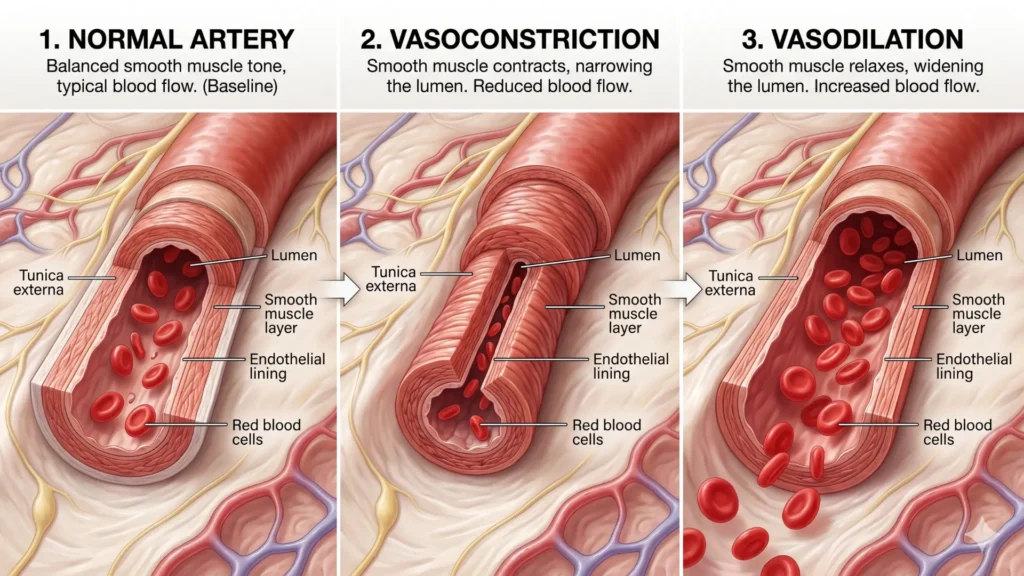
The popular explanations for both modalities tend to flatten the physiology in ways that cause people to make the wrong choice. Here is what is actually happening.
Cold cools the skin and can temporarily alter pain sensation. These effects do not demonstrate that it prevents secondary tissue damage or speeds recovery from low back pain.
Warmth can alter skin blood flow and pain perception and may make movement feel easier. This does not establish that it clears trapped lactic acid or corrects the cause of back pain.
Neither pain duration nor a response to a pack can tell you whether the pain is inflammatory, ischemic or muscle-driven.
What if cold makes my back feel stiffer?
The lumbar spine is surrounded by a dense architecture of overlapping muscles. The erector spinae columns run vertically alongside the vertebral bodies. The multifidus — arguably the most functionally important of the group — sits in close contact with individual spinal segments and acts as a real-time stabilizer with every movement. The quadratus lumborum bridges the lower ribs to the iliac crest and governs lateral stability. Beneath all of this, the thoracolumbar fascia connects the whole system into a tension network that responds to load, posture, and even psychological stress.
Muscle guarding can accompany pain, but it is not present in every episode and does not establish the original injury.
A dull ache that changes with movement has several possible explanations. It is not a home test for inadequate muscle blood flow.
If cold makes symptoms worse, stop using it. That response does not prove ischemia or damaged circulation. Try another comfortable option or seek assessment if symptoms persist.
The same response rule applies to warmth: stop if it increases pain or causes skin changes.
When does ice genuinely help?
Cold is an optional comfort measure, rather than a requirement for all new pain.
After an injury: A wrapped cold pack may ease discomfort. Significant trauma, severe pain or inability to move normally needs medical assessment first; visible bruising is not required for an important injury.
After exercise: Brief cold may feel helpful, but low-back-specific evidence is limited. Unusual, severe or worsening pain should not be assumed to be ordinary soreness.
With leg symptoms: A surface pack is not a treatment for nerve compression. Arrange assessment for persistent leg pain, tingling or numbness; get urgent help for weakness and follow the emergency guidance below.
The cited 2006 Cochrane review found too little evidence to establish the benefit of cold for low back pain. It also found conflicting evidence when comparing cold with heat. This uncertainty is different from proving cold ineffective or harmful.
When Heat Is the Right Call
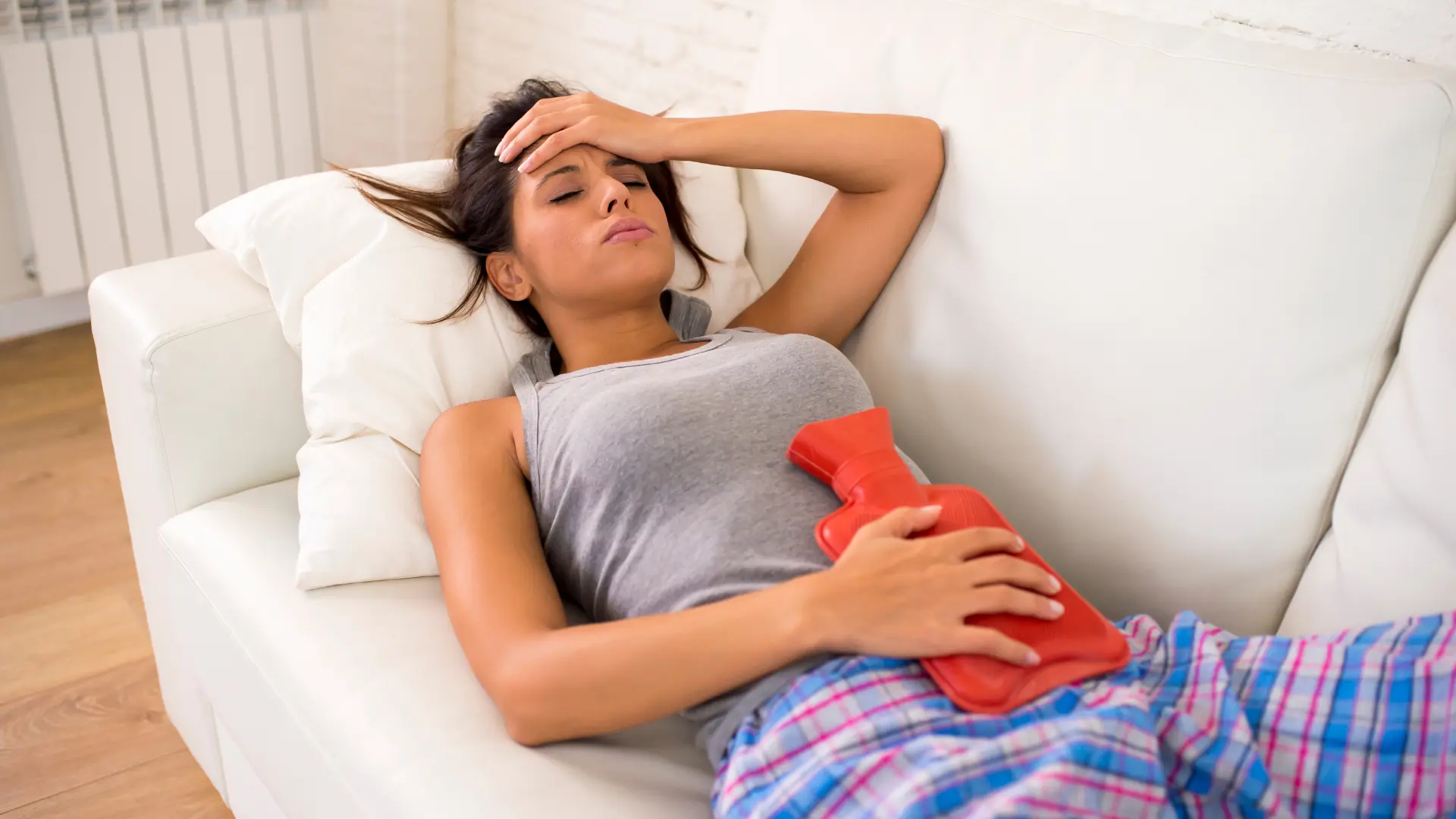
Warmth is an option when it feels helpful and is safe for your skin, not an automatic treatment for every non-traumatic back problem.
Morning stiffness: A comfortably warm shower or wrapped pack may help. Persistent or marked morning stiffness, especially with other symptoms, deserves assessment rather than an assumption about overnight disc swelling.
Persistent pain: Duration does not rule out inflammation. Evidence for heat in long-lasting low back pain is less certain in the cited review.
Activity-related discomfort: A brief warmth trial may improve comfort. Use it alongside manageable position changes and activity, without assuming a posture fault.
Aching or guarding: These symptoms do not reliably identify a muscle as the source. Use temperature only for comfort and reassess symptoms that are not improving.
The Cochrane review reported small short-term benefits from heat wraps in acute and subacute low back pain. It did not establish heat as superior for every presentation or as a treatment for poor circulation.
When Temperature Therapy Is the Wrong Question
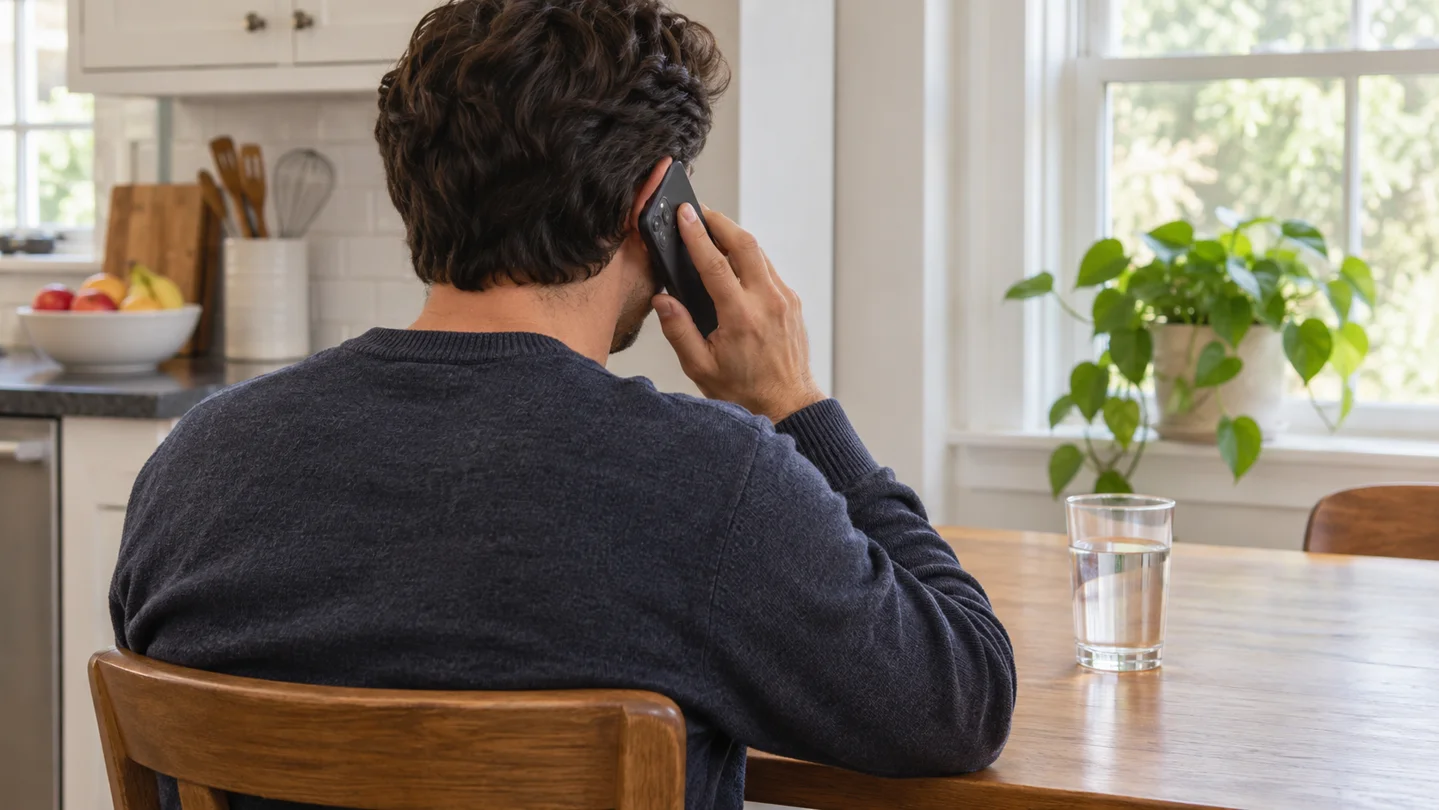
There is a category of lower back pain where reaching for ice or heat delays the evaluation that is actually needed.
Radiating leg pain: Persistent pain, tingling or numbness in a leg can warrant assessment for nerve involvement or other causes. A surface pack may ease discomfort but cannot establish or resolve the underlying condition. See the guide to common low back pain symptoms.
Emergency neurological symptoms: Get emergency care now for new saddle numbness, difficulty passing or controlling urine, loss of bowel control or sensation, or new pain, weakness or numbness in both legs. Each sign matters; do not wait for a combination.
Significant trauma: A serious accident needs emergency assessment. A clinician decides whether imaging is needed and which test is appropriate; a pack must not delay evaluation.
Fever combined with back pain: Fever in the presence of back pain raises the possibility of spinal infection (discitis or osteomyelitis) — rare but serious and requiring urgent medical assessment, not conservative management. This combination should never be managed with home therapy alone.
Unexplained weight loss, a cancer history or persistent worsening pain: Arrange medical assessment. The history and examination guide tests. The guide to possible causes of lower back pain provides broader context.
From the Clinic: Dr. Arora’s Expert Insight
The useful question is whether a pack helps you move or rest more comfortably without adverse effects. Pain relief is a response to a comfort measure, not confirmation of a tissue diagnosis.
A safe trial considers skin sensation, circulation, the product instructions and warning signs. The age of the pain alone does not decide which temperature to use.
Feeling better after movement does not prove that muscle guarding is dominant or that heat is required. Worsening or spreading symptoms deserve review.
If warmth makes gentle movement easier, it can be used before a walk or exercise. One trial in the review favored adding exercise to heat wraps, but this does not prove that everyone needs ongoing heat after symptoms improve.
Practical Application: How to Use Each Effectively
Ice: Application Guidelines
- Use a wrapped cold pack only if it feels helpful and warning signs have been addressed; there is no mandatory 48-hour window.
- Always use a cloth barrier between the pack and skin — direct contact can cause ice burns within minutes.
- Use for no longer than 20 minutes, or less if the product instructions advise. Allow the skin to return to normal and leave a few hours between treatments.
- If leg symptoms worsen during or after application, stop immediately.
- Do not use heat or cold on areas with poor sensation or circulation. Ask a clinician for suitable alternatives.
- Do not aim for a skin-temperature target. Check the skin and stop for pain, marked discoloration or blistering.
Heat: Application Guidelines
- Use comfortable warmth if helpful, after checking warning signs and skin safety. It is not automatically appropriate for every new or persistent symptom.
- Follow the product instructions and keep sessions brief, usually no longer than 20 minutes for an ordinary pack. Leave a few hours between treatments.
- Commercial heat wraps differ. Use only as directed; evidence from a particular wrap does not establish the safety of every product or eight-hour wear for everyone.
- If warmth helps, follow with comfortable movement; it is also reasonable to use it simply for brief symptom relief.
- Do not sleep with a hot water bottle, ordinary heat pack or electric heating pad in place.
- Avoid applying heat over significant bruising, open skin, or areas of acute trauma.
- Use gentle warmth rather than high heat. A specified skin temperature does not guarantee safety.
Do’s and Don’ts
Do use a heat pack or warm shower before morning movement to shorten the stiffness period.
Do apply heat for 15–20 minutes before your prescribed exercises to reduce guarding and improve range of motion.
Use cold only when it feels helpful; get assessment after significant trauma rather than relying on a pack.
Do keep moving gently after heat application — the goal is always to restore normal movement, not to extend the rest period.
Do not continue cold if it worsens discomfort or causes skin changes.
Don’t treat heat as permission to stay still — its benefit is maximized when it precedes movement, not replaces it.
Do not combine heating devices with topical pain creams or patches unless the product instructions and a pharmacist confirm this is safe.
Don’t persist with either modality if it consistently worsens your pain — that response is information worth paying attention to.
Return to Activity: A Realistic Timeline
Temperature therapy has a defined role and a defined endpoint. The goal is to make movement possible — and movement is what produces durable recovery.
Initially: Keep manageable daily activity and use brief supported rest when needed. Heat or cold is optional. Stop activities that worsen symptoms substantially, and seek care for warning signs.
As symptoms settle: Increase movement or exercise gradually, choosing comfortable options rather than a required sequence. The physical therapy home exercise guide explains ways to adapt activity.
Ongoing symptoms: Review the plan if function is not improving. There is no fixed week when packs must stop or heavy lifting becomes safe.
When Conservative Self-Management Isn’t Enough
Heat and cold manage symptoms; neither can diagnose a cause, reverse a disc finding or guarantee prevention of another episode.
Consider formal physical therapy assessment if pain persists beyond two weeks without meaningful improvement, if you have had three or more similar episodes in the past year, if you are modifying daily activities or avoiding movement out of fear rather than physical inability, or if the pattern of your pain is unclear and choosing between ice and heat feels like guesswork.
Back imaging is not routinely needed without a clinical reason. Reassessment after persistent symptoms can identify whether a scan would change care; incidental findings alone do not establish a diagnosis.
Surgery is considered for specific conditions, including persistent sciatica with matching findings when nonsurgical care has not helped. Progressive weakness or cauda equina warning signs require urgent or emergency assessment, without waiting months.
Conclusion
The ice or heat for lower back pain question has an individual answer: either may provide comfort, while heat wraps have somewhat better short-term trial evidence for acute and subacute pain. Neither choice requires a home diagnosis of tissue inflammation or poor circulation.
Use a pack safely if it helps, keep manageable activity in the day, and arrange assessment when symptoms worsen or continue to limit function. Warning signs take priority over temperature therapy.
If you’re still reaching for ice or heat for lower back pain after two weeks without clear progress, the next step is a proper assessment — not a different temperature.
Related reading: what to know before using tape for low back pain.
Frequently Asked Questions
1. Should I use ice or heat for lower back pain right after a bad lift?
Either may offer comfort after a mild flare, but pain after lifting does not identify a tear, disc problem or bleeding. Stop heavy painful lifting and seek prompt assessment for severe, worsening or neurological symptoms.
2. Can I alternate ice and heat for lower back pain?
You can use the option that feels helpful, but there is no clear low-back-specific evidence that alternating is better. Protect the skin, allow recovery between applications and stop if either temperature worsens symptoms.
3. I’ve been icing for several days and my back feels stiffer. What’s happening?
Stop cold if it makes you feel worse. This does not establish ischemia or a harmful circulation change; comfortable warmth or gentle movement may be alternatives if there are no warning signs.
4. How long should I apply heat to my lower back?
For an ordinary pack, keep sessions brief and no longer than 20 minutes, following product instructions. Use a barrier, check the skin, leave a few hours between sessions and do not sleep with the pack.
5. Is a hot shower as effective as a heat pack for lower back pain?
A comfortably warm shower may ease stiffness, but direct comparative evidence is limited. Avoid scalding water and use whichever safe option feels helpful.
6. My lower back pain radiates down my leg. Will heat or ice help?
It may ease some discomfort, but it does not treat or rule out nerve compression. Arrange assessment for persistent leg symptoms and use the emergency guidance for saddle, bladder/bowel or bilateral leg changes.
7. Can heat make lower back inflammation worse?
Heat can worsen discomfort or skin irritation in some situations; stop if it does. Symptoms and duration cannot establish whether inflammation is present. Significant swelling, trauma, fever or worsening pain merits assessment.
8. Is it normal to need heat or ice daily for lower back pain?
Some people use packs regularly for comfort. Daily use alone does not diagnose a mechanical fault, but ongoing pain or limited function deserves review. Follow skin-safety guidance each time.
Medical Disclaimer
This is general education rather than an individual treatment plan. Get emergency care now for new saddle numbness, difficulty passing or controlling urine, loss of bowel control or sensation, or new pain, weakness or numbness in both legs. Significant trauma needs emergency assessment; fever or rapidly worsening pain needs urgent medical advice.
References
- French SD, Cameron M, Walker BF, Reggars JW, Esterman AJ. Superficial heat or cold for low back pain. Cochrane Database of Systematic Reviews. 2006;(1):CD004750. doi:10.1002/14651858.CD004750.pub2.
- NHS inform. Back problems. Heat and ice safety and self-management advice.