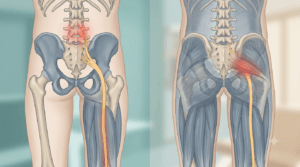
Before trying a stretch: Get emergency care now for new difficulty passing or controlling urine, new loss of bowel control or sensation, numbness around the genitals or anus, or new sciatic pain down both legs. Severe or worsening weakness or numbness in both legs also needs emergency care. See the NHS sciatica guidance.
Expert Review: This article includes clinical insights from Dr. Vivek Arora, a physical therapist (physiotherapist) with 20+ years of experience.
A sciatic nerve glide is a gentle movement that a clinician may use after assessment for some people with leg symptoms. Stretches for the hip or thigh are different exercises.
If a movement increases shooting pain, tingling or numbness, ease off. Seek care for new weakness or the warning signs above.
Key takeaways
- Nerves move in relation to nearby tissues. A glide uses coordinated movements rather than a sustained pull at the end of the range.
- A slider increases movement at one joint while reducing strain elsewhere. A clinician can show you the version that suits you.
- Choose range and frequency based on clinical advice and how you respond. No single dose suits everyone.
- Report any new or worsening symptoms, including changes in strength and sensation. Symptoms spreading into the leg are a reason to stop and reassess the exercise.
- Reduce or avoid any stretch that repeatedly reproduces shooting leg symptoms, such as a forceful hamstring stretch.
Why can some stretches aggravate sciatic symptoms?
A long or forceful stretch can increase symptoms in some people. The response varies and does not identify the source of your pain.
A review of 20 trials found that neural mobilization reduced pain and disability in adults with lumbar radiculopathy. The trials varied substantially and had limitations, including possible publication bias. The findings do not establish a single exercise or dose.
Tightness behind the thigh can have several causes. A clinician can assess whether gliding, stretching or another activity is appropriate.
What is actually going on along the sciatic nerve?
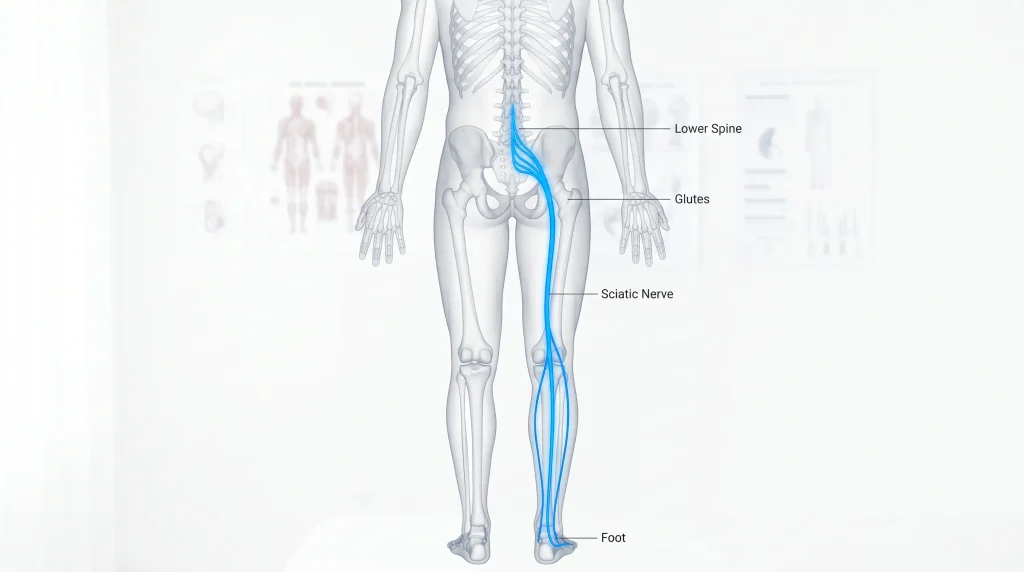
The sciatic nerve is built from roots leaving the spine at roughly L4 through S3. They merge in the pelvis, pass through the deep buttock, run down the back of the thigh and divide behind the knee. Sciatica almost always begins at the root end, where a disc bulge, a narrowed exit canal or inflammation irritates the root, not in the nerve trunk.
A gentle slider uses a change in position at more than one joint. The movement can be adjusted to avoid a strong pull or reproduction of symptoms.
Is it the nerve, the muscle, or the joint?
A clinical assessment can consider possible sciatica symptoms alongside other knee, hip, nerve and circulation conditions. Symptom areas and responses overlap.
| Possible condition | Where you may feel it | Activities that can affect it | What may ease it | What to discuss |
|---|---|---|---|---|
| Lumbar nerve root irritation | Buttock or leg, with or without back pain | Sitting, movement or coughing may change symptoms | Response varies | New numbness, tingling, weakness or tripping |
| Deep gluteal symptoms | Buttock or nearby leg | Sitting may aggravate symptoms | Changing position may help | Other possible causes of buttock and leg pain |
| Upper hamstring problem | Near the sitting bone or back of the thigh | Running or sitting may affect it | Reducing a provocative task | What reproduces symptoms and what the exam shows |
| Neurogenic claudication | Buttocks or legs | Symptoms can build when standing or walking | Sitting may help | Whether spinal narrowing or a circulation problem needs assessment |
When should you stop stretching and get assessed?
Stop stretching and seek emergency care if you develop any of the emergency signs at the top of this page. Seek urgent medical assessment for worsening weakness in one leg. Leg pain with fever, unexplained weight loss or a history of cancer also needs medical review before you continue exercising.
- New bladder or bowel changes, or numbness around the genitals or anus. Go to an emergency department now. These can be signs of serious nerve compression.
- Weakness that is getting worse. Get urgent medical assessment if one foot starts catching or dragging. Severe or worsening weakness in both legs requires emergency care.
- New sciatic pain in both legs needs emergency assessment even if bladder and bowel function feel normal.
- Seek urgent assessment for new severe back pain with fever or feeling very unwell. Report a history of cancer or unexplained weight loss promptly.
- Significant trauma, or new severe pain in an older adult with osteoporosis risk. Fracture should be excluded before loaded movement is added.
Do you need a scan before you start stretching?
For most people, no. National guidance advises against routinely offering imaging in a non-specialist setting for low back pain with or without sciatica, and recommends imaging in specialist settings only where the result is likely to change management. A scan answers a specific question. It is not a prerequisite for starting to move sensibly.
Disc bulges are common in people with no symptoms, so a scan taken mid-flare often finds something real that is not your pain source, and reports mentioning stenosis on an MRI cause needless alarm. Imaging earns its place with red flags, progressive weakness, or a stalled recovery where surgery is on the table, and then its job is to check whether the finding matches the leg you are complaining about.
From the Clinic: Dr. Arora’s Expert Insight
Tell your clinician what stretches you tried and what changed during and afterward.
If the leg symptoms worsen or strength or sensation changes, stop the exercise and arrange review.
An assessment helps choose the movements that fit what you can do and what you want to get back to.
Six movement examples a clinician may suggest
The first two are examples of gentle sliders. The other exercises focus on the hip or back. Try only movements that suit your symptoms and follow the safety guidance above.
1. Seated sciatic nerve glide (slump-based slider)
Sit on a stable chair. In a comfortable range, gently straighten the knee as you look slightly up, keeping the ankle relaxed. Bend the knee again as you return your head to neutral or slightly down. Ask a clinician to show you the sequence if it has been recommended for you.
Use a small, smooth movement without holding the end position. Stop if shooting pain, tingling or numbness increases or persists.
2. Supine nerve glide with ankle pumping
Lie on your back and support one thigh in a comfortable position. Gently straighten the knee a little as you point the toes away, then bend the knee as you ease the ankle back toward neutral. Keep the movement small and follow your clinician’s advice.
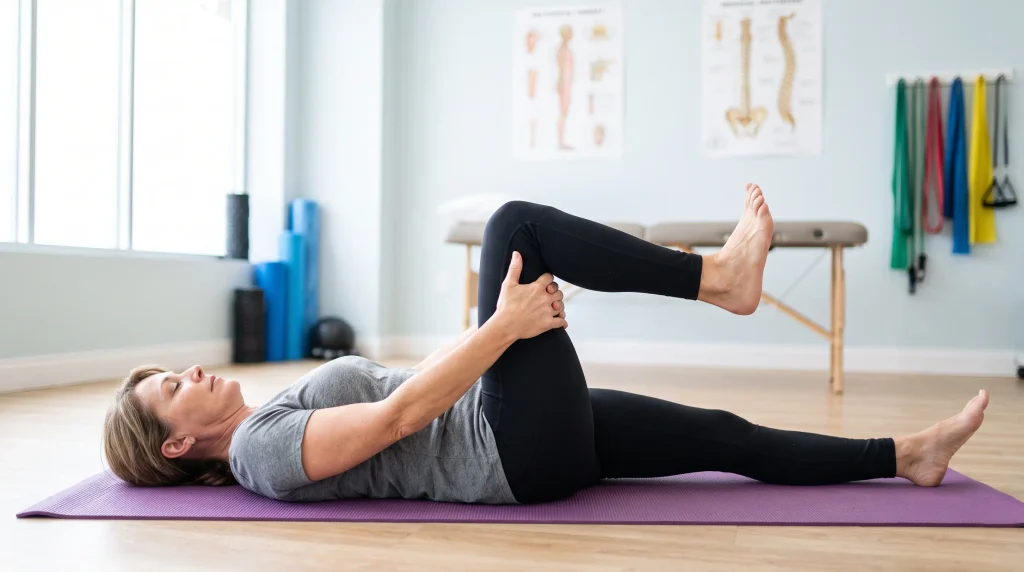
Let the effort and range be comfortable. The number of repetitions should be adjusted to your response and clinician’s plan.
3. Seated figure-four with a neutral spine
If appropriate for your hip and knee, sit on a stable chair and rest one ankle across the opposite thigh. Lean forward slightly if comfortable. Avoid pressing hard on the crossed knee.
A mild buttock stretch can occur. Stop for sharp joint pain or increasing leg symptoms.
4. Supine knee to opposite shoulder
Lie on your back and support the thigh as you guide it gently across the body. Choose an easy range without forcing the knee or hip.
Stop if it brings on sharp pain, worsening tingling or numbness. Ask about suitability if you have had hip or knee surgery.
5. Prone press-up, for extension responders
A press-up may be included if your clinician has found it suits your symptoms. Starting face down, use your arms to lift the chest within a comfortable range.
Avoid forcing the range and stop if symptoms spread or worsen. Follow the movement and frequency agreed with your clinician.
6. Standing hip flexor stretch
If comfortable and safe, use a sturdy support and stand in a short split stance. Shift your weight a little until you feel a mild stretch at the front of the rear hip.
Leave the movement out if you feel unsteady or it increases back or leg symptoms.
Two stretches to modify if they aggravate symptoms
A forceful hamstring stretch or deep forward fold can increase leg symptoms in some people. Adjust the movement if this happens.
1. The aggressive straight-leg hamstring stretch
Avoid pulling hard with the knee locked and toes drawn up when it reproduces shooting leg pain or tingling.
2. Deep seated forward folds and toe touching
A deep forward fold can aggravate symptoms in some people. Ease the range or leave it out temporarily if it increases leg pain, tingling or numbness.
How do you know when to progress?
Progress depends on symptoms, strength, sensation and what you can do. Do not continue a new exercise through worsening neurological symptoms.
What to do today
- If a clinician has shown you a slider, try it in the comfortable range they recommended.
- Take position breaks when they help.
- Try a short, comfortable walk if it is appropriate and safe.
- Modify or stop any movement that repeatedly aggravates leg symptoms.
- Record changes in symptoms and function. Get advice for new weakness or persistent worsening.
| Stage | When | What you can try | What to review |
|---|---|---|---|
| Comfortable activity | After assessment when needed | Usual movement and positions you can tolerate | Changes in neurological symptoms and daily activities |
| Movement options | When suitable for your symptoms | Gentle movements or a slider if instructed | Whether you can repeat it without worsening symptoms |
| Strength for daily tasks | As your activity and symptoms allow | Gradual strengthening or lifting practice | How strength and function change over time |
| Return to usual demands | Individual timing | Build work or sport gradually | Discuss readiness and safety with your clinician |
- Modify sitting or driving for comfort and take breaks where safe.
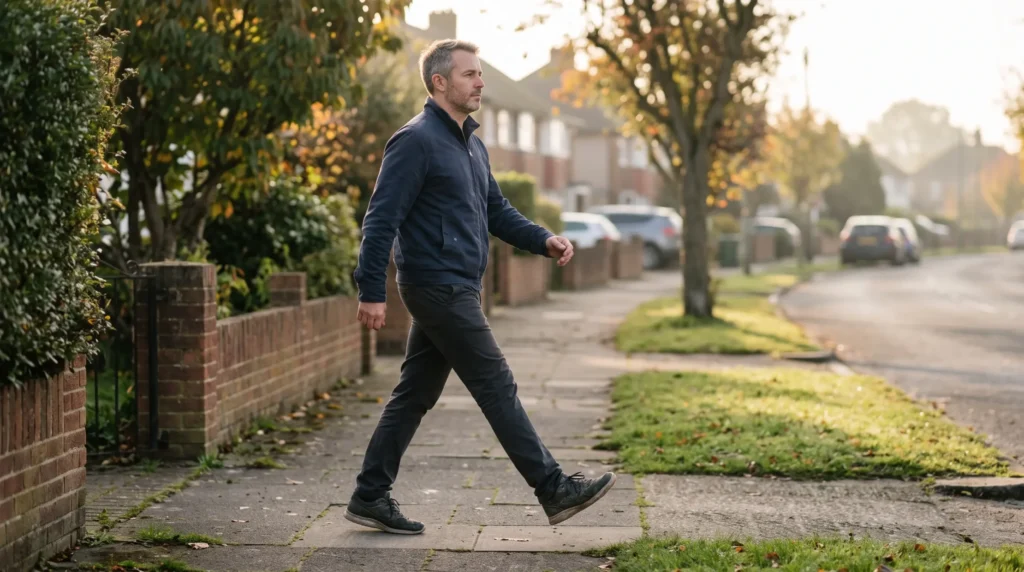
- Keep walking. National guidance for low back pain with or without sciatica specifically includes encouragement to continue normal activities.
- Stop a stretch that repeatedly increases leg pain, tingling or numbness.
- Avoid repeatedly provoking symptoms to test whether the exercise works.
- Avoid hard pressure over sensitive or numb areas.
Agree on a gradual return based on your symptoms and goals, including new changes in strength or balance. See returning to lifting after a disc herniation if relevant.
What if the pain does not settle?
Sciatica often improves over weeks to months. Seek assessment if symptoms worsen or keep limiting daily activity. Use emergency care for the warning signs above.
Rest is not the answer to a plateau. For acute low back pain, advice to stay active is modestly better than advice to rest in bed, although a Cochrane review comparing bed rest with staying active found little or no difference between the two specifically for sciatica. Bed rest offers nothing worth having, but the honest framing is that activity alone is not a cure for radicular pain.
A clinician may review the diagnosis, whether imaging would change management and whether specialist care is appropriate.
The bottom line on sciatic nerve stretches
Gentle gliding can be one option if symptoms have been assessed and it suits you. You can also choose tolerable everyday movement and seek help for worsening symptoms.
Notice how a movement affects pain, sensation and normal activities. Stop and seek advice for persistent worsening or new weakness.
Frequently asked questions
Can you actually stretch a nerve?
Nerves can move and change strain as joints move. A slider is a gentle coordinated movement. Sustained pulling is unnecessary when practising one.
How long before nerve glides start helping?
Some studies found short-term benefit in selected patients. The response varies and there is no established timeline for an individual.
Should nerve glides hurt while I am doing them?
A glide should stay comfortable. Stop and seek advice if it produces worsening shooting pain, persistent tingling, numbness or weakness.
Should I rest in bed until the leg pain settles?
There is no good reason to. For sciatica specifically, the available evidence suggests little or no difference between bed rest and staying active, so bed rest costs you conditioning and confidence without buying anything back. Lying down briefly for relief is a comfort measure, not a treatment.
Why is my sciatica worse in the morning after stretching at night?
Symptoms can fluctuate for several reasons. If a particular exercise repeatedly makes them worse later, reduce or pause it and ask your clinician for advice.
Does this mean I will end up needing surgery?
Surgery depends on the diagnosis and how symptoms affect function. Suspected serious nerve compression needs emergency assessment.
Medical disclaimer
These examples are general information. A clinician can assess whether gliding or stretching is appropriate and how to adapt it. Follow the urgent and emergency advice above.
References
- National Institute for Health and Care Excellence. Low back pain and sciatica in over 16s: assessment and management (NG59). 2016, last updated 2020. https://www.nice.org.uk/guidance/ng59
- Dahm KT, Brurberg KG, Jamtvedt G, Hagen KB. Advice to rest in bed versus advice to stay active for acute low-back pain and sciatica. Cochrane Database of Systematic Reviews. 2010;(6):CD007612. https://doi.org/10.1002/14651858.CD007612.pub2