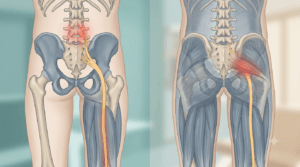
Check for emergency symptoms before trying repeated movements. Get emergency care now for new difficulty passing or controlling urine, new loss of bowel control or sensation, numbness around the genitals or anus, or new sciatic pain down both legs. Severe or worsening weakness or numbness in both legs also needs emergency care. If an exercise sends pain, tingling or numbness further down the leg, stop that movement and seek advice if symptoms persist or worsen.
Expert Review: This article includes clinical insights from Dr. Vivek Arora, a physical therapist (physiotherapist) with 20+ years of experience.
A press-up is one example of a movement used in the McKenzie Method, also called Mechanical Diagnosis and Therapy. The method assesses how symptoms and movement change before choosing an exercise.
Key takeaways
- Directional preference describes a movement direction that produces a lasting improvement in symptoms or movement during assessment.
- Centralization describes symptoms moving from farther down a limb toward the back. Clinicians consider it alongside pain severity, function, strength and sensation.
- Stop a movement if it increases shooting symptoms, numbness or tingling farther down the leg. Seek care for new weakness or the emergency signs below.
- Exercise range and frequency are adjusted to the person and response.
- People can respond to different movement directions. Some show no clear preference.
What are McKenzie exercises for lower back pain, and why do they work for some people?
Mechanical Diagnosis and Therapy includes assessment, education and exercises selected from the person’s response. It can involve backward bending, forward bending or a sideways movement.
Directional preference is a response to a movement direction. Centralization refers specifically to symptoms moving closer to the spine. Either finding needs to be interpreted with the rest of the assessment.
A response to repeated movement cannot show that disc material moved or identify the tissue causing pain.
A 2023 Cochrane review found no clinically important benefit for acute or subacute nonspecific low back pain, based on low to very low certainty evidence. A separate review found some benefit in people with chronic low back pain who had a directional preference and were treated by credentialed therapists. The results apply to different groups and do not establish a universal home routine.
How do I know whether I am moving in the right direction?
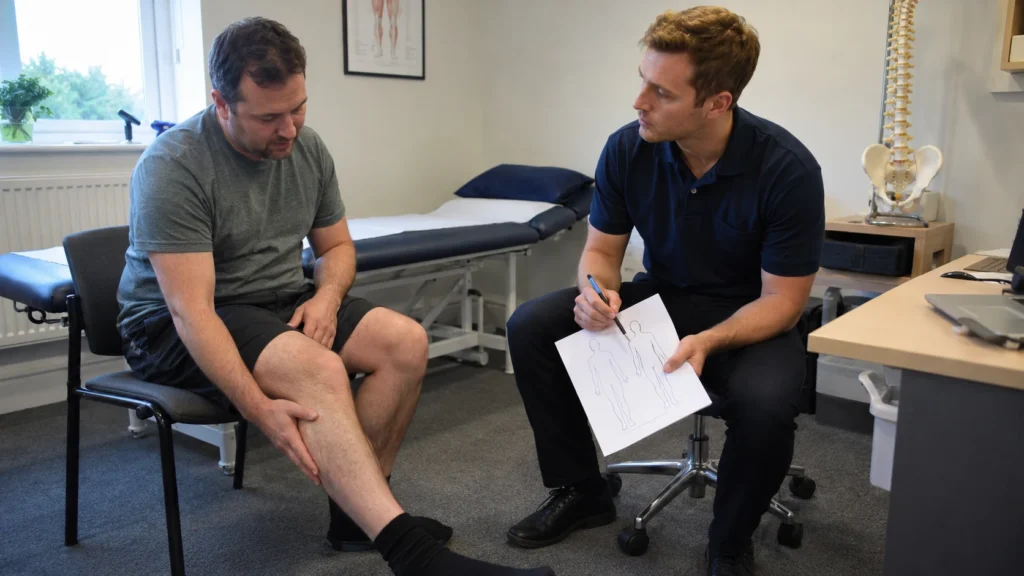
Tell your clinician where symptoms travel and whether they change during and after a movement. Include changes in strength, sensation and daily activity.
| Response | What you may notice | What it can tell you | What to do |
|---|---|---|---|
| Centralization | Pain or other symptoms move closer to the back | This is one response clinicians monitor | Mention it along with pain, strength, sensation and function |
| Symptoms ease | A movement feels more comfortable and the relief lasts | That direction may suit you | Discuss whether to include it in your plan |
| Symptoms ease briefly then worsen | Relief during movement, followed by more pain | The response needs review | Reduce or stop the movement and discuss if it keeps happening |
| Symptoms spread farther into the leg | New or increased pain, tingling or numbness farther from the back | The movement may be aggravating symptoms | Stop and seek advice if symptoms persist or worsen |
| No clear improvement | Location and intensity stay the same | You may have no clear directional preference | Ask whether another activity or approach would suit you |
| New weakness or neurological changes | New foot drop, increasing weakness, saddle numbness or bladder changes | Urgency depends on the symptom | Get prompt assessment for new weakness. Use emergency care for the signs above. |
Back and leg symptoms can move in different directions. Increased pain, new numbness or weakness still deserves attention even if leg pain is less intense.
Who does extension help, and who does it make worse?
Some people find backward bending helpful. A clinician may test it if it is safe, based on the history and examination. The activities that aggravate symptoms cannot select an exercise on their own.
A systematic review found centralization or directional preference in some people with spinal pain. It did not establish that the direction can be chosen reliably from a symptom checklist.
When forward bending feels easier
Forward bending is more comfortable for some people. Walking-related leg symptoms can occur with spinal stenosis or poor circulation and merit assessment where appropriate.
What a sideways lean can mean
A sideways lean can occur with back pain. A clinician should assess a new or persistent lean before you try to force it into a different position.
When is this protocol not safe to start?
Get care for the warning signs below before starting repeated or end-range movements.
Seek care if
- Get emergency care now for new saddle numbness, difficulty passing or controlling urine, new loss of bowel control or sensation, new sciatica in both legs, or severe or worsening weakness or numbness in both legs.
- Seek prompt assessment for new foot drop, tripping due to weakness or increasing weakness in one leg.
- Arrange assessment if pain is persistent, worsening or repeatedly wakes you. Mention any cancer history or unexplained weight loss.
- Seek urgent care for back pain with fever or feeling very unwell, particularly after an infection or spinal procedure.
- The pain started after significant trauma, or after a minor fall in someone with osteoporosis or on long-term steroids. Vertebral fracture is possible, and extension loading may be exactly the wrong direction.
Imaging deserves a similar cool head. For a first episode of mechanical back pain without those warning features, a scan rarely changes what happens next — the treatment plan is built from how you move and how your symptoms respond, not from a report. Imaging earns its place when there is a progressive neurological deficit, when a serious cause is suspected, or when surgery or an injection is genuinely on the table and the surgeon needs to see whether the imaging findings match the symptoms. Otherwise it mostly supplies alarming vocabulary; understanding what the phrases on a lumbar spine report actually mean saves a great deal of unnecessary worry.
Four things people get wrong about the press-up
The press-up is a movement a clinician may recommend after assessment. People vary in their comfort, useful range and response.
- A repeated movement and a sustained stretch are different. A clinician can advise which is appropriate for you.
- Try the direction your clinician considers suitable. Backward bending is one option.
- Report what happens to both back and leg symptoms. Stop an exercise that brings on worsening leg symptoms or new neurological changes.
- Believing it “puts the disc back.” The mechanism is not settled, and the language sets up a fragile mental model of a spine that slips in and out of place. What is reliable is the symptom response, not the metaphor.
From the Clinic: Dr. Arora’s Expert Insight
Describe what you could do before the pain began and which tasks are difficult now.
If you try an assessed movement, notice any sustained change in comfort, movement or symptoms during daily tasks.
A clinician can reassess the plan when symptoms or strength change.
Examples of extension movements
These are examples you may be shown in an assessment. You can use the version that feels comfortable and matches your clinician’s advice.
| Example | Position | How to start | When to review |
|---|---|---|---|
| Lying face down | Rest on a comfortable surface, using a pillow if it helps | Try briefly if comfortable | Stop if leg symptoms increase |
| Supported on elbows | From face down, gently support the upper body on the forearms | Use a small, comfortable range | Report any worsening leg symptoms |
| Press-up | Use the hands to raise the chest as comfortable, with legs relaxed | Choose the range with your clinician | Stop if symptoms worsen or travel farther down the leg |
| Offset movement | A clinician may assess a sideways component | Ask for a demonstration before trying it | Avoid forcing a side shift at home |
| Standing extension | A clinician may suggest a small supported movement in standing | Use steady support if needed | Avoid if you feel unsteady or symptoms increase |
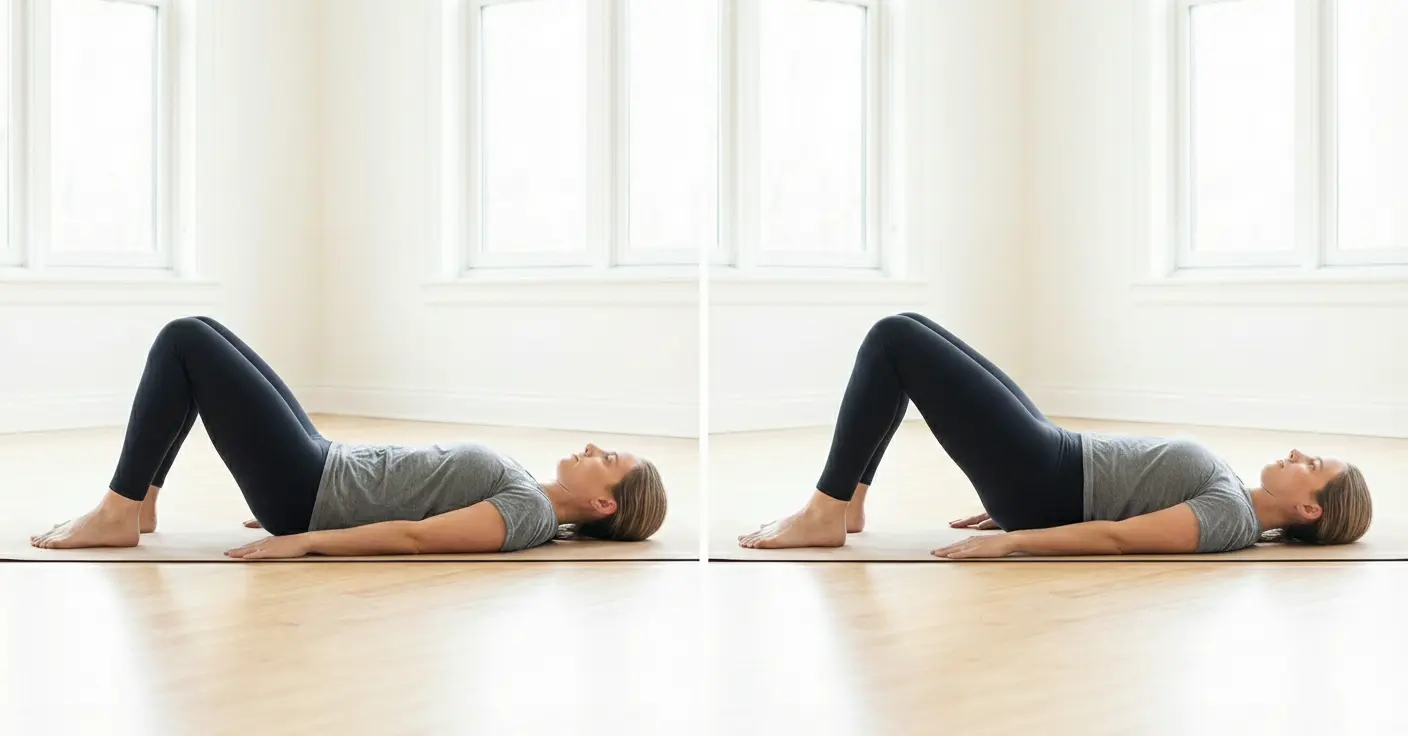
Follow the exercise amount and range agreed with your clinician. There is no single repetition count or frequency for everyone.
What if extension makes your symptoms worse?
Stop and discuss an alternative if extension makes symptoms worse. Forward bending may be suitable for some people after assessment.
Examples of flexion movements
- Single knee toward the chest can be used as a gentle example. Move as far as is comfortable.
- Knees toward the chest is another example. Do not force the knees closer if this reproduces pain or leg symptoms.

- A small supported forward bend in sitting can be considered if it suits your symptoms and balance.
Report any lasting response or worsening symptoms. Stop and seek care for the warning signs above.
What if you have a sideways lean?
Ask a clinician to assess a new or persistent shift. Avoid pushing hard against a wall or repeatedly forcing the trunk sideways to try to correct it.
Living with the protocol: what to do, what to avoid, and how to get back to normal
Keep up comfortable activities if safe. Use a range and plan that leave daily movement manageable.
What to do today
- Note the location of pain and any weakness or altered sensation.
- If you have been shown a movement during an assessment, try it in the comfortable range your clinician recommended.
- Record whether an improvement lasts and whether it helps with a daily activity.
- Adjust the frequency and range with your clinician if needed.
- Change sitting or standing positions when it makes your day easier.
Use a comfortable setup for each movement. The ability to tolerate different positions varies.
Avoid trying to force more range or continuing through worsening neurological symptoms.
Gradually resume tasks that matter to you such as walking, sitting or training. Discuss limitations or new weakness with a clinician.
When conservative care stalls, and where surgery fits
Arrange reassessment if pain worsens, function keeps declining or your current exercise plan is not helping.
A clinician can reassess your symptoms and other possible causes, then discuss a different exercise or treatment plan.
Surgery enters the conversation in a narrow set of circumstances: persistent, disabling leg-dominant pain that has not responded to a reasonable course of non-surgical care, where imaging findings clearly correspond to the symptoms and the affected nerve root — or, urgently, where there is a progressive neurological deficit or suspected compression of the nerve bundle at the base of the spine. Notably, a strong centralizing response is generally a favourable prognostic sign, and most people who find their direction never reach that discussion.
The bottom line
A movement response can help choose exercises during a clinical assessment. If symptoms remain limiting or neurological changes appear, seek the appropriate level of care described above.
Frequently asked questions
How quickly should I expect to see a change?
Responses vary. Your clinician can review lasting changes in symptoms and function and change the plan if it is not helping.
Can these exercises make a disc problem worse?
Repeated movement can aggravate symptoms. Stop if symptoms spread or worsen and seek prompt assessment for new weakness. Use emergency care for the warning signs above.
Can I do the press-ups in bed?
Ask the clinician who showed you the movement which setup is appropriate. A firm or soft surface can feel different and changes what you can do comfortably.
What if I can’t get down to the floor at all?
A clinician can show you an option in sitting or standing that fits your balance and symptoms. Choose the direction after assessment.
Do I need a scan before starting a home protocol?
Routine scans are usually unnecessary when symptoms are uncomplicated. A clinician may request imaging when warning signs are present or the result would change treatment.
Do these work if my pain is only in my back, with no leg symptoms?
A clinician can assess whether a movement improves back pain or makes daily activity easier. Evidence differs by duration and patient group.
Can I keep training at the gym while doing this?
If assessed and cleared to train, keep the activities you can manage safely and adapt loads or movements that repeatedly worsen symptoms.
How long do I keep doing them once I feel better?
How long to continue depends on your symptoms, goals and plan. Review it with the clinician who chose your exercises.
Medical disclaimer
These examples are general information. A clinical assessment helps select a movement and identify when another approach is needed.
References
- Almeida MO, Garcia AN, Menezes Costa LC, van Tulder MW, Lin CWC, Machado LAC. The McKenzie method for (sub)acute non-specific low back pain. Cochrane Database of Systematic Reviews. 2023;(4):CD009711. https://doi.org/10.1002/14651858.CD009711.pub2
- May S, Runge N, Aina A. Centralization and directional preference: an updated systematic review. Musculoskeletal Science and Practice. 2018;38:53–62.