This guide helps you decide whether to use a weighted vest and when to seek advice. Stop using it and get emergency help for sudden chest pain or shortness of breath, new bladder or bowel changes, or numbness around the genitals or anus.
Expert Review: This article includes clinical insights from Dr. Vivek Arora, a physical therapist (physiotherapist) with 20+ years of experience.
A weighted vest adds load during walking or exercise. Whether it suits you depends on balance, health, the activity and how symptoms respond. Get advice before using one if you have a spine fracture, high fracture risk, recent surgery or new leg symptoms.
If the vest repeatedly brings on pain, take it off. An examination may be needed if pain continues without it or you develop new symptoms.
Key takeaways
- How long you wear it and what you do while wearing it both affect how demanding it feels.
- Follow the fitting and loading instructions and make sure you can move steadily.
- There is no proven starting weight for a sore back. If using the vest makes your symptoms worse, pause it and get advice before returning if symptoms persist.
- Ask a clinician before using a vest if you have high fracture risk, recent surgery, balance problems or leg symptoms that affect walking.
Is a weighted vest bad for your lower back?
A vest increases the work involved in walking or other activity. It is not an established treatment for lower back pain, and extra load does not suit everyone.
A vest and a backpack distribute weight differently. Fit, movement and individual response matter. Their placement alone cannot establish which is safer for a sore back.
Why the weight split matters
Keep the weights secured according to the manufacturer’s instructions and avoid using an unstable, shifting load. If it pulls you off balance, remove it.
Why does your lower back hurt after wearing a weighted vest?
Pain may begin after adding weight, wearing the vest longer or using it for a new activity. These changes can help explain when it happens, but they do not diagnose the cause.
- New weight. Note how much you added and whether you felt steady.
- Wear time. A longer session can be more demanding even at the same weight.
- Higher-impact activity. Running, jumping and stairs can require more balance and effort when wearing a vest.
- Lifting or bending. Extra weight changes the demand of a task. Leave it off if an ordinary task is already difficult or painful.
If ordinary walking also produces pain, heaviness or tingling, tell your clinician. See walking-related back symptoms.
Where does it hurt, and what does that suggest?
Note when the pain starts, whether taking off the vest helps, and whether you notice leg, breathing or balance changes.
| What you notice | When it happens | What to report | Why it matters | What to do |
|---|---|---|---|---|
| Aching around the back after a session | During or after using the vest | How much weight and time you added | Several factors can affect comfort | Pause vest use and review if pain continues |
| Sharp one-sided back pain | While standing, walking or exercising | Whether the pain persists without the vest | The pattern cannot identify a joint or muscle | Stop the session and seek advice if persistent or worsening |
| Back pain that spreads into the buttock or leg | During or after activity | Where it travels and any tingling or weakness | Several conditions can cause spreading pain | Get assessed if persistent. Seek prompt care for new weakness. |
| Heavy or tingling legs | With walking or standing | Walking distance and what helps symptoms ease | Spinal and circulation conditions can overlap | Take off the vest and arrange assessment |
| Sudden severe back pain | After a fall, load or ordinary movement | Osteoporosis, steroids or previous fracture | A fracture may need assessment | Stop and seek urgent medical advice |
| Local pressure discomfort | Under a strap or edge of a vest | Redness, rubbing or soreness | The vest may be pressing on the area | Remove or refit it as directed. Seek advice about persistent symptoms. |
Report groin pain, pelvic heaviness or leakage if these repeatedly occur with the activity. Seek emergency care for new loss of bladder or bowel control with neurological warning signs.
Who should avoid a weighted vest or get cleared first?
Ask a clinician whether added weight is appropriate if you have a spine fracture, high fracture risk, substantial balance difficulties, recent surgery or leg symptoms that limit walking.
- If you have osteoporosis or a previous fragility fracture, discuss safe exercise and added load with the clinician managing your bone health.
- If pain, heaviness or tingling limits walking, get assessed before adding weight. Spinal stenosis is one of several possible causes.
- If leg pain is new or worsening, pause weighted activity and get advice. See activity and treatment after a disc herniation if relevant to your diagnosis.
- If you are recovering from surgery or have a diagnosed spine condition, follow your treating team’s activity restrictions.
- If you feel unsteady or have fallen recently, get advice before adding a vest. A study of older adults losing weight does not establish fall risk for every vest user.
When is back pain from a weighted vest a red flag?
Get emergency care now for new difficulty passing or controlling urine, loss of bowel control or sensation, or numbness around the genitals or anus. New sciatic pain down both legs or severe or worsening weakness or numbness in both legs also needs emergency care. Get urgent advice for severe back pain with fragile bones or new weakness in one leg. Call emergency services for chest pain, sudden breathlessness or fainting during activity.
- Get emergency care now for new trouble passing or controlling urine, loss of bowel control or sensation, new saddle numbness, new sciatica on both sides, or severe or worsening weakness or numbness in both legs.
- Stop and seek urgent assessment for sudden severe back pain, especially after a fall or if you have osteoporosis or a previous fragility fracture.
- Seek prompt medical assessment for new foot drop or new or worsening leg weakness.
- Stop immediately. Call local emergency services for chest pressure or sudden severe breathing difficulty, particularly with faintness or pain spreading to the arm or jaw.
- Seek urgent medical advice for fever with new back pain. Promptly report unexplained weight loss, a history of cancer or persistent worsening pain.
Do you need an X-ray or MRI?
A clinician may request imaging if there is concern about fracture, nerve compression or another condition and if the result would guide care.
How can you tell if the vest is the problem?
Removing the vest and noting whether symptoms change can help describe the problem. It cannot tell whether the weight, activity or another condition is responsible.
What can you check before trying it again?
- Note whether symptoms persist during activities without the vest. Get advice if they do.
- Check whether the vest shifts or affects balance. Take it off if you feel unsteady.
- Follow the manufacturer’s fitting instructions. It should let you breathe freely and move comfortably.
- Note how you feel during and after activity. Stop if symptoms increase, spread or persist.
- Seek assessment for recurring leg heaviness, tingling or weakness with walking.

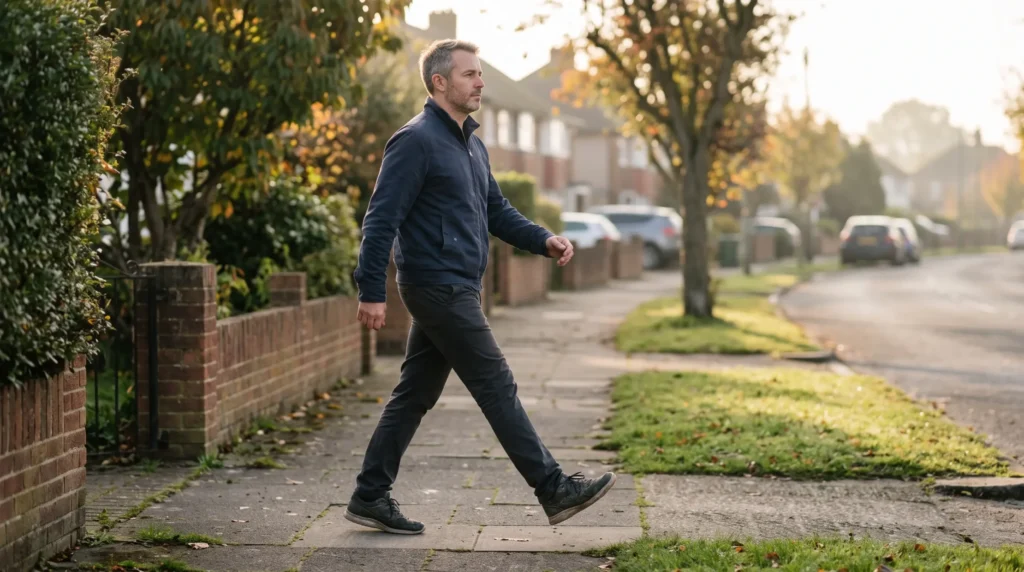
These two positions illustrate that stance can vary while wearing a vest. Use comfort and balance to guide your decision, and seek advice if symptoms persist.
Does a weighted vest actually help your back or bones?
A vest can increase exercise demand. A 12-month randomized study in 150 older adults with obesity who were losing weight found that vest use did not prevent weight-loss-associated hip bone loss. It did not test treatment for back pain.
A 2026 review of nine randomized trials found some bone-density benefits when vest exercise was compared with usual activity. Adding a vest to exercise alone did not show a clear bone-density benefit in the limited available comparison. This does not establish a reliable spine treatment or a safe load for everyone.
From the Clinic: Dr. Arora’s Expert Insight
When symptoms arise, report how you used the vest, for how long and what activity you were doing.
Tell your clinician whether you also have pain, imbalance or leg symptoms without added weight.
If you are cleared to use a vest, review its fit and how it affects your balance and symptoms. Continue with ordinary activity if additional weight is unhelpful.
What can you do after symptoms start?

Take off the vest. If you can walk comfortably and safely without it and have no warning signs, you can continue ordinary movement.
What to do today
- Pause weighted walking while symptoms are getting worse or limiting normal activity.
- Try a short, comfortable walk without added weight if safe.
- Rest in a comfortable position when needed.
- Change sitting or standing position if it helps.
- If warmth helps, protect the skin. Ask a pharmacist if you need advice about pain relief.
Get reassessed if symptoms persist, worsen or come with the warning signs above.
The bottom line on a weighted vest and lower back pain
Pause the vest if it brings on back pain. Seek advice first if you have osteoporosis, a previous spinal fracture, recent surgery, trouble with balance or ongoing leg symptoms. Call emergency services for chest pain or sudden shortness of breath.
Frequently asked questions
1. Can a weighted vest cause a herniated disc?
The onset of pain while wearing a vest cannot establish that a disc has herniated. Seek care if symptoms spread into the leg or you develop weakness or altered sensation.
2. Can I wear a weighted vest if I have sciatica?
Pause weighted walking if leg symptoms flare. Get emergency care now for new difficulty passing or controlling urine, loss of bowel control or sensation, or numbness around the genitals or anus. New sciatic pain down both legs or severe or worsening weakness or numbness in both legs also needs emergency care. Get urgent medical assessment for new or worsening weakness in one leg.
3. Is a weighted vest safe with osteoporosis in the spine?
Ask the clinician managing your bone health before adding weight if you have osteoporosis in your spine, especially after a fracture or if your fall risk is high.
4. How many hours a day should you wear a weighted vest?
No number of minutes or hours has been shown to be safe for everyone with back pain. If a clinician considers it appropriate, try a brief comfortable session and stop if symptoms increase.
5. Can a weighted vest improve your posture?
A vest can change how exercise feels, and fit and balance matter. It has not been established as a reliable treatment for posture or back pain.
6. Will a weighted vest permanently damage my spine?
Back pain during a session cannot tell you whether you have an injury. Seek the appropriate care if pain is severe, follows a fall, persists or comes with any warning signs above.
Medical disclaimer
This article provides general information. It cannot assess your symptoms or give you an individual treatment plan. Ask a clinician before weighted walking after a fracture or spinal surgery, in pregnancy, or with heart, lung or balance problems. Get emergency care now for new difficulty passing or controlling urine, loss of bowel control or sensation, or numbness around the genitals or anus. New sciatic pain down both legs or severe or worsening weakness or numbness in both legs also needs emergency care. Call emergency services for chest pain, sudden shortness of breath or fainting during a walk.
References
- Luo H, Zhang X, Li H, et al. Weighted vest interventions in older adults: a mini-review of implementation, benefits, and limitations. Frontiers in Public Health. 2026;14:1811712.
- Beavers KM, Lynch SD, Fanning J, et al. Weighted vest use or resistance exercise to offset weight loss–associated bone loss in older adults. JAMA Network Open. 2025;8(6):e2516772.