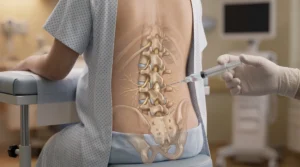
An aching lower back weeks before there is anything to see is one of the more disorienting parts of a first trimester. Nothing looks different, nothing has happened, and yet getting out of a chair has become an event. It is a common experience, and the reason for it is straightforward once explained — but so is the short list of symptoms that mean this has stopped being a musculoskeletal problem and needs a phone call instead.
Low back pain in early pregnancy is usually mechanical and benign. Progesterone and relaxin soften the ligaments supporting the pelvis and lower spine, so muscles have to work harder to stabilize joints that were previously held passively. The result is a dull, band-like ache that shifts with position. It needs same-day obstetric contact only when it arrives with bleeding, fluid loss, fever, rhythmic cramping, or leg weakness.
This guide assumes your pregnancy is already confirmed. If you are still at the stage of wondering whether an ache might mean you are pregnant, that is a different question with a different answer, and it is covered in the companion article on whether low back pain is a sign of pregnancy.
Key Takeaways
- Ligament softening, not bump weight, explains first-trimester pain. The uterus is still small at this stage. What has changed is passive joint stability, which is why the ache often appears long before any visible change.
- Stability beats stretching early on. Long, deep stretches into already-lax tissue frequently make things worse. Short isometric holds and gentle hip work tend to settle symptoms faster.
- Five signs mean contact your midwife or doctor the same day: vaginal bleeding, leakage of fluid, fever or burning urination, rhythmic or cramping pain that comes in waves, or new leg weakness, numbness or bladder change.
- Movement is the treatment, in small doses. Two or three minutes every half hour outperforms both bed rest and one long session.
- Avoid long spells lying flat on your back after around 16 weeks. This matters when choosing exercises and sleep positions as the pregnancy progresses.
Disclaimer: This article is for educational purposes only and is not a substitute for professional medical advice, diagnosis, or treatment. Always speak with your midwife, obstetrician or clinician for personalized guidance.

What Does Low Back Pain in Early Pregnancy Feel Like?
Most commonly a dull, band-like ache spread across the lower back, worse after sitting or standing for a while, and eased by changing position. It often has a stiff quality first thing in the morning that loosens within ten or fifteen minutes of moving. Sharp, one-sided twinges on rolling over or standing from a chair are also typical. Common descriptions include:
- A dull, band-like ache across the lower back.
- Stiffness on waking that settles after gentle movement.
- Twinges when standing from a chair, bending, or rolling in bed.
- A pulling sensation near the buttocks after long sitting or standing.
- Occasional one-sided discomfort without true sciatica.
These patterns are common and usually reflect normal adaptation rather than a dangerous problem.
Why Does Your Back Hurt Before There Is Any Bump?
Because the change happens in the ligaments long before it happens in your silhouette. As the NHS explains, the ligaments naturally become softer and stretch in preparation for labour, which puts strain on the joints of the lower back and pelvis. Nothing has been injured — the passive support system has simply been dialled down, and muscle has to make up the difference.
Ligament laxity, and what it costs
Ligaments are not springs that you consciously control; they hold joints together without any effort on your part. When progesterone and relaxin soften them, the sacroiliac joints and lumbar segments become fractionally more mobile. The muscles around them — glutes, deep abdominals, the small spinal stabilizers — take over that job. Muscle fatigues; ligament does not. That single trade-off explains most first-trimester back pain, and it also explains why the ache tends to arrive late in the day rather than first thing.
Small postural shifts, repeated all day
Subtle changes in pelvic tilt and rib position begin early, and the loads that used to be unremarkable stop being unremarkable. An eight-hour desk day, a commute, or standing at a kitchen counter now asks slightly more of a slightly less stable system. No injury is required for that to hurt.
Referral from the pelvis
Structures in the pelvis share segmental nerve supply with skin and muscle over the sacrum and lower back, so discomfort originating in the pelvis is often felt as a broad backache. This is why the pain can feel poorly localized — deep, wide, and difficult to point to with a finger.
Sleep, fatigue and sensitivity
First-trimester nausea and broken sleep are not incidental to the pain — they change how much of it you feel. Short sleep measurably lowers pain tolerance, so the same mechanical load produces a louder signal. This is one reason the ache can vary considerably from one day to the next without anything structural having changed.
Which Symptoms Mean You Should Contact Your Midwife or Doctor Today?
Five patterns change this from a musculoskeletal problem into an obstetric one: vaginal bleeding, any leakage of fluid, fever or burning on passing urine, pain that comes in rhythmic waves rather than varying with position, and new leg weakness, numbness or bladder change. Any of these warrants same-day contact. The table below separates ordinary mechanical pain from the patterns that need a phone call.
| Feature | Ordinary pregnancy-related back pain | Needs same-day obstetric contact |
|---|---|---|
| Pattern over time | Varies with what you have been doing; worse after long sitting or standing, better after moving or resting | Comes and goes in a regular rhythm, tightening and releasing, regardless of position |
| Character | Dull, band-like ache; sometimes a sharp twinge on rolling or standing | Strong cramping felt in the back and lower abdomen together |
| Response to position | Clearly eases in some positions — side-lying, walking, leaning forward | No position makes any difference |
| Bleeding or discharge | None | Any vaginal bleeding, or a gush or trickle of fluid |
| Temperature and urinary symptoms | None | Fever or chills, burning or urgency on passing urine, cloudy or bloody urine |
| Leg and bladder function | Normal power, sensation and bladder control | Weakness, a dragging foot, numbness around the groin or inner thighs, or difficulty controlling the bladder or bowel |
| Night-time behavior | Uncomfortable to settle, but eases once positioned | Wakes you consistently and does not change however you lie |
- Vaginal bleeding, or leakage of fluid. Why it matters: back pain with bleeding needs assessment to exclude pregnancy complications, including miscarriage and, in the first trimester, ectopic pregnancy. Fluid loss later in pregnancy may indicate ruptured membranes. Neither should be observed at home.
- Rhythmic or cramping back pain that comes in waves. Why it matters: pain arriving at regular intervals and building then fading behaves like uterine activity, not muscle. In the second or third trimester this may be a sign of early labour and requires same-day contact with your midwife or maternity unit.
- Fever, chills, or burning and urgency on passing urine. Why it matters: urinary tract infections are more common in pregnancy and can ascend to the kidney, where they carry risk for both mother and pregnancy. Back pain with these features should be assessed and a urine sample tested promptly.
- Numbness, weakness, foot drop, or any change in bladder or bowel control. Why it matters: these suggest nerve compression rather than tissue strain. Loss of feeling in the legs, buttocks or genitals requires emergency assessment, not an appointment in a few days.
- Severe or escalating pain that no position relieves, or that wakes you every night. Why it matters: mechanical pain almost always has a position of ease. Pain that ignores position is behaving differently and should be reviewed rather than managed with self-care.
- Pain under the ribs, particularly in the second half of pregnancy. Why it matters: the NHS lists this alongside the features above as a reason to contact your GP or midwife urgently, as it can accompany other pregnancy complications.
How low back pain in early pregnancy evolves across trimesters
- First trimester: hormonal ligament laxity dominates and symptoms fluctuate noticeably from day to day, often tracking how well you slept rather than what you did.
- Second trimester: the center of gravity shifts; lumbar curve increases; symptoms may appear after activity.
- Third trimester: ligament laxity peaks; belly support, pacing, and sleep setup matter more.
Root causes and contributors in detail
1) Hormones + ligament laxity
Relaxin and progesterone allow the pelvic ring to become fractionally more mobile. The muscles around the sacroiliac joints absorb that change, doing work they did not previously have to do. This is why the pain can appear in a week when nothing about your activity has altered at all — the demand went up without the schedule changing.
2) Core and hip coordination
With looser ligaments, more of the stabilizing job falls to the deep abdominals and the hip muscles, particularly gluteus medius. If those have been under-used through months of desk work, they fatigue quickly and the load transfers to tissue that was not designed to hold it for hours. That is a strength and endurance problem, not a flexibility problem — which is why the instinct to stretch often backfires here.
3) Sleep position and mattress feel
Side-lying with the top leg dropped forward twists the pelvis and holds the sacroiliac joint at end range for hours. A pillow between the knees keeps the pelvis stacked, and a small folded towel under the waist stops the spine sagging into the mattress. Morning stiffness is usually the first thing to improve when these are corrected.
4) Daily load management
Doing any one thing for too long — sitting, standing at a counter, a long stretch of housework — concentrates load on the same tissue without a break. Rotating between tasks and moving briefly every 30 to 40 minutes spreads that load, and is usually more effective than any single exercise.
What Actually Relieves It Safely in the First Trimester?
Frequent short bouts of movement, a corrected sleep position, gentle warmth, and stability work rather than deep stretching. Most people notice a difference within a week from three changes alone: breaking up long sitting, putting a pillow between the knees at night, and adding a few short isometric holds for the glutes and deep abdominals. Aggressive stretching into lax tissue tends to aggravate rather than help.
The 5–20 Movement Pattern
Brief and frequent beats long and occasional, particularly in the first trimester when fatigue and nausea make longer sessions unappealing:
- Every 30–40 minutes, walk for 2–3 minutes or do 5 slow hip circles.
- Accumulate 15–40 minutes of walking daily, split into short bouts.
- If pain rises during a bout, shorten it next time. If pain rises afterward, cool down with a 60–90-second easy stroll and deep breaths.
First-trimester friendly micro-stretches
- Cat–cow (slow, pain-free range) × 6–8 breaths.
- Seated figure-4 stretch (gentle) × 30–45 seconds each side.
- Pelvic tilts at the wall × 8–10 reps.
- Standing hip hinge with wall support (teaches neutral spine).
Kept short and gentle, these settle irritated muscle without dragging already-lax ligaments further. Two cautions on positioning as the pregnancy progresses. First, NHS guidance is to avoid lying flat on your back for long periods, particularly after 16 weeks, because the weight of the bump presses on the main vein returning blood to the heart and can make you feel faint — so floor-based exercises done lying supine should be swapped for side-lying, seated or all-fours versions from around 16 to 20 weeks onward. Second, the same guidance advises avoiding contact sports where there is a risk of being hit, such as kickboxing, judo or squash.
👨⚕️ Dr. Arora’s Clinical Note:
Many patients ask me if “relaxin makes everything loose—so should I stretch more?” Counterintuitively, the first-trimester win is usually the opposite: keep stretches gentle and prioritize stability over flexibility. Clinically, the people who flare are often the ones doing long, deep stretches (figure-4, forward folds, aggressive hip openers) when the pelvis is already more sensitive to shear and single-leg loading.
Here’s a simple safety filter I like: the 2–30 rule. Any movement is acceptable only if pain stays ≤2/10 during it and settles back to baseline within 30 minutes. If it doesn’t, shorten the range or switch to an isometric hold.
Try this 3-minute stability micro-routine once or twice daily:
- Wall-supported hip hinge + long exhale (5 slow reps): keeps the spine neutral without “cranking” it.
- Glute + lower-belly brace (5 holds × 5 seconds): think “belt-buckle gently up,” not a hard crunch.
- Side-lying clamshell isometric (5 holds × 8 seconds per side): targets glute med—often the missing stabilizer early on.
If pain is worse with stairs, rolling in bed, getting out of the car, or standing on one leg, treat it as pelvic girdle load sensitivity: shorten your walking stride, avoid deep lunges/split squats for now, and consider a light pelvic belt during chores (only with your clinician’s approval).
Heat vs. cold
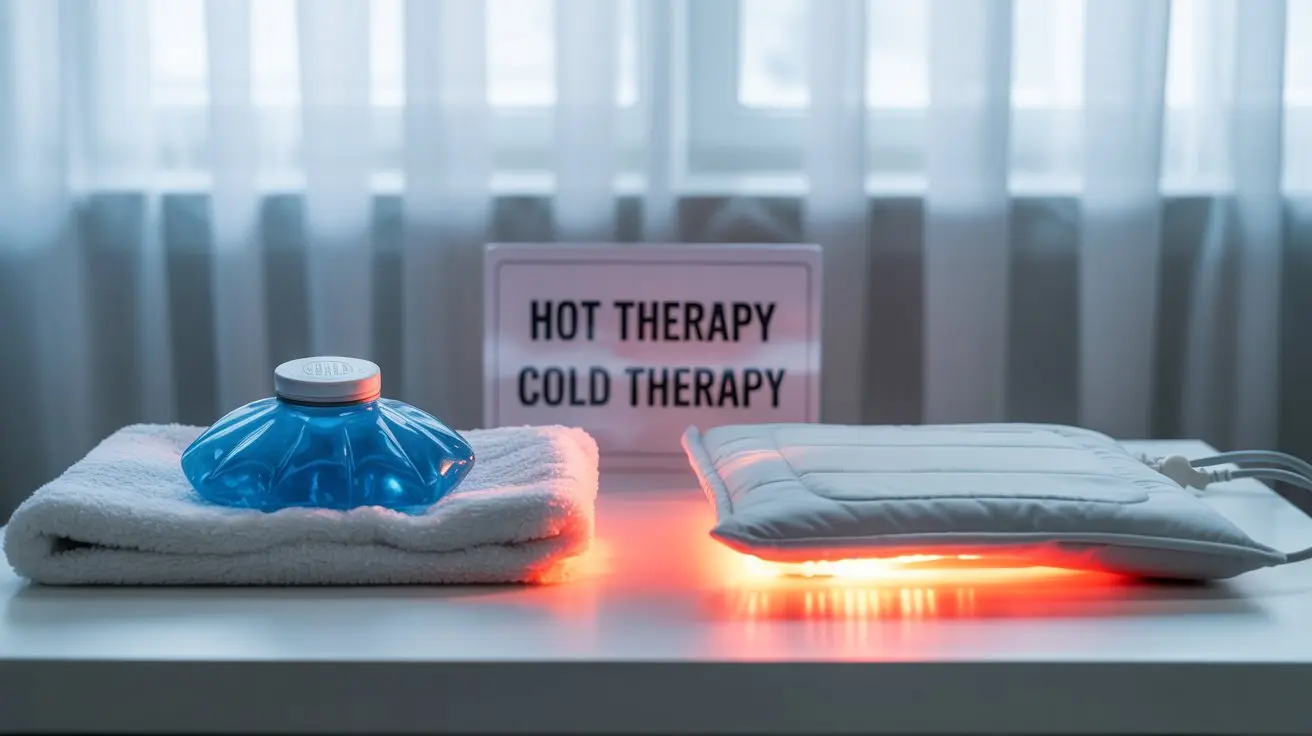
- Warmth (low-setting pad or shower, 10–15 min) helps tight, guarded muscles.
- Cold (wrapped pack, 5–10 min) helps sharp, activity-related spikes.
Either should take the edge off within an hour. If neither changes anything at all, that is worth noticing — it points back toward load and position as the driver rather than muscle tension, and toward reviewing how long you are holding any one posture.
Sleep setup checklist
- Side-lying with a pillow between knees and ankles.
- Small folded towel under the waist to maintain a neutral spine.
- Hug a pillow to square the chest if shoulders ache.
Morning stiffness is often the first symptom to respond once sleep positioning is corrected, usually within several nights rather than weeks. It is the cheapest change available and worth making before anything else.
Ergonomics that actually help
Sitting
- Lumbar support (small cushion where the low back curves).
- Hips slightly higher than knees; feet flat on the floor.
- Screen at eye level; elbows close to your sides.
This alignment reduces the repeated strain that builds through a laptop working day. It matters less than how often you get up, but the two together work better than either alone.
Standing
- Weight slightly forward over the mid-foot.
- One foot on a low stool; switch sides every few minutes for long standing.
- Avoid sustained spine extension.
Lifting and chores
- Hinge at the hips, keep the load close, exhale as you lift.
- Split groceries into lighter bags.
- Bring the laundry basket to a waist-height surface before sorting.
None of these are dramatic on their own. Collectively they remove a surprising amount of daily load from the sacroiliac joints, which is where most of this pain is generated.
Professional options: when home care isn’t enough
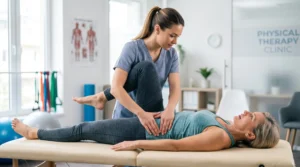
- Physical therapy: an individualized plan blending gentle mobility, hip and trunk strengthening, and pacing. A physical therapist with prenatal experience can also distinguish lumbar pain from pelvic girdle pain, which are managed differently.
- Prenatal massage: reduces muscle guarding and stress reactivity.
- Chiropractic (prenatal-trained): low-force methods may increase comfort.
- Acupuncture: may help pregnancy-related back pain when provided by trained practitioners.
- Medications: acetaminophen is commonly considered if non-drug strategies fall short; avoid NSAIDs unless your clinician specifically advises them.
- Support belts: a light pelvic or maternity belt can reduce sacroiliac shear during chores, shopping or prolonged standing. It is worth trialling for specific tasks rather than wearing all day, and is best introduced with your clinician’s agreement.
Prevention stack: build capacity, lower risk
- Walk most days; target 70–150 minutes per week in short bouts.
- Twice weekly, complete a 10–12 minute gentle strength circuit (wall sits, side-lying clamshells, supported hip hinge, light-band rows).
- Insert movement snacks during long desk blocks.
- Practice 2 minutes of slow nasal breathing after stressful moments.
- Hydrate consistently—one glass on waking, one mid-morning, one mid-afternoon.
A predictable routine matters more than any single exercise. Consistency across the week is what builds the endurance the pelvis is currently short of.
Myth vs. fact—clearing confusion
- Myth: Back pain can’t start this early.
Fact: Weeks 4–8 are a common onset period; biology supports it. - Myth: Complete rest will fix it.
Fact: Gentle, regular movement outperforms prolonged bed rest. Rest reduces the load but also reduces the endurance you need to tolerate it, so the relief is temporary. - Myth: Exercise is unsafe in the first trimester.
Fact: Appropriately scaled activity is protective; progress gradually with clinician clearance. - Myth: If pain is present, something is seriously wrong.
Fact: Most cases reflect normal adaptation; use the red-flag list to decide when to seek care. - Myth: Belts are only for late pregnancy.
Fact: A light pelvic belt can help earlier if approved by your clinician.
The emotional side: why reassurance matters
Pain is an alarm, and an alarm is not the same as danger. Knowing that this is a common, well-understood adaptation — and that you have specific things to do about it — reduces fear, and less fear means less protective muscle guarding, calmer breathing and better sleep. All three lower the volume of the signal. Keeping brief notes on what helps and what flares things is genuinely useful; the pattern usually becomes obvious within a week, and it makes any clinical appointment far more productive.
Three patterns that come up repeatedly
- The long-meeting pattern. Pain that is fine in the morning and unbearable by mid-afternoon almost always tracks uninterrupted sitting. A sit-stand rhythm through the working day, plus two short walks, tends to change this faster than any exercise prescription — because the problem was duration, not weakness.
- The standing-shift pattern. People on their feet all day usually describe pain that peaks in the evening and is worst on one side. This behaves like pelvic girdle load sensitivity, and it responds to shortening stride length, avoiding single-leg loading where possible, and trialling a light pelvic belt for the shift itself.
- The morning-stiffness pattern. Pain that is worst on waking and eases within twenty minutes is almost always a sleep-position problem rather than a pathology. Correcting knee and waist support usually settles it before any strengthening programme has had time to work.
Frequently asked questions
What causes low back pain in early pregnancy?
Hormonal ligament laxity, micro-postural shifts, and repetitive daily loads. Deconditioning or previous episodes can prime sensitive tissues.
Is low back pain in early pregnancy normal?
Yes—common and typically short-lived. Track red flags and address triggers like long sitting early.
Can back pain be a sign of miscarriage?
Mild, activity-related aches are usually benign. Pain with bleeding, fluid leakage, fever, or worsening cramps needs urgent medical review.
Which exercises are safest in the first trimester?
Walking, wall pelvic tilts, cat–cow within a pain-free range, side-lying clamshells and wall-supported hip hinges. Avoid deep twists, extreme backbends and contact sports. From around 16 weeks, swap any exercise done lying flat on your back for a side-lying, seated or all-fours version.
What sleep position helps most?
Side-lying with a pillow between the knees and ankles; add a small waist support to keep the spine neutral.
Are pelvic support belts helpful this early?
A light pelvic support belt can decrease sacroiliac shear during chores or prolonged standing.
Can I use heat or ice?
Yes. Warmth helps tight muscles; cold helps activity spikes. Protect the skin and limit sessions to short, comfortable intervals.
When should I see a physical therapist or doctor?
If home strategies don’t help within 1–2 weeks, or sooner if red flags appear. A clinician can tailor guidance and coordinate safe therapies.
Which pain medications are usually considered?
Discuss acetaminophen with your clinician; avoid NSAIDs unless specifically instructed.
Will it last the whole pregnancy?
Not necessarily. Many people improve as routines stabilize and strength returns. Prevention habits lower recurrence risk.
What the guidance actually emphasizes
Mainstream guidance for back pain in pregnancy is unglamorous and consistent: explanation, continued activity, sensible lifting and posture, and reassurance — with a clear list of symptoms that should prompt urgent contact. The NHS advice covers bending the knees when lifting, avoiding heavy objects, wearing flat shoes, sitting with support, resting adequately, warm baths or massage, and a supportive mattress, alongside the urgent-contact criteria set out earlier in this article. Notably, none of the first-line advice involves scans or injections. That is not an oversight — for this presentation, they rarely change what is done.
A practical 7-day reset plan
Day 1: Audit your day. Mark the three longest sitting blocks and insert two-minute walks. Note the time of day the ache is worst and what preceded it.
Day 2: Set up sleep supports (knee pillow, waist towel). Cat–cow × 8 breaths before bed.
Day 3: Add the 5–20 Movement Pattern and one 10-minute easy walk after lunch.
Day 4: Start the gentle strength circuit (10–12 minutes). Keep every move pain-free.
Day 5: Trial evening heat and reassess morning stiffness.
Day 6: Test a light pelvic belt during chores or shopping; remove if symptoms increase.
Day 7: Review notes. Keep what helped. If pain remains ≥4/10 most of the day, book an appointment and bring your log.
Quick reference: do/don’t table
Do
- Break up long sits.
- Support side-sleeping.
- Use gentle, frequent movement.
- Breathe slowly during flare-ups.
- Seek help early if red flags appear.
Don’t
- Push through sharp pain.
- Hold one posture for hours.
- Start new high-intensity routines.
- Self-prescribe NSAIDs.
- Ignore progressive symptoms.
Putting it together
Low back pain in early pregnancy is common, usually benign, and unusually responsive to small changes — because the underlying problem is load and endurance rather than damage. Correct the sleep position, break up the long sitting, add a few short stability holds, and give it a fortnight. Most people are meaningfully better in that window, and the habits built now hold up well into the later trimesters when the mechanical demands increase.
Keep the urgent list separate in your mind, though. Bleeding, fluid loss, fever or burning urination, rhythmic cramping pain, or any new leg weakness or bladder change are not part of ordinary adaptation, and they are worth a same-day phone call to your midwife or maternity unit rather than another week of self-management.
References
- NHS. Back pain in pregnancy. National Health Service, UK. https://www.nhs.uk/pregnancy/related-conditions/common-symptoms/back-pain/
- NHS. Exercise in pregnancy. National Health Service, UK. https://www.nhs.uk/pregnancy/keeping-well/exercise/