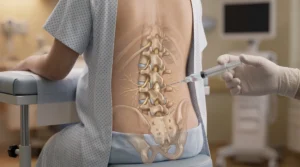
Low back pain is one of the most common aches women face—during busy workweeks, long commutes, study marathons, or around menstruation. Most of the time it’s blamed on posture, stress, or an ordinary muscle strain. But when you’re trying to conceive or notice other body changes, a big question pops up:
Is low back pain a sign of pregnancy, or just another everyday ache?
Low back pain on its own is a poor indicator of pregnancy. It is far too common in ordinary life to mean much by itself, and the NHS does not include it among the usual early signs. What matters far more is timing relative to your cycle, and the company the ache keeps — a missed period, sore breasts, nausea, unusual tiredness, needing to urinate more often. A test settles the question; back pain does not.
This article is about the period before you know. If you already have a positive test and your back is aching, the practical management side is covered separately in this guide to low back pain in early pregnancy and how to relieve it safely. What follows here is about interpreting an uncertain symptom: what it can mean, what it usually means, and when it needs attention regardless of the answer.
Key Takeaways
- Back pain is not on the standard list of early pregnancy signs. The NHS lists a missed period, nausea, tiredness, sore breasts, needing to pass urine more often, constipation, more vaginal discharge, and changes in taste or smell — back pain is not among them.
- The baseline rate is the problem. Back pain is so widespread in the general adult population that its presence barely shifts the odds either way.
- Timing does most of the work. Ache in the few days before a period is due looks like premenstrual discomfort. Ache that continues past a missed period, alongside other changes, is worth testing.
- A home test is more informative than any symptom. A positive home pregnancy test is almost certainly correct when the instructions are followed properly.
- Some back pain needs care regardless of pregnancy status. Fever, burning urination, vaginal bleeding, rhythmic cramping, or leg weakness and bladder change all require prompt assessment on their own merits.

Is Low Back Pain a Sign of Pregnancy?
Sometimes — but almost never as a stand-alone clue. The NHS list of signs and symptoms of pregnancy covers a missed or lighter period, nausea, tiredness, sore breasts, needing to urinate more often, constipation, increased vaginal discharge, and odd tastes or cravings. Back pain does not appear on it. That absence is informative: back pain can occur in pregnancy, but it is not one of the features that distinguishes a pregnant body from a tired, stressed, deskbound one.
So the honest answer depends on two things. First, timing: where you are in your cycle, and whether a period has been missed. Second, clustering: whether the ache arrived alone or alongside two or three of the symptoms above. A backache in isolation, three days before a period is due, is far more likely to be premenstrual or postural than a pregnancy sign. The same ache a week after a missed period, with breast tenderness and nausea, is a reason to take a test rather than keep guessing.
Myth vs Fact: Sorting Out the Confusion
Myth 1: “If your back hurts early on, you’re definitely pregnant.”
Fact: Plenty of people go through an entire pregnancy without significant back pain, and among those who do get it, it more often builds later — as ligaments soften and the load on the lower back and pelvis increases — than in the first few weeks. An early backache is therefore weak evidence in either direction. Someone who “just knew” because their back hurt is usually remembering the one time the guess was right.
Myth 2: “Back pain alone means pregnancy.”
Fact: The base rate defeats it. National survey data published by the CDC’s National Center for Health Statistics found that 39.0% of US adults reported back pain in the previous three months in 2019. When roughly two in five adults have back pain in any given three-month window, its presence tells you very little about anything specific. If nothing else has changed, everyday causes remain the more likely explanation.
Myth 3: “Back pain before your missed period is a giveaway.”
Fact: This is the hardest one, because premenstrual symptoms and very early pregnancy overlap almost completely — cramps, bloating, breast tenderness, mood changes and low backache appear in both. Progesterone rises in the luteal phase whether or not conception has occurred, so the body’s signals in that window are genuinely ambiguous. Until a period is missed or a test is positive, there is no symptom that reliably separates the two.
Myth 4: “Severe back pain early in pregnancy is normal—wait it out.”
Fact: Mild aching can be normal; severe, sudden, or worsening pain isn’t. Back pain with bleeding, fever, burning urination, cramping/contractions or other concerning signs needs prompt medical assessment to rule out complications (e.g., UTI, preterm issues, ectopic).
Myth 5: “Back pain only happens in the last trimester.”
Fact: It’s more common later as posture changes and load increases, but sensitive individuals can feel it earlier—especially with pre-existing back issues or rapid hormonal shifts that loosen ligaments.
Why Can Back Pain Happen During Pregnancy?
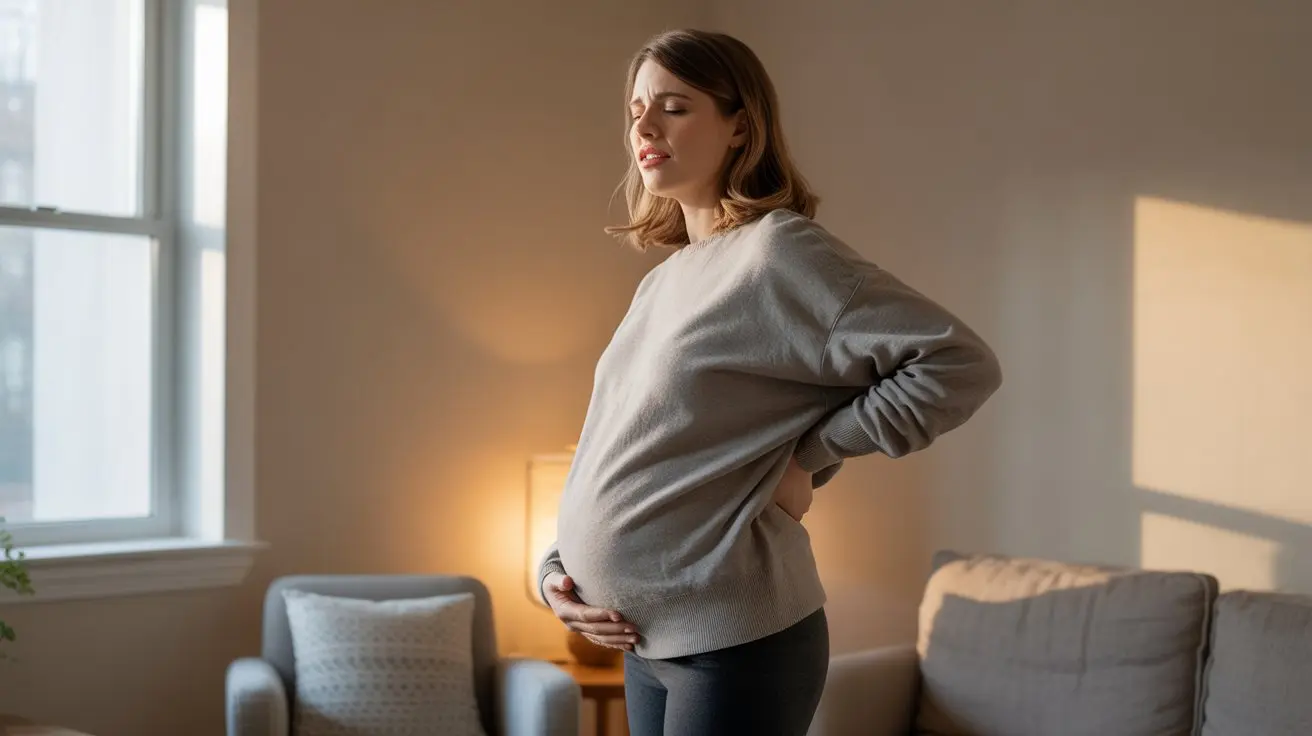
Knowing the mechanisms is useful for a specific reason: most of them only become significant later, which is exactly why an ache in week three is weak evidence and an ache in week thirty is unremarkable.
- Hormonal effects (relaxin, progesterone, estrogen): These prepare the pelvis for birth by loosening ligaments. The trade-off is reduced passive stability around the lumbar spine and sacroiliac joints, raising strain risk.
- Shift in center of gravity: As the uterus grows, lumbar lordosis increases. Paraspinal and gluteal muscles work harder to keep you upright.
- Muscle fatigue & endurance: If core and hip stabilizers are deconditioned, everyday tasks can tip tissues past their comfort zone.
- Fluid shifts & nerve irritation: Swelling can narrow spaces where nerves travel, sometimes provoking sciatica-like symptoms.
- Stress and sleep disruption: Stress increases muscle tone; poor sleep dials up pain sensitivity.
- Pelvic girdle pain: A distinct and common problem affecting the sacroiliac joints and the pubic symphysis rather than the lumbar spine itself. It typically flares with single-leg loading — stairs, getting out of a car, rolling in bed, putting on trousers standing up — and is managed differently from ordinary low back pain.
How Can You Tell Whether Your Back Pain Is Pregnancy-Related?
You cannot tell from the back pain itself. What you can do is count the company it keeps. One symptom means very little; three or four occurring together, particularly after a period is late, shifts the picture substantially. Run through the list below and note how many apply to you right now — not how many you can imagine applying.
- A missed or late period
- Breast tenderness or swelling
- Nausea/morning sickness or food aversions
- Fatigue beyond your norm
- Frequent urination
- Mood shifts
- Mild, period-like cramping plus back ache
None of these are diagnostic either. They shift probability, and probability is all symptoms can offer. The step that actually answers the question is a home test — and a positive home test result is almost certainly correct provided the instructions were followed properly. If the test is negative but your period has not arrived within a week or so, repeat it rather than reinterpreting your back.
👨⚕️ Dr. Arora’s Clinical Note:
Many patients ask me if a “new” low back ache means pregnancy—and here’s the clinically useful way to think about it: in the first few weeks, your uterus is still small, so a lot of early back pain is actually a tolerance + stability issue, not a “bump weight” issue. Sleep disruption, stress, and early hormonal shifts can make your usual posture or sitting load feel suddenly unbearable.A quick self-check I like (safe and simple): does the pain spike most with rolling in bed, standing on one leg to wear trousers, climbing stairs, or getting out of the car? That pattern often behaves more like pelvic girdle/SI-joint sensitivity than “tight muscles that need stretching.” In that situation, the counter-intuitive shortcut is: stabilize first, stretch later.
Try this 90-second “reset” twice a day for 3 days:
- 5 slow diaphragmatic breaths (ribs expand 360°, long exhale).
- 6 gentle pelvic tilts (small range, pain-free).
- 10-second glute squeeze (both sides) + relax, repeat 3 times.
If pain settles even 20–30%, it’s a strong clue you’ll do better with graded movement + hip/core endurance, not aggressive forward-fold stretching. And if pregnancy is possible, confirm with a test—don’t let back pain “decide” the story.
Non-Pregnancy Reasons Your Low Back May Hurt
When you are actively trying to conceive, every twinge acquires meaning it does not deserve. It is worth holding the ordinary explanations in view, because they account for the overwhelming majority of low backache in women of reproductive age:
- PMS: Hormone fluctuations commonly cause back and pelvic aching.
- Posture & sedentary time: Long sitting, study or driving sessions.
- Muscle strain: Lifting, awkward twists, weekend projects.
- Stress: Tension keeps muscles “on,” increasing soreness.
- Spinal conditions: Disc irritation, arthritis, stenosis, scoliosis.
Side-by-Side: Pregnancy vs PMS vs Lifestyle Back Pain
| Feature | Pregnancy-linked back pain | PMS-related back pain | Lifestyle/postural back pain |
|---|---|---|---|
| Timing | Often after missed period; escalates in 2nd–3rd trimester | Peaks 1–3 days before period | Any time; after long sitting or exertion |
| Other signs | Nausea, breast tenderness, fatigue, urinary frequency | Bloating, mood shifts, cramps | Stiffness; improves with breaks |
| Pain quality | Dull/achey; sacrum/hips; may radiate | Crampy pelvic + low back | Stiff or sharp with movement |
| Responds to | Pillows, posture, gentle movement | Onset of period, OTCs as advised | Micro-breaks, ergonomic fixes |
| Pregnancy clue? | Low alone; stronger with other symptoms & positive test | No | No |
Age- and Life-Stage Patterns
- Teens and 20s: Study posture, training load and premenstrual symptoms account for most of it. Pregnancy is rarely the explanation unless other clear symptoms are present.
- 30s: Childcare lifting and desk work add load; symptom-watching is common when trying to conceive.
- 40s: Perimenopausal hormone shifts mimic early pregnancy; an irregular cycle can muddy timing.
When Does Back Pain Need Medical Attention, Pregnant or Not?
Some patterns need assessment regardless of whether you turn out to be pregnant. Back pain with vaginal bleeding, fever or chills, burning on passing urine, rhythmic cramping, or any numbness, weakness or bladder change should be reviewed promptly rather than watched. Severe pain that no position relieves also belongs in this group, whatever the cause proves to be.
- Vaginal bleeding, or any leakage of fluid. Why it matters: bleeding with pain in someone who may be pregnant needs assessment to exclude early pregnancy complications, including ectopic pregnancy, which can present with one-sided pain before a pregnancy is confirmed.
- Fever or chills, or burning and urgency on passing urine. Why it matters: these point to a urinary tract infection that may have reached the kidney. Urinary infections are more likely and more consequential in pregnancy, and they are straightforward to test for with a urine sample.
- Rhythmic cramping that comes and goes in a pattern. Why it matters: pain that arrives in waves at regular intervals behaves like uterine activity rather than muscle. In a confirmed pregnancy past the first trimester, that requires same-day obstetric contact.
- Numbness or weakness in a leg or foot, or a change in bladder or bowel control. Why it matters: this raises the possibility of significant nerve compression. Loss of feeling in the legs, buttocks or genitals is a reason to seek emergency care immediately, not to wait for an appointment.
- Pain that is severe, escalating, or unrelieved by any position. Why it matters: mechanical back pain almost always has a position that helps. Pain that ignores position is behaving like something other than strained tissue.
How Clinicians Evaluate Back Pain When Pregnancy Is Possible
If you bring this question to a clinician, the assessment is short and mostly conversational. It is designed to answer two things at once: could this be pregnancy, and is anything about the back pain itself concerning.
- History & timing: Last menstrual period, cycle length, contraception, fertility treatments, onset/progression of pain.
- Associated symptoms: Nausea, breast changes, urinary symptoms, bleeding, fever.
- Physical exam: Spinal motion, sacroiliac provocation tests, neurologic screen.
- Testing: Urine or serum hCG to confirm pregnancy when indicated.
- Imaging: Usually avoided early; ultrasound considered for obstetric concerns; MRI without contrast if red flags suggest serious spine pathology and benefits outweigh risks.
What Should You Do While You Wait to Find Out?
Treat the back pain on its own terms, using measures that are safe whether or not you are pregnant. That means gentle, frequent movement rather than bed rest, breaking up long sitting, side-lying with a pillow between the knees, and warmth rather than deep tissue work. Hold off on new high-intensity training and on any medication decision until the test result is known.
- Move little and often. Two or three minutes of walking every 30 to 40 minutes does more than one long session, and it is appropriate at any stage.
- Adjust the position, not the activity level. If sitting is the trigger, stand more; if standing is, sit periodically and put one foot on a low step.
- Set up sleep. Side-lying with a pillow between the knees and a small folded towel under the waist is the single change most people notice within a few nights.
- Be cautious with medication. If pregnancy is possible, check any painkiller with a pharmacist or clinician before taking it rather than after. This is the main reason not to simply carry on as usual.
- Take the test. It is the only step here that actually resolves the uncertainty, and it changes what is safe to do next.
If the test is positive, the plan changes from interpretation to management — pacing, ergonomics, sleep setup, safe strengthening and the specific warning signs that need obstetric contact. That is covered in detail in the companion guide on managing low back pain in early pregnancy.
Note: For medications, always follow your obstetric provider’s guidance. Many clinicians prefer non-drug strategies first and individualized advice if medication is needed.
Prevention Playbook (Pregnancy-safe and Everyday)
- Stay active: Regular, comfortable movement keeps tissues resilient.
- Strengthen what matters: glute medius, deep abdominals, mid-back posture muscles.
- Sit smarter: hips slightly above knees; lumbar support; screen at eye level.
- Lift like a pro: hinge at hips, keep the load close, exhale with effort.
- Stress tools: breathing drills, short mindfulness breaks, and consistent sleep routines.
A Three-Step Way to Settle It
- Check for red flags first. Bleeding, fever, burning urination, rhythmic cramping, leg weakness or bladder change means arranging assessment now, before you think about pregnancy tests at all.
- Count the other symptoms, honestly. Zero or one alongside the backache, with a period not yet due, points strongly toward ordinary causes. Three or more, with a period late, points toward testing.
- Test rather than deliberate. A home test taken from the day a period is missed answers in minutes what no amount of symptom interpretation can. If it is negative and your period still does not arrive, repeat it after a week.
Frequently Asked Questions
1) Is low back pain a sign of pregnancy before a missed period?
Usually no. Before a period is missed, premenstrual backache is the far more likely explanation, and the two are indistinguishable by feel. Testing too early can also give a false negative, so a test taken from the day the period is due is more informative than one taken earlier.
2) Does every pregnant woman get back pain?
No. Back pain is common in pregnancy but far from universal, and when it does appear it tends to build in the second and third trimesters as ligaments soften and load increases — not in the first few weeks.
3) Can back pain be the very first sign?
Rarely, and almost never on its own. It carries weight only when it arrives alongside nausea, breast changes, unusual tiredness and a missed period — and even then, the test is what confirms it.
4) What does pregnancy-related back pain feel like?
Often a dull, achy pressure around the sacrum and hips, sometimes radiating into the thighs or buttock (especially with pelvic girdle involvement).
5) How early can it start?
Some notice it in the first trimester, but for most it builds later, as posture and load change through the second and third trimesters. Very early back pain is more often explained by sleep disruption, stress and unchanged desk habits than by the pregnancy itself.
6) What red flags should prompt urgent care?
Back pain with vaginal bleeding, leakage of fluid, fever or chills, burning on passing urine, or rhythmic cramping needs prompt evaluation. Loss of feeling in the legs, buttocks or genitals, or a change in bladder or bowel control, needs emergency care rather than an appointment.
7) What are safe, non-drug ways to help?
Breaking up long sitting, side-sleeping with a pillow between the knees, short frequent walks, warm baths or a low-setting heat pad, and attention to how you lift and rise from chairs. Hold off on new intense training and on medication decisions until you know whether you are pregnant.
8) Do I need imaging?
Usually not early in routine cases. Ultrasound is used for obstetric concerns; MRI (no contrast) is reserved for specific spine red flags when benefits outweigh risks—decided with your clinician.
9) I’m active—should I stop exercising?
Generally no. Regular moderate activity is appropriate in uncomplicated pregnancies and is protective for back pain. What usually needs adjusting is intensity and choice of movement rather than volume — and any new programme should be discussed once pregnancy is confirmed.
10) Bottom line—so is low back pain a sign of pregnancy?
It can be part of the picture, but not a stand-alone sign. Pair your symptoms with timing, take a test, and seek care for red flags.
Conclusion
So—is low back pain a sign of pregnancy? It can be one piece of the puzzle, but it’s not reliable in isolation. Because back pain is so common in everyday life and during pregnancy, the smarter approach is to look for symptom clusters, confirm with a pregnancy test, and watch for red flags.
In the meantime, treat the back on its own terms: move little and often, break up long sitting, set up side-lying sleep with a pillow between the knees, and check any painkiller before taking it if pregnancy is possible. If bleeding, fever, burning urination, rhythmic cramping or any leg weakness or bladder change appears, arrange assessment promptly — those need attention whatever the test says.
And if the test comes back positive, the question changes from interpretation to management. The companion guide on low back pain in early pregnancy picks up from there, with safe relief strategies and the specific patterns that warrant same-day obstetric contact.
References
- NHS. Signs and symptoms of pregnancy. National Health Service, UK. NHS: Signs and symptoms of pregnancy
- Lucas JW, Connor EM, Bose J. Back, Lower Limb, and Upper Limb Pain Among U.S. Adults, 2019. NCHS Data Brief No. 415. National Center for Health Statistics; July 2021. NCHS Data Brief No. 415