This guide covers how to adjust a weighted vest and resume walking after a flare. If you have osteoporosis, a spinal fracture, recent surgery, balance problems or ongoing leg symptoms, ask a clinician before using one. See when to get medical advice about weighted vest use.
Expert Review: This article includes clinical insights from Dr. Vivek Arora, a physical therapist (physiotherapist) with 20+ years of experience.
Back pain while wearing a weighted vest is a reason to pause and review what you were doing. Fit, load, duration and the activity all affect how the vest feels. Symptoms that continue without the vest or affect your legs may need assessment.
This guide covers getting the fit right and returning to walking if added weight suits you. If walking without a vest meets your goal, it is a reasonable choice.
Key takeaways
- Start with an unloaded walk. If returning to a vest is appropriate for you, use the lightest setting first and keep the first trial short.
- Take the vest off before tasks that make it harder to move or balance, especially if bending already hurts.
- In a trial of older adults with obesity who were losing weight, vest use did not prevent hip bone loss. The trial did not establish a starting load for someone with back pain.
- Get urgent care for sudden severe spinal pain, particularly after a fall or with osteoporosis.
Why does the vest feel different when you walk or bend?
Added weight increases the work of walking. Comfort and steadiness depend on the vest’s fit, how much it weighs, the route and what you can currently tolerate.
Vest versus backpack
A vest and a backpack carry weight in different places. Either can shift your balance or change how you move. There is no evidence that one is always better for a painful back.
What changes when you bend forward
A vest adds weight to an everyday task such as loading the dishwasher. If the task already triggers symptoms, try it without the vest. See what to do when bending aggravates back pain.

What changes as a walk gets longer?
Note whether the vest starts bouncing, digging in or pulling you off balance. If you become uncomfortable or unsteady, stop and take it off.
If walking also hurts without a vest, see back symptoms while walking and consider assessment for persistent or recurring symptoms.
What should you report about your symptoms?
The location and timing can help a clinician understand your symptoms. They cannot tell you which tissue is causing the pain.
| Pattern | What to note | What to do |
|---|---|---|
| Aching during or after a walk | Route, load and wear time | Take off the vest and check whether ordinary walking feels comfortable |
| Pain standing or leaning back | Whether it happens without the vest | Pause added load and get advice if it keeps happening |
| Pain during bending or lifting | The task and whether the vest shifts | Take it off before repeating the task |
| One-sided back or buttock pain | Whether the fit feels even and whether symptoms spread | Check the fit and get advice for persistent pain |
| Leg pain, tingling or altered feeling | How far it travels and whether strength or walking has changed | Stop using the vest and seek care for persistent symptoms. New weakness needs prompt assessment. |
| Shoulder or neck discomfort or hand tingling | Strap pressure, rubbing or difficulty breathing freely | Remove the vest. Seek care if tingling persists or weakness develops. |
| Sudden severe spinal pain, especially after a fall or with osteoporosis | Recent injury or fracture risk | Stop and seek urgent assessment |
Improvement with less weight or time is worth noting. It does not rule out a condition or identify the source. Get assessed if symptoms recur, persist without the vest or disrupt sleep.
How do you restart after a vest-related flare?
Wait until walking without the vest feels comfortable. If a clinician has advised that using a vest is appropriate, start with the lightest available setting for a short, easy walk on level ground. Increase one thing at a time. Research in older adults uses different loads and does not establish a single starting weight or safe upper limit for people with back pain.
What should you look for in the fit?
Choose an adjustable design that you can put on and take off safely. Follow the manufacturer’s instructions for securing weights. The vest should allow comfortable breathing, movement and balance.
Try the vest without added plates, where the design allows, to check that your usual range of movement and breathing feel comfortable.
A practical fit check
Follow the manufacturer’s adjustment steps before wearing the vest outdoors.
- Adjust and secure the straps. Check for rubbing or pressure when you stand and walk.
- Take a few easy steps in a clear space if you feel steady. Stop if the vest shifts, bounces or pulls you off balance.
- Use the mirror to check whether the vest hangs evenly. Your posture alone cannot tell you whether a fit is safe.
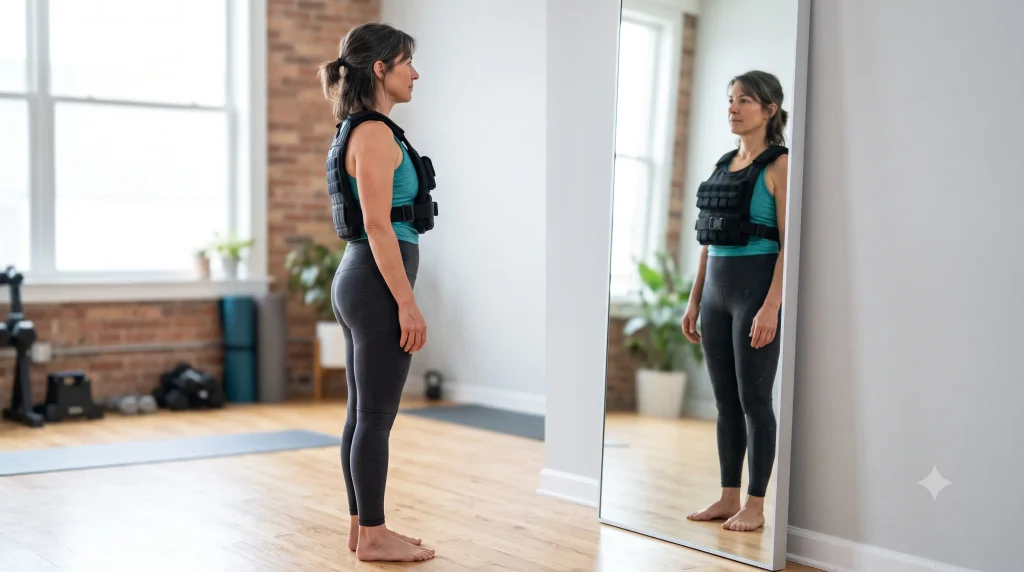
- Sit and stand if those movements feel comfortable. Check whether the hem digs in or a pocket catches.
- Take a comfortable full breath. Loosen or remove the vest if it restricts breathing.
- Stop for hand tingling, numbness or weakness. Get advice if it persists or keeps returning.
When is weighted vest back pain a red flag?
Back pain during a vest walk has several possible causes. Review these warning signs before trying a fit adjustment.
- Seek urgent medical assessment for sudden severe spinal pain, especially with osteoporosis, a previous fragility fracture, a fall or long-term steroid use.
- Get emergency care now for new saddle numbness, difficulty passing or controlling urine, loss of bowel control or sensation, new sciatica in both legs or severe or worsening weakness or numbness in both legs.
- Seek prompt medical assessment for new foot drop or new or worsening leg weakness.
- Stop and call emergency services for chest pressure or sudden severe breathlessness, especially with faintness or pain spreading to the arm or jaw.
- Seek urgent assessment for new back pain with fever or feeling very unwell. Report a history of cancer with new pain, unexplained weight loss or persistent worsening pain.
When does vest-related back pain need a scan?
A scan may help when the clinician suspects a fracture, a serious condition or nerve compression and the result would change care. Age-related findings can appear in people without symptoms.
A clinician chooses tests based on suspected fracture and symptoms. Bone density testing helps assess future fracture risk. See what a low back X-ray report can tell you.
From the Clinic: Dr. Arora’s Expert Insight
When symptoms arise, record which activity you were doing and how long the vest had been on, including time outside the walk.
Check whether you also notice pain or imbalance without the vest. This is useful information to share during an assessment.
A return to added weight is optional. Comfort, ease of movement and function are practical guides when a clinician considers it appropriate.
What helps when vest pain starts?
Remove the vest. Continue ordinary movement as tolerated if you have no warning signs. Seek advice if pain persists, worsens or makes normal walking difficult.
What to do today
- Set the vest aside while symptoms are worsening or limiting your usual activities.
- Try comfortable movement without the vest if it feels safe.
- Note any change in pain, leg symptoms or balance.
If you are unsure whether to restart because pain continues or keeps coming back, arrange assessment.
What can you check before you return?
- Get the appropriate care for the warning signs above.
- Check whether you walk comfortably without added weight.
- If a vest is suitable, check fit and try a short, easy walk. Avoid changing the load, time and terrain together.
- Stop if pain spreads, becomes worse or persists. Report recurring numbness, tingling or weakness.
How can you work back toward vested walking?
Return to ordinary activity first. If resuming the vest is appropriate, use a comfortable load and route and review how you feel during and after.
| Stage | Focus | What to check |
|---|---|---|
| Start without a vest | Comfortable walking or other daily movement | You can repeat it without worsening symptoms |
| Build activity | Choose strength or endurance work that suits your goals | You can perform it steadily and comfortably |
| Reintroduce the vest if appropriate | Light load and a short, easy walk | You can walk without increased symptoms, rubbing or imbalance |
| Consider a gradual increase | Change the time, load or terrain one at a time | Stop and review the change if it brings symptoms back |
Examples of exercises a clinician may suggest
- A supported trunk exercise such as a bird dog may be an option if the position is comfortable.

- A modified side plank is one option for working on trunk endurance, if suitable for you.
- A bridge or supported sit-to-stand can be adapted to work on hip and leg strength.
- Rows and light carries are other options if you can control the load. A clinician can suggest alternatives.
See examples of exercises for back pain.
Do’s and don’ts for a vest-sensitive back
- Put the vest on and remove it in a stable place where you can manage its weight.
- Remove the vest if the task makes lifting, bending or balancing harder.
- Get advice before adding impact or weight if you have high fracture risk, balance problems or a recent injury.
- Stop if the vest leaves you unsteady or produces spreading pain or altered sensation.
What if your back still hurts after fixing the vest?
Seek assessment if pain continues without the vest, keeps recurring or interferes with normal activities.
A clinician can discuss treatment based on the cause and any neurological findings. A vest is not needed to resume walking or build strength.
Weighted vest back pain: what to change first
Pause the vest, check your comfort during unweighted activity and seek care if there are warning signs. If you choose to restart, check fit and change one variable at a time.
Frequently asked questions
1. Is 20 lb too heavy for a weighted vest?
Twenty pounds (9 kg) can be a substantial load. Whether it is appropriate depends on your symptoms, health, experience and intended activity. If a vest is suitable for you, build from a lighter load that you can tolerate.
2. Can a weighted vest cause a herniated disc?
Pain during a vest walk cannot show whether a disc has herniated. If you have a diagnosed disc problem, see options for care after disc herniation.
3. Is a weighted vest safe if I have osteoporosis but no fractures?
Ask the clinician managing your bone health whether added load is appropriate, even if you have not had a fracture.
4. Can I wear a weighted vest while doing housework?
Take it off if the task makes balance, breathing or movement harder, or pain is already provoked by the task.
5. How long does weighted vest back pain take to go away?
Recovery time varies. Seek assessment if symptoms persist without the vest, worsen or interfere with sleep or ordinary activity.
6. Can a weighted vest permanently damage my spine?
Pain alone cannot tell whether there is damage. Sudden severe spinal pain after a fall or with osteoporosis needs urgent assessment.
Medical disclaimer
This guide gives general information on fit and activity. Follow your clinician’s advice if you have a medical condition or new symptoms.
References
- Beavers and colleagues. Weighted vest use or resistance exercise to offset weight loss-associated bone loss in older adults. JAMA Network Open, 2025.
- Wang and colleagues. Weighted vest exercise and bone health in middle-aged and older adults. Osteoporosis International, 2026.