Check for emergency symptoms before stretching. Get emergency care now for new difficulty passing or controlling urine, new loss of bowel control or sensation, numbness around the genitals or anus, or new sciatic pain down both legs. Severe or worsening weakness or numbness in both legs also needs emergency care.
Expert Review: This article includes clinical insights from Dr. Vivek Arora, a physical therapist (physiotherapist) with 20+ years of experience.
A piriformis stretch is one option for comfortable hip movement. Buttock pain can come from several sources. A clinician can help decide whether a stretch is suitable or another approach may fit better.
Key takeaways
- The piriformis sits deep in the buttock and helps move the hip. Changing the position can change how a stretch feels.
- Use a comfortable range and a stable position. Back movement during a stretch does not diagnose a disc problem.
- Stop if stretching increases shooting pain, tingling or numbness. Seek care for new weakness or the warning signs above.
- A mild stretch near the buttock is possible. A groin pinch, knee pain or increasing leg symptoms is a reason to ease off.
- If you need more than stretching, a clinician can help choose other movements or strengthening suited to your symptoms.
What is the piriformis, and why does stretching it feel so hit-or-miss?
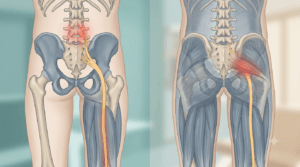
The piriformis runs from the sacrum to the upper thigh bone and is close to the sciatic nerve. Anatomy varies, and this relationship alone cannot explain a person’s symptoms.

Different hip positions change how the muscle contributes to movement. Feeling a stretch cannot tell which tissue is causing your pain.
Should you be doing these stretches at all?
If buttock pain spreads into the leg, stretching may be uncomfortable or unsuitable. Get advice for persistent or worsening leg symptoms.
What should you report before starting?
- Where does the pain travel?
- Is there new or worsening tingling or altered feeling?
- Does sitting, moving, coughing or sneezing affect symptoms?
- Is the leg weaker, or is your foot catching when walking?
- Have you had a recent hip or knee operation or been given movement restrictions?
Symptoms such as pain spreading below the knee, numbness, tingling or weakness warrant assessment if they persist or worsen. A home checklist cannot distinguish a spinal nerve problem from a buttock muscle problem. Skip stretches that increase leg symptoms.
Symptoms around the buttock can overlap with lumbar nerve root pain and deep gluteal symptoms. A systematic review found important limits in the research on diagnostic features.
Symptoms that need assessment before any stretching
- Get emergency care now for new saddle numbness, difficulty passing or controlling urine, loss of bowel control or sensation, new sciatic pain in both legs, or severe or worsening weakness or numbness in both legs.
- Seek prompt assessment for new foot drop or new or worsening leg weakness.
- Seek urgent medical assessment for back or buttock pain with fever or feeling very unwell.
- Report persistent worsening symptoms, unexplained weight loss or a history of cancer with new pain to a clinician.
- Seek urgent assessment for severe pain after a fall or if you cannot bear weight. Discuss any recent surgery or restrictions before stretching.
When is imaging actually needed for buttock and leg pain?
Imaging may be needed if a clinician suspects a serious condition or if it would change care. Buttock symptoms can have several causes, and diagnosis depends on the history and examination.
UK national guidance is explicit that routine imaging should not be offered for low back pain and sciatica outside a specialist setting, and that scans belong where the result would change management. An MRI at three weeks often shows a disc bulge equally present in people with no pain at all, and once that is on paper it is hard to un-see. What a scan can do is confirm whether a compressed nerve root matches the leg symptoms — the correspondence that makes injection or surgical decisions possible.
From the Clinic: Dr. Arora’s Expert Insight
Tell your clinician what you feel during and after any stretch and which ordinary activities are uncomfortable.
A suitable movement should feel manageable. You do not need to force more range to get a useful result.
Ask for an alternative if the setup strains your hip or knee, feels unsteady or makes leg symptoms worse.
Five hip stretch variations to discuss or try when appropriate
Choose one comfortable option if stretching is suitable for you. Follow any instructions from your treating team after a hip or knee operation.
| Variation | Position | What may feel comfortable | How to start | When to skip or ask first |
|---|---|---|---|---|
| Supine figure-four | On your back with one ankle over the opposite thigh | A mild buttock stretch | Keep the supporting foot down or lift it a little | Avoid if it pinches the hip, hurts the knee or conflicts with surgical restrictions |
| Knee toward the opposite shoulder | On your back, gently guide the thigh across | A mild sensation near the buttock | Use a small range | Stop if it sends symptoms farther into the leg |
| Seated figure-four | Sit on a stable chair with one ankle over the opposite thigh | Mild stretch in the back of the hip | Stay upright or lean forward a little if comfortable | Skip if the hip or knee hurts or the position feels unsteady |
| Supported pigeon-style position | Support the body in a comfortable floor position if appropriate | A mild buttock stretch | Use the easier range and firm support | Choose another option if floor access, hip or knee pain makes it difficult |
| Supported standing figure-four | Use a sturdy support and remain in control | A mild stretch if the balance demand is manageable | Choose a seated or lying version if you need more stability | Skip if unsteady or if your hip or knee hurts |
1. Supine figure-four (thread the needle)
On your back with knees bent, rest one ankle across the opposite thigh. Keep the supporting foot down first. If comfortable, hold behind the supporting thigh and lift it a little.
A mild buttock stretch is enough. Stop for a sharp groin pinch, knee pain or symptoms travelling down the leg.
- Keep your breathing comfortable and reduce the range if you feel strain.
- Avoid pressing hard on the crossed knee.
You can leave the supporting foot down for an easier setup.
2. Supine knee to opposite shoulder
On your back, support one thigh and guide it gently across the body. Choose a small comfortable range.
The movement may be felt around the outer hip or buttock. Stop if it increases pain, tingling or numbness.
- Use a position that feels steady and comfortable.
- Do not force the knee toward your chest or shoulder.
Try a smaller movement or leave this variation out if you feel pinching.
3. Seated figure-four with a hinge from the hips
Sit on a stable chair with feet supported. If comfortable, rest one ankle on the opposite thigh. You can stay upright or lean slightly forward.
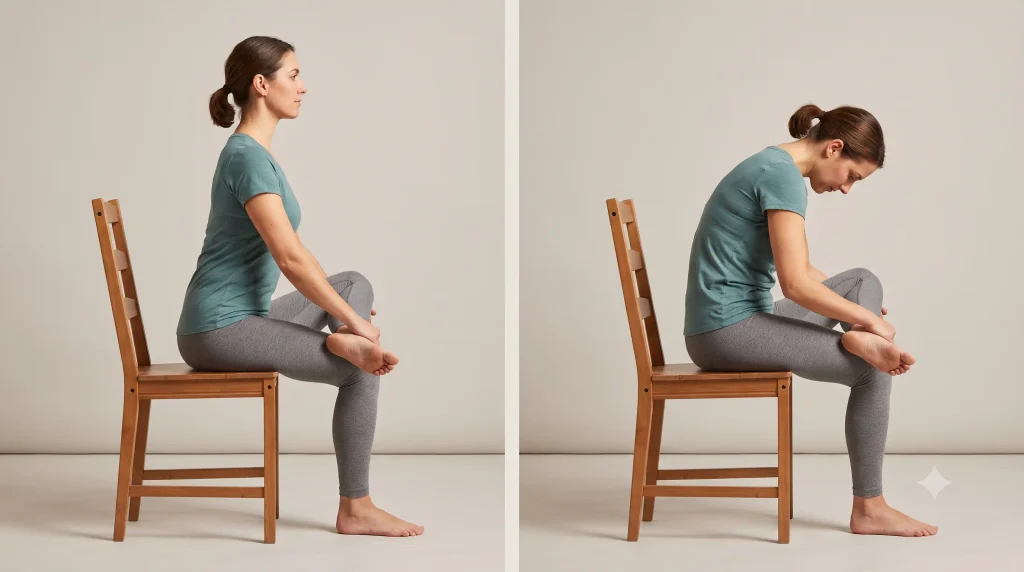
A mild buttock stretch is enough. Stop for sharp pain, tingling or numbness.
- Use a range you can control and a chair that will not slide.
- Avoid pushing downward on the crossed knee.
If crossing the leg is uncomfortable, choose a different option.
4. Prone pigeon-style variation with modifications
Start on hands and knees if you can comfortably get to the floor. Bring one bent knee forward and let the shin rest at a natural angle. Keep your hands on a firm support and use a small range. Choose a lying or seated option if you have hip or knee pain or cannot control the floor position.
Keep the sense of stretch mild. Leave it out if the knee or hip feels painful.
- Avoid forcing the front leg farther around than comfortably possible.
- Use support if needed, or choose an easier variation.
A seated or lying variation is a practical alternative that avoids the floor position.
5. Supported standing figure-four
Hold a fixed counter with both hands and bend the supporting knee slightly. If steady, rest the other ankle lightly across the supporting thigh. Stay with the support and use a small range. Choose a seated or lying version if you feel unsteady.
Ease off if you feel unsteady, your standing knee hurts or symptoms spread.
- Stay in a position you can control.
- Stop rather than reaching farther if you feel you may lose balance.
Ask for an alternative after hip or knee surgery or if you have difficulty balancing.
How can you fit stretching into a broader plan?
If stretching suits you, start with one comfortable variation. Choose a range and amount you can do without worsening symptoms.

The single-leg bridge shown here is an example of a strengthening exercise. A clinician can suggest a version that fits your current ability.
| Stage | Focus | What to try | What to review |
|---|---|---|---|
| Explore comfort | Find a position you can manage | One suitable variation or a comfortable activity | Stop if symptoms spread or worsen |
| Build movement | Keep daily activity manageable | Comfortable walking or a different position if needed | Review sitting, walking and symptoms |
| Add strength if needed | Work toward daily goals | Gradual hip or leg exercises appropriate to you | Keep attention on function, strength and sensation |
| Return to usual demands | Build back toward work or sport | Increase relevant activity gradually | Review readiness with your clinician if symptoms persist |
What to do today
- Use the warning signs above. Stop a stretch if it sends symptoms further down your leg or increases numbness. Arrange assessment if symptoms persist or worsen.
- Try one suitable movement in a comfortable range if it does not increase leg symptoms.
- Break up long periods of sitting when it helps.
- Adjust seating for comfort without forcing a fixed posture.
- Notice how you feel during and after the movement. Stop for persistent worsening.
Do’s and don’ts specific to this stretch
- Do stop at the first clear stretch, not the strongest. This muscle sits alongside a nerve; maximum tension is not the goal.
- Let the hip settle into a comfortable position without forcing the shin or knee.
- Choose a variation that suits your symptoms and any restrictions.
- Move slowly and avoid forcing extra range.
- Avoid firm pressure that increases tingling, numbness or shooting pain.
- Leave out deeper positions when they aggravate symptoms.
When conservative care stalls
Arrange assessment if buttock or leg symptoms persist, worsen or limit activity. Seek care sooner for new weakness or the emergency signs above.
A specialist may discuss other options for a confirmed nerve problem. Recommendations depend on the cause and response to care.
The bottom line
Use a comfortable movement if it is appropriate. New weakness, numbness or worsening leg symptoms need assessment rather than more forceful stretching.
Frequently asked questions
How long before piriformis stretches start to help?
The response varies. If stretching does not help or symptoms worsen, get reassessed rather than assuming you need to stretch harder.
Why do I feel the stretch in my groin instead of my buttock?
A groin pinch can have several causes. Ease off and try another position if appropriate. Get advice for persistent groin pain.
Is it normal for the stretch to make my leg tingle?
Stop if you notice tingling, numbness or shooting symptoms. Get advice if they persist or recur, and seek prompt care for new weakness.
Can I still stretch if I have a diagnosed disc herniation?
It depends on your symptoms and examination. Ask whether hip stretching fits your plan and ease off if leg symptoms increase.
Should I foam roll or use a ball on my piriformis?
Avoid hard pressure that reproduces leg symptoms. Ask what is suitable if you have ongoing pain, numbness or a distinct lump.
Will stretching alone fix it, or do I need strengthening too?
Stretching may feel comfortable for some people, while others benefit from different activity or strengthening. A clinician can help decide what fits your symptoms.
Medical disclaimer
This article gives general information about hip stretches. Follow individual restrictions after surgery or injury and use the urgent and emergency guidance above when appropriate.
References
- Hopayian K, Danielyan A. Systematic review of the clinical features attributed to piriformis syndrome. Eur J Orthop Surg Traumatol. 2018;28:155–164.
- National Institute for Health and Care Excellence. Low back pain and sciatica in over 16s: assessment and management (NG59). Published 2016, last updated 2020.