Expert Review: This article includes clinical insights from Dr. Vivek Arora, a physical therapist (physiotherapist) with 20+ years of experience.
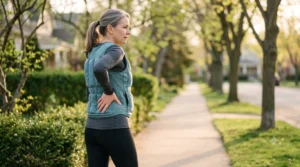
A painful back after lifting or an ordinary movement may be described as a lumbosacral strain. Strictly, a strain involves muscle or tendon; a ligament injury is a sprain. The label is sometimes used broadly for acute low back pain and does not identify every injured tissue.
Many uncomplicated episodes improve, but the diagnosis should fit an assessment. This guide explains the term, reasonable activity options and the warning signs that require a different pathway.
Key takeaways
- A strain involves muscle or tendon; a sprain involves a ligament. The label does not prove that the discs, nerves or other structures are normal.
- Local back or upper-buttock pain and stiffness can occur with a strain, but the same pattern occurs in other conditions.
- Many acute back-pain episodes improve over a few weeks. A universal strain-healing deadline or first-week peak is not established.
- Pain and guarding can be intense. Severity alone neither proves major injury nor excludes a condition needing assessment.
- Imaging is rarely useful for a straightforward strain and often finds age-related changes that were already there and are not the cause.
What is a lumbosacral strain?
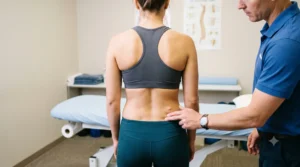
A lumbosacral strain refers to injury of muscle or tendon in the lower-back region. A suspected strain may cause pain, stiffness or guarding, but symptoms and routine examination often cannot identify the precise tissue. Other conditions can coexist.
A sprain involves a ligament rather than muscle or tendon. The terms may be used loosely in back-pain notes, but they are not anatomically identical. Ask what the clinician means and which findings support the plan.
A strain label does not mean the pain must be mild. Severe or rapidly worsening pain deserves assessment in context rather than automatic reassurance that it is only protective muscle activity.
What does a lumbosacral strain feel like?
A suspected strain may cause aching or sharper pain during bending, turning or rising. These symptoms are not specific. Tingling, numbness or weakness can suggest a coexisting nerve or other problem and should not simply be folded into the strain label.
Symptoms may vary with rest, position or activity, but a comfortable position cannot rule out a serious cause. A worse next day, guarded posture or sideways lean does not prove uncomplicated muscle spasm. See back pain with a sideways lean for assessment considerations.
How is it different from a disc problem or SI joint pain?
Location and movement can guide questions, but they cannot reliably distinguish strain, disc, SI or facet pain. A disc condition may cause local pain without sciatica, while other conditions may also produce leg symptoms.
| Observation | Possible relevance | Limit |
|---|---|---|
| Local back or buttock pain | Strain and several other back conditions | Location alone cannot identify injured tissue |
| Radiating pain or altered sensation | Possible nerve or referred pain | A disc diagnosis is not established by distance or quality |
| Pain near a pelvic dimple | Back, hip, SI or another source | Cannot diagnose the SI joint from one spot |
| Pain with bending or arching | A task that changes symptoms | Cannot reliably select disc versus facet pain |
| Weakness, systemic illness or trauma | May change the need for assessment | Use the warning-sign guidance rather than this comparison |
Several conditions can coexist, and routine examination does not always identify a single pain source. New neurological symptoms alter the assessment, but their absence does not prove a strain.
What actually gets injured, and why there?
The lumbosacral region transmits forces during daily activity. That anatomy does not establish that a particular bend, twist or load tore tissue in an individual episode.
Muscles, tendons, fascia and ligaments can contribute to symptoms, but tenderness or pain after lifting cannot identify which one is injured. See the guide to back muscles and pain for general context.
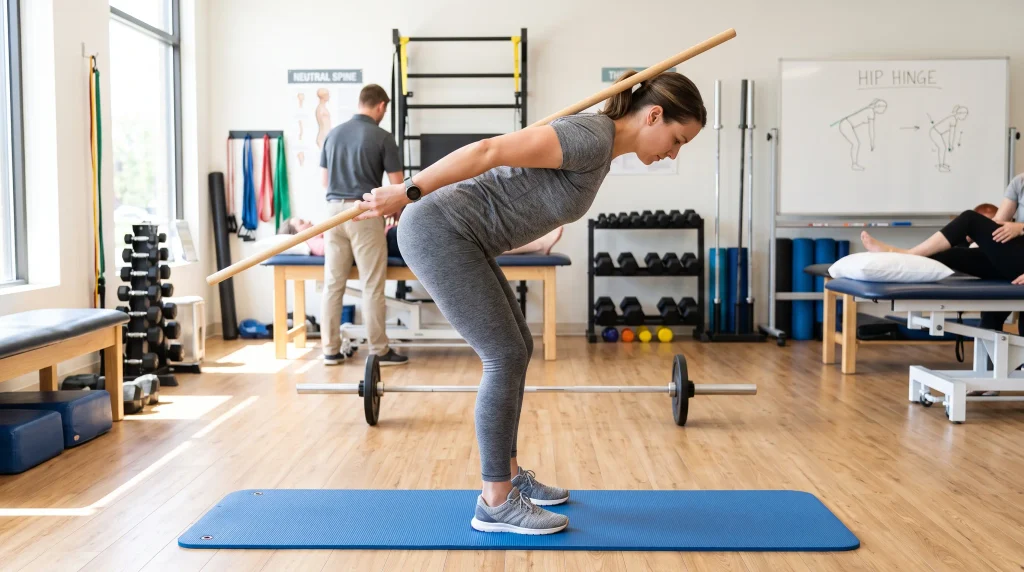
Lifting load, fatigue and recent activity changes may be useful to review. Normal lumbar bending is not a failure of the hips, and a strain diagnosis does not demonstrate that glutes stopped working or that a visible technique fault caused a tear.
What makes a strain more likely?
A sudden or unusually demanding task can precede pain, but an episode can also occur during familiar activity. No posture or level of preparation eliminates all risk.
- Lifting with the load away from the body — a box held at arm’s length multiplies the leverage acting on the lumbar tissues far more than its weight suggests.
- A combined lift and turn may be uncomfortable or demanding; it does not establish that a ligament was sprained.
- Hip or hamstring mobility may be assessed where relevant, but tightness alone does not prove that the back took harmful extra movement.
- A sudden jump in activity — a weekend of garden work, a house move, or a return to the gym after months away.
- Fatigue, sleep and general health can affect symptoms and tolerance without proving a muscle-timing failure.
- Prolonged sitting may affect comfort, but it does not demonstrate that the posterior-chain muscles switched off before a lift.
When is back pain not just a strain?
A presumed strain should be reconsidered when warning signs appear, symptoms are severe or worsening, or the clinical course is unclear.
- Emergency now: New difficulty passing or controlling urine, loss of bowel control or sensation, or numbness around the genitals or anus.
- Neurological changes: New or worsening weakness in one leg needs urgent assessment. A muscle injury can itself affect strength, so weakness does not prove nerve compression. New bilateral sciatic pain or severe or worsening bilateral weakness or numbness needs emergency care.
- Persistent or worsening rest/night pain: Arrange assessment, especially with systemic symptoms. Positional relief cannot rule out infection, fracture or another serious condition.
- Fever, unexplained weight loss, or a history of cancer alongside the back pain, which shifts the priority toward excluding infection or other pathology before assuming a mechanical injury.
- Significant trauma, or milder trauma in someone with osteoporosis or on long-term steroids, where a vertebral fracture needs to be excluded rather than assumed away.
- Age informs assessment but is not, by itself, a red flag requiring urgent imaging.
Do you need an X-ray or MRI for a lumbosacral strain?
Routine imaging is not recommended for uncomplicated low back pain. A scan is chosen when a clinician suspects another condition or expects the result to change management, not simply to confirm a strain label.
National guidance is explicit about this. NICE recommends against routinely offering imaging for low back pain outside specialist settings, and suggests considering it only where the result is likely to change management. Imaging becomes genuinely useful in three situations: to exclude a red flag, to investigate nerve symptoms that are severe or progressing, and to plan an intervention that is actively being considered.
Common disc and joint findings may be incidental or relevant, depending on the clinical picture. Avoid using a scan alone to declare the back damaged or to predict delayed recovery.
Three myths that slow a strain down
- “I should rest until all pain has gone.” Avoid prolonged bed rest when possible and maintain manageable activity for uncomplicated back pain. The Cochrane overview found small benefits from activity advice for acute nonspecific low back pain; this does not establish a specific strain-healing exercise or dose.
- “Spasm means the spine needs putting back.” Muscle guarding does not show a displaced vertebra. New traumatic pain or neurological findings still requires appropriate assessment.
- “Once your back goes, it always goes.” Recurrence can occur, but it is not inevitable. An individualized activity plan can help function without guaranteeing prevention through one hinge or strength routine.
From the Clinic: Dr. Arora’s Expert Insight
A strain can hurt substantially, but a severe episode also deserves a careful history and examination. The label should explain the clinician’s working assessment rather than certify that every possible cause has been excluded.
Hip movement and strength may be relevant to a rehabilitation plan. They should not be presumed to have caused an episode or used to blame recurrent pain on a failed hinge pattern.
Encourage manageable activity rather than prolonged bed rest when symptoms are uncomplicated. A light hinge may be an option when appropriate; it should not be forced in week two regardless of readiness, and ten days cannot establish that tissue has fully healed.
How long does a lumbosacral strain take to heal?
Many acute low-back-pain episodes improve within a few weeks, but symptoms cannot precisely date muscle or ligament repair. Recovery depends on the diagnosis, severity, health and activity demands, and some symptoms last longer.
The table is a flexible planning example. It does not provide tissue-healing dates or mandatory tests to pass.
| Goal | Possible activity | Review |
|---|---|---|
| Manage a flare | Comfortable support and manageable daily movement | Warning signs and ability to function |
| Restore movement | Selected mobility and task practice | Response during and after activity |
| Build strength | Appropriate exercises and gradually adjusted loads | Symptoms, function and any relevant diagnosis |
| Return to demands | Individual work, gym or sport progression | Goals, clinical restrictions and recovery between sessions |
What to do today
For new symptoms, check warning signs first. If activity is appropriate, choose manageable movement and comfort measures rather than forcing a fixed first-72-hours protocol.
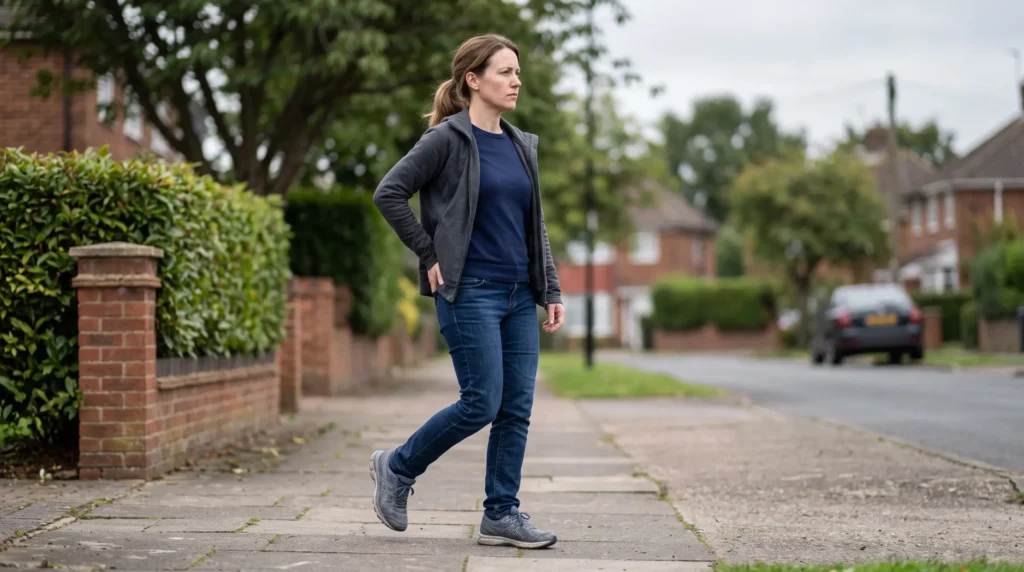
- Try a brief comfortable walk or another manageable daily activity. Do not force walking if you cannot do it safely or symptoms are deteriorating.
- Use brief comfortable rest as needed, while avoiding prolonged bed rest when possible. There is no required 20–30-minute cap for everyone.
- Heat or cold is optional for comfort. Protect the skin, avoid use on areas with poor sensation without advice and do not sleep with a pack. See heat and ice guidance.
- Choose comfortable support in bed or a chair. A knee pillow is optional and cannot be promised to remove overnight pain.
- Track pain, daily activities and any strength or sensation changes rather than measuring a bend as a healing test.
Do’s and don’ts for a lumbosacral strain
- Return to comfortable bending gradually if appropriate. Avoiding it temporarily does not make the back forget how to move.
- A hip hinge is one way to manage a task, not a required movement for every low object or a mandatory week-two exercise.
- Work with suitable task adjustments if it is safe and manageable. Return timing depends on the job, symptoms and clinical advice rather than a rule that time off causes delayed healing.
- Don’t stretch into sharp pain in the first week. Injured muscle that is already lengthened and irritable does not want more length; it wants gentle, repeated movement.
- Do not routinely use a belt or corset for uncomplicated low back pain. A separately prescribed brace for a specific diagnosis follows its own instructions; do not stop it based on this general article.
- Increase demanding activity gradually as function and the clinical picture allow. Pain relief does not directly measure tissue strength, but neither does it require a fixed additional restriction period.
What if it is not settling?
Seek review if symptoms are worsening, substantially limit activity or have not improved after a few weeks. Do not wait two to three weeks if warning signs or new neurological findings appear.
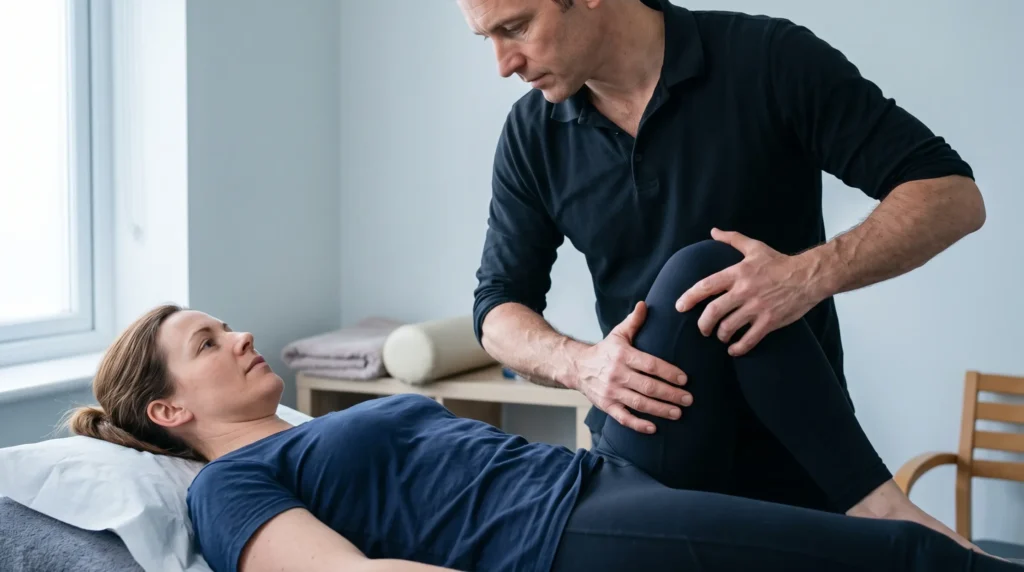
An assessment can reconsider the diagnosis, neurological findings, movement, goals and current activity plan. Exercise has evidence for persistent nonspecific low back pain, but it does not establish that a particular muscle deficit or sensitization explains an individual’s symptoms.
Surgery is not a routine treatment for an uncomplicated back strain. A different diagnosed condition, such as significant nerve compression or fracture, may require specialist care; urgent indications should not wait for exercise to fail.
Seek care if…
- New radiating leg pain merits reassessment, particularly if it persists or is worsening.
- New or worsening weakness in one leg needs urgent advice. New bilateral sciatic pain or severe or worsening bilateral weakness or numbness needs emergency care; persistent tingling or numbness also merits review.
- Nothing has improved after two to three weeks, or symptoms are worsening week on week.
- Pain is severe at night and unrelieved by any position.
- New difficulty passing or controlling urine, loss of bowel control or sensation, or saddle numbness needs emergency care now.
Conclusion
A lumbosacral strain involves muscle or tendon, but the term is sometimes used broadly for an acute back-pain episode. Local pain and stiffness cannot reliably distinguish it from other conditions or exclude a coexisting problem. Many uncomplicated episodes improve over weeks, while persistent or worsening symptoms deserve review.
Maintain manageable activity when appropriate and build back toward your own demands. No single hinge technique or rehabilitation phase guarantees that pain will not recur. Act on warning signs rather than using a strain label as reassurance.
Frequently asked questions
Is a lumbosacral strain serious?
A strain can cause back pain and usually improves. Get emergency care now for new difficulty passing or controlling urine, loss of bowel control or sensation, or numbness around the genitals or anus. New sciatic pain down both legs or severe or worsening weakness or numbness in both legs also needs emergency care. Get urgent medical assessment for new or worsening weakness in one leg. Those symptoms need assessment for another cause.
Can I still go to work with a lumbosacral strain?
Often, with appropriate task changes, but it depends on the work and your function. Breaks, lighter duties or temporary restrictions can help; no universal sitting interval or one-to-two-week lifting ban applies to everyone.
Why does my back hurt more the day after the injury?
Symptoms can fluctuate after an activity or rest. A worse next day does not automatically mean further damage, but marked worsening or new warning symptoms should not be dismissed as expected inflammation.
Should I use a back brace?
Belts and corsets are not routinely recommended for uncomplicated low back pain. If a brace was prescribed for a specific condition or after surgery, follow that clinician’s instructions rather than this general advice.
Is it a strain or did I herniate a disc?
You cannot reliably distinguish them from a symptom checklist. Disc-related pain can be local, and nerve symptoms can have other causes. New leg weakness or significant sensory change needs assessment; a scan is used selectively when it can change care.
Will this happen again?
It can recur despite sensible care. An individualized activity and exercise plan may support function, but the strongest predictor is not known to be whether you perfected a hip hinge or changed a particular habit.
Are painkillers or muscle relaxants worth taking?
Pain relief may help some people, but benefits and harms vary. Ask a pharmacist or prescriber about your medical history and medicines; muscle relaxants may offer uncertain small benefits and can cause drowsiness. Do not drive if impaired.
Medical disclaimer
This article provides general information. It cannot assess your symptoms or give you an individual treatment plan. Get emergency care now for new difficulty passing or controlling urine, loss of bowel control or sensation, or numbness around the genitals or anus. New sciatic pain down both legs or severe or worsening weakness or numbness in both legs also needs emergency care. Get urgent medical assessment for new or worsening weakness in one leg.
References
- Rizzo RN, Cashin AG, Wand BM, Ferraro MC, Sharma S, Lee H, et al. Non-pharmacological and non-surgical treatments for low back pain in adults: an overview of Cochrane reviews. Cochrane Database of Systematic Reviews. 2025;(3):CD014691. https://doi.org/10.1002/14651858.CD014691.pub2
- National Institute for Health and Care Excellence. Low back pain and sciatica in over 16s: assessment and management (NG59). Recommendations on assessment, imaging and management.
- Cashin AG, et al. Efficacy, acceptability, and safety of muscle relaxants for adults with non-specific low back pain. BMJ. 2021;374:n1446.
- NHS. Sciatica. Symptoms, activity advice and emergency warning signs.