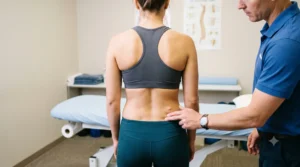
Get emergency care now for new loss of bladder or bowel control, difficulty passing urine, or numbness around the genitals or anus. These can be signs of serious nerve compression. Each sign matters on its own. If you are pregnant and have pelvic pain or bleeding, seek urgent maternity advice. Severe pain with heavy bleeding or fainting needs emergency help.
Expert Review: This article includes clinical insights from Dr. Vivek Arora, a physical therapist (physiotherapist) with 20+ years of experience.
When the lower back aches and the pelvis feels heavy, full, or under pressure at the same time, the brain runs two stories in parallel. One says, I must have strained something — it’s mechanical. The other says, Something inside me is wrong — this is more than a back problem. Both stories can be true at different times, and that is exactly why lower back pain and pelvic pressure as a combined symptom pattern confuses people more than either symptom alone.
Lower back pain and pelvic pressure can occur with back or pelvic girdle conditions, pelvic floor problems, prolapse, pregnancy, constipation and urinary or gynecological conditions. The combination should not be assumed to be mechanical. Movement sensitivity helps describe symptoms but cannot exclude an organ-related condition. New, recurring or unexplained pelvic pressure deserves medical assessment.
This article is built to give you a clinician’s framework for sorting the picture out: what is usually happening when the two symptoms travel together, which patterns point toward mechanical causes, which patterns deserve a medical workup, when imaging genuinely earns its place, and what early management looks like when the cause is musculoskeletal. The goal is for you to leave with a clearer sense of what to do in the next 72 hours and what would change your decision to seek care sooner.
The information below can help you describe your symptoms. Get emergency care now for new difficulty passing or controlling urine, loss of bowel control or sensation, or numbness around the genitals or anus. Get emergency care for sudden severe abdominal pain. Contact a maternity service urgently for vaginal bleeding if you are pregnant.
Key Takeaways
- The lower back and pelvis are one functional unit; signals from one region routinely overlap with the other through shared innervation and shared load demands.
- Combined back and pelvic symptoms have a wider differential than back pain alone — including pelvic floor dysfunction, pelvic girdle pain, gynecological, urological, and bowel-related causes.
- The urgency depends on the symptoms and circumstances, including possible pregnancy, bleeding, fever and neurological changes.
- Symptom patterns — what makes the pain better, worse, when it happens, and how it behaves — are usually more informative than imaging in the first weeks.
- Pelvic floor exercises should match the assessment. Pressure alone cannot show whether muscles need strengthening, relaxation or another treatment.
- For an assessed musculoskeletal condition, care may include activity changes and progressive exercise. Medical causes need their own treatment.
What’s actually happening when lower back pain and pelvic pressure show up together?

The back, hips, pelvis and pelvic organs can produce overlapping symptoms. Their anatomical relationships explain why an examination may need to consider more than the spine; they do not establish the cause of pressure.
Several possibilities may need consideration:
- Referred symptoms: Pain may be felt away from its source. Pelvic pressure is not a reliable sign that a spinal joint is responsible.
- Movement-related symptoms: Back, hip or pelvic girdle conditions may hurt with walking or transfers. This does not establish weak muscles or faulty SI-joint load transfer.
- Pelvic floor and support conditions: Muscle dysfunction or pelvic organ prolapse can cause symptoms, but heaviness does not distinguish weak from overactive muscles.
- Visceral referral. Pelvic and abdominal organs share spinal innervation with structures in the lower back. A bowel, bladder, prostate, or uterine problem can present as lumbopelvic pain even when nothing is mechanically wrong with the spine.
Describe back, pelvic, bowel, bladder and reproductive symptoms together. A clinician can decide which examinations or tests are relevant, rather than asking you to choose a diagnostic category at home.
What are the most common causes of lower back pain and pelvic pressure?
Possible causes span musculoskeletal, pelvic floor, pregnancy-related, urinary, reproductive and bowel conditions. Their relative frequency cannot be inferred from the symptom pair alone. Start with the warning signs and arrange assessment for unexplained or recurring pressure.
1. Back, hip and pelvic girdle conditions:
- Pelvic girdle or SI-region pain: May be aggravated by stairs or rolling. Gluteal tightness and back pain can coexist, but tightness does not establish an SI-joint diagnosis.
- Pelvic girdle pain (PGP) — a specific form of low back pain located between the posterior iliac crest and the gluteal fold, often radiating into the posterior thigh, sometimes including symphysis pain. PGP can occur separately or together with general low back pain.
- Pelvic floor dysfunction or prolapse: Can cause pressure, heaviness, pain, leakage or a vaginal bulge. Examination is needed; pressure does not show that the pelvic floor is usually too tight.
- Lumbar disc or facet involvement — a disc or facet joint at L4–L5 or L5–S1 referring pain into the buttock and pelvis.
- Hip conditions: Hip or groin symptoms can overlap with pelvic and back discomfort; an examination can assess their relevance.
2. Pregnancy and postpartum: Pelvic girdle symptoms and pelvic floor conditions may occur. New pressure or pain, possible pregnancy, bleeding, fluid leakage or contractions needs maternity advice rather than self-diagnosis. The early-pregnancy back-pain guide provides related context.
3. Gynecological and urological causes:
- Endometriosis, fibroids, ovarian cysts, or pelvic congestion (often produce cyclical pressure tied to the menstrual cycle).
- Urinary tract infection, kidney stones, interstitial cystitis.
- Prostatitis or benign prostatic hyperplasia in men.
- Inguinal or femoral hernias.
For female-specific patterns, the broader picture of common causes of lower back pain in women is worth a careful read, especially if your pelvic pressure tracks with your cycle.
4. Bowel-related causes: Constipation and other bowel conditions can cause pelvic discomfort. Persistent bowel changes, bleeding, vomiting or severe abdominal pain need assessment. See the guide to back and abdominal pain together.
5. Serious causes (uncommon but important):
- Cauda equina syndrome
- Spinal infection or tumor
- Abdominal aortic aneurysm (older adults)
- Ectopic pregnancy or pregnancy complications
- Pelvic infection (PID)
These are uncommon but they exist, which is why the red flag section below matters.
How do I tell if it’s mechanical or something internal?
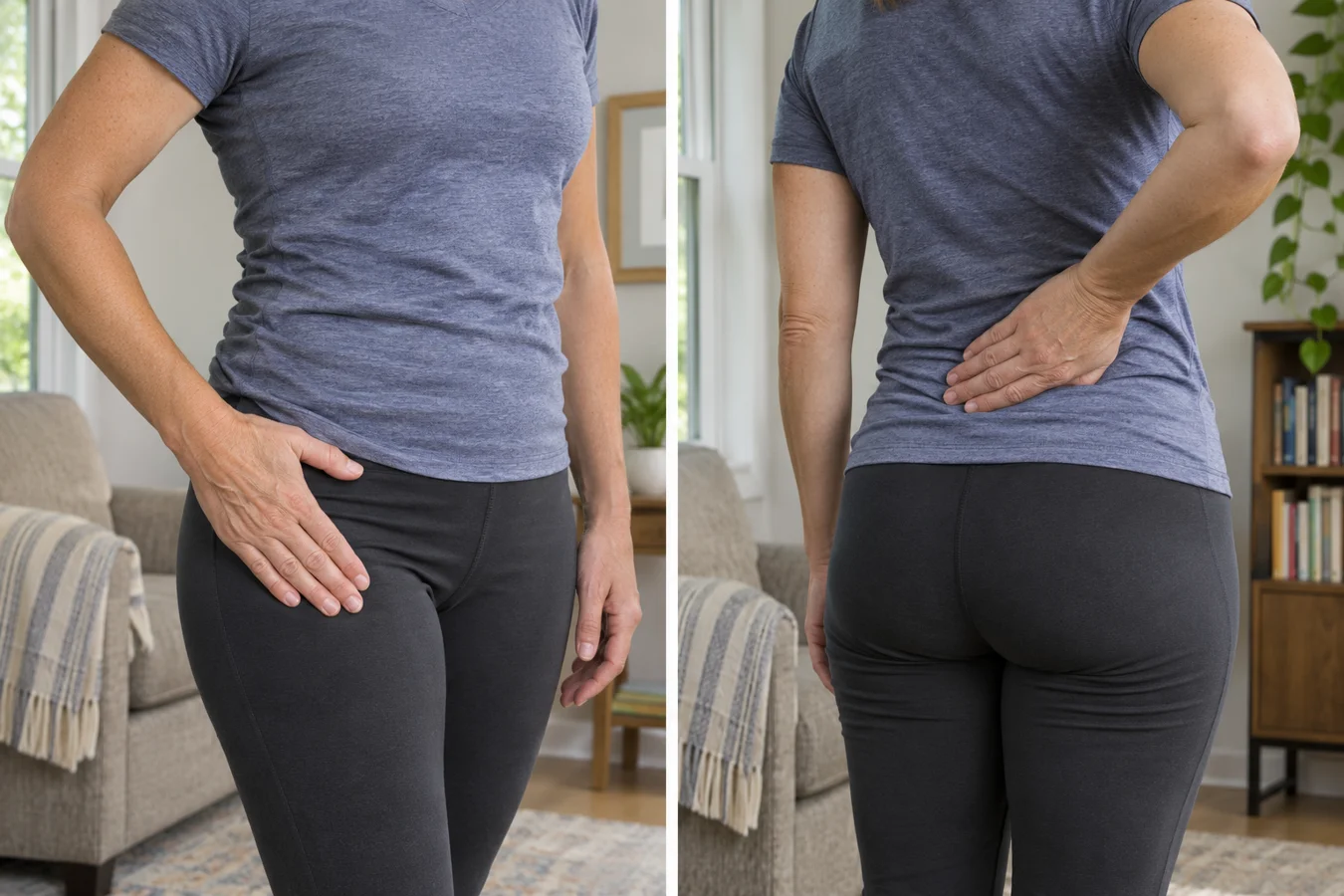
Movement, menstrual timing, urination, bowel habits and eating can all provide useful clues, but none reliably separates a musculoskeletal cause from an internal condition. Organ-related symptoms can also change with movement. Use the table to prepare a history for a clinician, rather than rule out disease.
| Pattern | What to discuss | Action |
|---|---|---|
| Changes with sitting, standing or transfers | Back, hip and pelvic girdle symptoms; medical causes can overlap | Assessment if persistent or unexplained |
| Heaviness, vaginal bulge or leakage | Pelvic floor or support conditions, including prolapse | Medical or pelvic health assessment |
| Symptoms with menstruation | Possible reproductive causes | Medical assessment |
| Urinary pain, blood, frequency or difficulty | Possible urinary condition | Prompt medical advice; emergency for new retention with neurological signs |
| Bowel changes or symptoms with meals | Possible bowel cause | Assess persistent symptoms; urgent help for severe symptoms |
| Possible pregnancy with pelvic pain | Pregnancy-related and ectopic causes | Urgent medical/maternity advice |
| Severe pain with fainting or heavy bleeding | Potential emergency | Emergency care now |
A predictable trigger and relief pattern does not prove the condition is mechanical. New or unexplained pelvic pressure still deserves assessment.
When are red flags actually red flags?
Some emergency signs matter individually. Do not wait for several symptoms to occur together, especially with new saddle numbness or bladder/bowel changes. Other warning signs need prompt assessment in their clinical context.
Use the following urgency guide:
- Emergency now: New numbness around the genitals, anus or inner thighs.
- Emergency now: New difficulty passing or controlling urine, or loss of bowel control or sensation.
- Emergency now: New pain, weakness or numbness in both legs. New or worsening weakness in one leg needs urgent medical assessment.
- Fever with back or pelvic pain, especially with chills, night sweats, or recent infection
- Emergency now: Sudden severe or worsening abdominal/pelvic pain, fainting, marked dizziness, breathing difficulty or heavy vaginal bleeding.
- Urgent maternity/medical advice: Pelvic pain if pregnant or possibly pregnant, especially with bleeding, contractions or fluid leakage. Severe pain, shoulder-tip pain or fainting needs emergency care.
- Significant unexplained weight loss with persistent pain
- History of cancer with new persistent back or pelvic pain unresponsive to position change
- Pain so severe at night that it wakes you and you cannot find any position that helps
- Recent significant trauma, even if pain seemed mild at first
New saddle numbness, new trouble passing or controlling urine, and loss of bowel control or sensation can each signal serious nerve compression. Seek emergency care now if any occurs. Severe or worsening weakness in both legs also needs emergency care.
🚩 Do not delay care if:
- New saddle or bladder/bowel warning signs appear: get emergency care now.
- Pregnancy is possible and you have pelvic pain: seek urgent medical or maternity advice.
- You have a fever with this combination of symptoms
- The pain is rapidly worsening rather than fluctuating
- You have a known cancer history and the pain is new or different
When is imaging actually needed?
Investigations depend on the suspected cause. General low-back imaging rules do not justify waiting four to six weeks with unexplained pelvic pressure. A clinician may consider pregnancy testing, urine tests, examination, ultrasound or other investigations promptly when appropriate.
In practice, that breaks down roughly as follows:
- MRI of the lumbar spine is most useful when there is suspected nerve root compromise, suspected serious pathology, or persistent radiating pain with neurological signs.
- Pelvic ultrasound is the go-to first-line investigation when the picture suggests a gynecological cause, ovarian pathology, or bladder or uterine involvement.
- Plain X-rays rarely change management for typical mechanical lumbopelvic pain.
- CT is usually reserved for suspected fracture, kidney stones, or specific abdominal causes.
- Blood and urine tests are often more useful early on than imaging — they can quickly clarify infection, pregnancy, kidney involvement, or inflammatory markers.
Ask what question a proposed test will answer and how it may change care. Urgent investigations should not be postponed while trying a rehabilitation program.
What myths get in the way of recovery?
A few specific misconceptions tend to slow people down with this presentation:
- “Pelvic pressure always means prolapse.” Prolapse is one possibility, alongside muscle, bowel, bladder and other conditions. Symptoms alone cannot reliably distinguish them.
- “The combination always means serious disease.” Many causes are manageable, but reassurance should follow appropriate assessment and attention to warning signs.
- “Stronger abs will fix it.” Trunk exercises may be useful for some goals, but they do not treat every cause of pressure. Modify exercises that worsen symptoms and reassess.
- “Everyone with pressure needs Kegels.” Pelvic floor treatment depends on the examination. Weakness and difficulty relaxing can coexist; neither can be diagnosed from pressure alone.
- “Rest will sort it out.” Short rest helps; prolonged rest worsens deconditioning, fear avoidance, and central sensitization. Movement is medicine, but the right kind and the right dose.
From the Clinic: Dr. Arora’s Expert Insight
Medical causes and pregnancy-related warning signs should be considered before prescribing a back exercise program for unexplained pelvic pressure. People do not need to earn rehabilitation; they need an appropriate assessment.
A pelvic health assessment may identify muscle, support or other contributing findings. It should not presume that the pelvic floor is overactive, that strong abdominals caused the symptoms or that all symptoms originate from one muscle group.
Breathing practice, pelvic floor training and hip strengthening may be options once the findings are clear. No single sequence or six-to-eight-week result can be promised.
Stress can affect pain and muscle tension, but should not be assumed to explain pelvic pressure before medical causes are considered. Clear information and an agreed plan can reduce uncertainty without dismissing symptoms.
What can I do in the next 24 to 72 hours?
For new or unexplained pelvic pressure, arrange medical advice and check the warning signs first. If a clinician has assessed a musculoskeletal cause, the following comfort measures may be reasonable:
- Reduce what clearly aggravates. If sitting longer than 30 minutes worsens it, set a timer and stand. If standing on hard surfaces makes the pelvis feel heavier, alternate positions every 20–30 minutes.
- Move within your comfort and any maternity or medical restrictions. Short walks may be an option; no fixed duration is necessary.
- Comfortable slow breathing can be tried for relaxation. Do not strain, force a pelvic floor movement or continue if it increases symptoms.
A wrapped warm pack may help familiar muscular discomfort if safe for your skin. Ask a clinician or pharmacist about medicines, particularly if pregnant or possibly pregnant; comfort measures should not delay assessment.
✅ What to do today
- If activity is appropriate, try brief comfortable movement rather than a required walking target.
- Try relaxed breathing if it feels helpful; it is optional.
- Change position for comfort; no chair firmness or spinal curve treats every cause.
- Note what makes the pain better, what makes it worse, and when it spikes — this list is what your clinician will need.
- If any warning sign above appears, stop home management. Follow the emergency or urgent-care instructions for that sign.
A phase-based recovery framework
The structure below is a clinical scaffold, not a prescription. Real progression is driven by symptom response and load tolerance, not by calendar weeks.
| Stage after assessment | Goal | Possible work | When to review |
|---|---|---|---|
| Comfortable activity | Find manageable tasks | Short walks or position changes if appropriate | Worsening or unexplained symptoms |
| Individual exercise | Address relevant findings | Pelvic floor, hip or trunk work selected after assessment | Increased pressure, leakage or sustained pain |
| Gradual loading | Build tolerance for daily demands | Progress one variable at a time | Lack of functional progress |
| Return to goals | Resume work or recreation | Task-specific progression | Review with clinician as needed |
Two practical rules across the whole framework:
- Response rule: If a session causes a substantial or lasting increase in pain, pressure, leakage or leg symptoms, reduce or pause it and seek advice. Warning signs require urgent or emergency care.
- The progression rule. Do not move to the next phase because the calendar says so. Move when the current phase’s exercises feel controlled, repeatable, and produce no day-after flare.
Do’s and don’ts that are specific to this presentation
Do:
- Choose hip and trunk exercises according to assessment and goals, without a mandatory order.
- Use pelvic floor strengthening or relaxation only when it suits the findings.
- Discuss persistent bowel or bladder symptoms; avoid repeated straining and seek advice for constipation.
- Use manageable loads and stop exercises that worsen pressure or neurological symptoms.
Don’t:
- Do not prescribe yourself Kegels solely because of pelvic pressure; an assessment can identify appropriate training.
- Do not continue a program that repeatedly worsens pain, pressure or leakage without review.
- Do not push through pain that radiates into the leg with neurological symptoms.
- Do not assume a one-off MRI finding explains everything; correlate with how the symptoms behave.
When does conservative care fail, and what comes next?
Reassess if symptoms persist, worsen or the agreed plan is not helping. New or unexplained pelvic symptoms should not wait through a six-to-eight-week exercise trial.
- Reconfirming the diagnosis. Is there a visceral or pelvic floor component that was missed? Is hip pathology driving the pelvis?
- Targeted imaging or specialist referral. Pelvic floor physical therapy assessment, gynecology, urology, or spine consult depending on the clinical picture.
- Condition-specific treatment: A clinician may discuss options suited to the diagnosis. Spinal injections are not routine treatment for nonspecific back pain or unexplained pelvic pressure.
Surgery may be relevant to a specific diagnosis, such as selected pelvic organ conditions or urgent nerve compression. It cannot be recommended or excluded from the symptom pair alone.
Realistic outlook
Outlook depends on the diagnosis. This symptom combination has no established eight-to-twelve-week rehabilitation prognosis. Agree on symptom and functional goals, and revise the plan if progress is limited.
A clear diagnosis and a workable plan support care, but this article cannot rank predictors of recovery or guarantee that a particular exercise frequency is best.
Conclusion
Lower back pain and pelvic pressure have several possible causes. Check the warning signs, arrange assessment for unexplained or recurring symptoms and describe bowel, bladder, reproductive and movement-related changes together. Rehabilitation may help an assessed musculoskeletal condition; other causes need different care.
A symptom record can make the consultation more useful. It cannot replace examination, pregnancy assessment or investigations when indicated.
FAQs
1. Can a pinched nerve in the lower back cause pelvic pressure? A nerve condition can cause symptoms around the back or pelvis, but pressure alone cannot identify one. New saddle numbness or difficulty passing or controlling urine needs emergency assessment, even if other symptoms are absent.
2. Is pelvic pressure always a sign of pelvic organ prolapse? No. Prolapse is one cause, and pelvic floor, bladder, bowel or other conditions can also produce pressure. An appropriate examination helps distinguish them.
3. How long should I wait before seeing a doctor? Arrange assessment for new, recurring or unexplained pelvic pressure. Get emergency care for new saddle numbness, difficulty passing or controlling urine, loss of bowel control or sensation, or new bilateral leg symptoms. Possible pregnancy, fever or urinary symptoms need prompt medical advice.
4. Can stress and anxiety actually cause this combination of symptoms? Stress can influence pain and muscle tension, but it should not be assumed to be the cause. New, persistent or unexplained pelvic pressure needs assessment for other conditions too.
5. Are Kegels safe if I have lower back pain and pelvic pressure? They may be appropriate for some conditions and unsuitable for others. A clinician can assess contraction, relaxation and pelvic support; pressure does not prove weakness or overactivity.
6. Can men experience pelvic pressure with back pain? Yes. Back, pelvic floor, bowel, bladder, prostate or testicular conditions may contribute. Seek assessment for unexplained symptoms and urgent care for sudden severe testicular or pelvic pain.
7. Does pelvic pressure during pregnancy always need treatment? Contact your maternity or medical team for new pelvic pain or concerning pressure, especially with bleeding, contractions, fluid leakage or possible pregnancy. Severe pain, fainting, shoulder-tip pain or heavy bleeding needs emergency care.
Medical Disclaimer
This article is general health education and is not a substitute for individual medical assessment. Combined lower back and pelvic symptoms can be produced by a wide range of causes — some musculoskeletal, some visceral, some serious — and only a qualified clinician who can take your full history and examine you can make a diagnosis. If you have any of the red flags described above, do not use this article to delay care. If your symptoms persist beyond a few weeks of sensible self-management, or if anything is worsening, get a formal assessment.
References
- Vleeming A, Albert HB, Östgaard HC, Sturesson B, Stuge B. European guidelines for the diagnosis and treatment of pelvic girdle pain. European Spine Journal. 2008;17(6):794–819. doi:10.1007/s00586-008-0602-4.
- NHS. Pelvic pain. Possible causes and urgent-care guidance.