You bend forward to cough, and suddenly your lower back “grabs” with a sharp, catching pain. Maybe it happens every time you cough during a cold, or only when you have a deep, dry cough that won’t go away. Either way, low back pain when coughing can feel alarming.
Short answer: low back pain when coughing usually means an already-sensitive structure in your lower back is being loaded by the sharp pressure spike a cough creates. A strained muscle, an irritated facet or sacroiliac joint, or a bulging disc are the usual sources. Pain that stays in the back is generally mechanical. Pain that shoots down one leg with every cough points toward nerve root involvement and deserves assessment.
Key takeaways
- A cough is a pressure event, not an injury. Coughing briefly raises intra-abdominal and intradiscal pressure, so it exposes tissue that is already irritated rather than creating damage from nothing.
- Where the jolt travels matters more than how sharp it feels. Pain confined to the back suggests muscle, facet or sacroiliac involvement; pain firing down past the knee suggests a nerve root.
- Bracing changes the experience immediately. Supporting the trunk before you cough, rather than folding forward into it, reduces the peak load the spine has to absorb.
- Most cases do not need a scan. Without red flags, imaging rarely changes what is done in the first few weeks.
- Some patterns need same-day care. Saddle numbness, bladder or bowel change, weakness in both legs, fever, or sudden severe pain after minimal force in someone with osteoporosis are not wait-and-see symptoms.
The good news: most of the time the source is mechanical — muscle strain, irritated joints, or a sensitive disc rather than anything catastrophic. The not-so-good news: it usually means your spine and the tissues around it are under extra stress and need some attention.
In this guide, we’ll unpack what that pain actually means, the most common causes, what you can safely do at home, and the red flags that mean you should seek medical help quickly. You’ll also learn simple positions, exercises, and prevention strategies so the problem doesn’t keep returning.
Think of this as a practical, honest, step-by-step explainer—not just a list of scary possibilities, but a roadmap to understand your body and take smart action.

What Does Low Back Pain When Coughing Really Mean?
Pain on coughing tells you that a structure in your lower back has become load-sensitive. A cough drives the diaphragm up, clamps the abdominal wall, and spikes pressure inside the trunk in under a second. Healthy tissue absorbs that without complaint. Irritated tissue registers it as a sharp catch, which is why the cough feels like the cause when it is really the test.
When you cough, a lot happens inside your trunk in a fraction of a second. Your diaphragm snaps upward, your abdominal muscles tighten hard, air pressure inside your chest and abdomen rises sharply, and your spine has to resist that internal “pressure wave.”
If everything in your lower back is healthy and well-coordinated, you might feel a brief “bracing” but no pain. If tissues are irritated, overloaded, or injured, that sudden surge in pressure can:
- Pinch a sensitive spinal joint
- Compress an already irritated disc
- Tug on tight, protective muscles
- Irritate nerves that are already inflamed
So a painful cough usually means:
- There is an underlying issue in the lower back (often mechanical, like muscle, disc, or joint irritation), and
- The force of the cough is temporarily increasing stress on that painful area.
The cough itself rarely causes the problem from scratch—it more often reveals or aggravates something that was already brewing under the surface.
Why Do I Get Low Back Pain When Coughing?
You feel it because coughing loads your spine from the inside. The deep abdominals, diaphragm, pelvic floor and back muscles form a pressurized cylinder that stiffens the lumbar spine. When that cylinder is weak, poorly timed, or guarding around an injury, the pressure surge transfers into sensitive tissue instead of being shared across the trunk.
To understand low back pain when coughing, it helps to know how your spine and “core cylinder” work together.

- Your lumbar spine (lower back) is made of vertebrae, discs, joints, ligaments, muscles, and nerves.
- Around it is a cylinder of muscles: deep abdominals, back muscles, pelvic floor, and diaphragm.
- During coughing, these muscles contract strongly and intra-abdominal pressure rises to force air out of the lungs.
If the system is strong and well-balanced, the spine is supported. But if:
- Your core is weak or uncoordinated
- You have a recent back strain
- A lumbar disc is already bulging or herniated
- Joints are stiff or arthritic
…then the sudden “pressure spike” of a cough can trigger pain, especially during repeated or forceful coughing spells.
What Causes Low Back Pain When Coughing?
Five structures account for most cases: the lumbar muscles and ligaments, an intervertebral disc, the facet joints at the back of the spine, the sacroiliac joints in the pelvis, and in older adults a vertebral compression fracture. Each produces a recognizably different pattern of pain, and the pattern is usually more informative than the intensity.
Which structure is it? Match your pattern
| Likely source | Where the cough sends the pain | What typically eases it | What typically provokes it |
|---|---|---|---|
| Muscle or ligament strain | A tight, guarding band across the low back, one or both sides; stays above the buttock crease | Gentle walking, position changes, heat after the first day or two | Bending forward, staying still for long periods, the first movement after rest |
| Disc with nerve root involvement | A sharp jolt that travels into the buttock and down the leg, often past the knee, sometimes with tingling | Standing or lying flat; short, frequent movement breaks | Prolonged sitting, forward bending, straining on the toilet, the cough itself |
| Facet joint irritation | A localized point beside the spine, often one-sided; rarely below the knee | Sitting, leaning slightly forward, unloading the joint | Arching backward, twisting, standing still, waking stiffness |
| Sacroiliac joint | A deep ache low over one dimple of the pelvis, sometimes into the groin or back of the thigh | Even weight-bearing, a supportive belt, symmetrical positions | Single-leg loading, rolling over in bed, stairs, standing on one hip |
| Vertebral compression fracture | Sudden, severe, band-like midline pain that spikes with every cough | Lying still; very little else in the early days | Any trunk movement, sitting up, coughing or sneezing |
1. Muscle Strain and Ligament Sprain
One of the most common reasons is a simple strain or sprain.
How it happens:
- You lifted something heavy or awkward.
- You sat or stood in a slouched posture for too long.
- You had a minor twist or slip you barely remember.
The muscles and ligaments of your lower back become irritated and protective. Then, when you cough, the sudden contraction of your abs and back muscles pulls on those already-sore tissues, causing a sharp or aching low back pain.
Typical features:
- Localized ache or tightness in the lower back
- Pain that worsens with bending, twisting, or changing positions
- No significant numbness, tingling, or weakness in the legs
Muscle strains usually improve within days to a few weeks with rest from heavy loads, gentle movement, and smart self-care.
2. Lumbar Disc Bulge or Herniation (With or Without Sciatica)
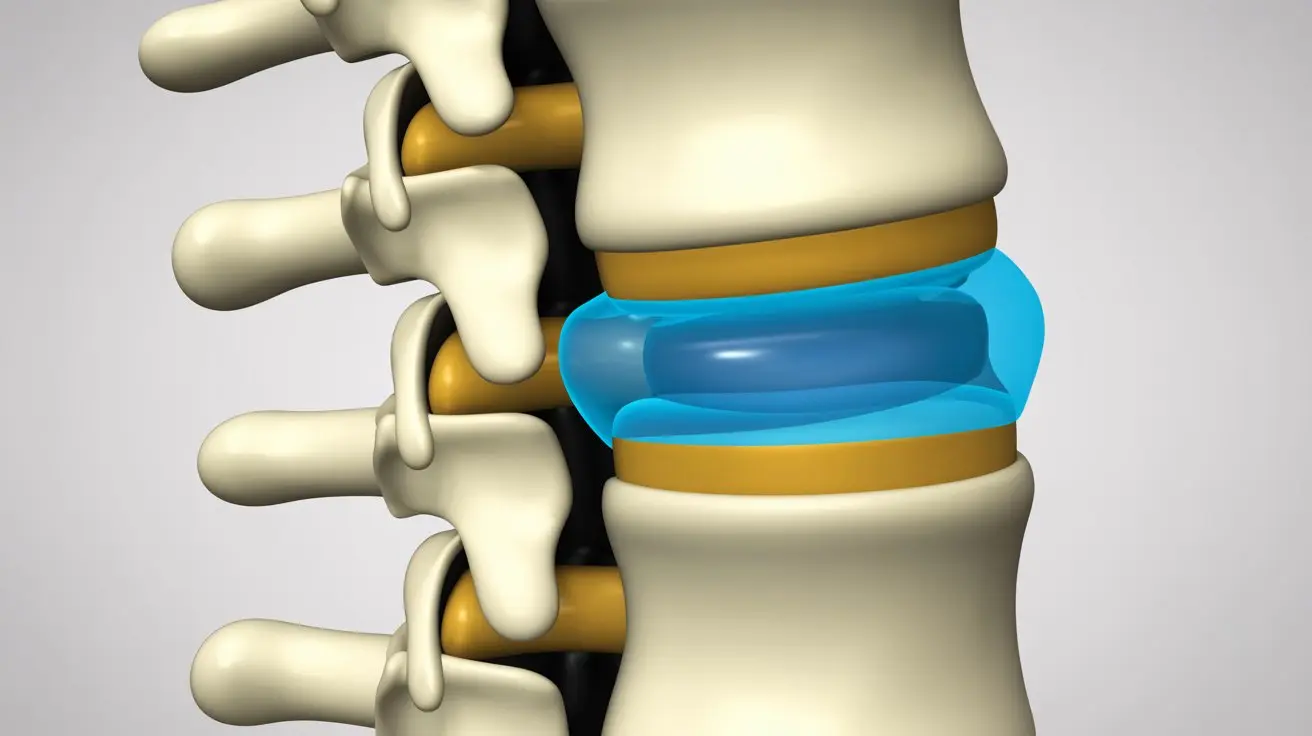
A lumbar disc is like a cushion between vertebrae. When the outer layers weaken or tear, the soft inner material can bulge or herniate. Coughing sharply increases pressure inside the disc and spinal canal.
If you have a disc problem:
- The cough produces a deep, sharp, or “electric” pain.
- You might also feel pain shooting down one leg (sciatica), with possible tingling or numbness.
- Pain often worsens with coughing, sneezing, or straining on the toilet, because all of these increase internal pressure.
Not everyone with a disc herniation gets dramatic symptoms, and many disc issues improve without surgery. The location of the jolt is the useful detail: in a diagnostic study of 395 adults with severe sciatica, worsening of leg pain during coughing, sneezing or straining carried significant diagnostic value for nerve root compression and disc herniation on MRI, whereas worsening of back pain alone did not. Persistent cough-triggered pain combined with leg symptoms therefore deserves proper evaluation.
3. Facet Joint Irritation
Facet joints are small joints at the back of the spine that guide movement. They can become inflamed due to:
- Repeated extension (arching)
- Sudden twisting
- Age-related wear and tear
When these joints are irritated, the cough tends to produce:
- A sharp pain on one or both sides of the spine
- Pain that worsens with leaning backward or twisting
- Stiffness, especially after sitting or upon waking
The pressure spike from a cough can briefly compress the facet joints, making them complain.
4. Sacroiliac (SI) Joint Dysfunction
The sacroiliac joints connect your spine to your pelvis. When they become irritated or unstable, you might feel:
- Pain low in the back, often off to one side
- Pain that may radiate into the buttock or groin
- Discomfort with prolonged standing, stairs, or single-leg activities
Coughing can jolt the pelvis and SI joints, triggering pain low over the buttock, particularly if your core muscles aren’t stabilizing the area well.
5. Spinal Stenosis or Nerve Compression
Spinal stenosis means narrowing of the canal or spaces where nerves travel. It is more common in older adults or in people with long-standing degenerative changes.
When stenosis or nerve root compression is present, the cough-related pain may come with:
- Leg pain, numbness, or heaviness (especially when standing or walking)
- Relief when sitting or bending forward
- Symptoms that fluctuate with posture and activity
Coughing in this context can temporarily compress already crowded nerves, intensifying symptoms.
6. Osteoporosis and Vertebral Compression Fractures
In people with weakened bones (osteoporosis), even minor stress can cause tiny fractures in the vertebrae. Sometimes a strong cough or series of coughs is enough to trigger pain from a compression fracture.
Signs that raise suspicion:
- Sudden onset of sharp, localized back pain
- Pain worse with standing, walking, or coughing
- Increased rounding of the upper back over time
- Older age, history of osteoporosis, long-term steroid use, or previous fractures
If you suspect this, treat it as a reason to seek medical assessment rather than relying on home care alone.
7. Less Common but Serious Causes
Occasionally, pain provoked by coughing is a clue to something more serious, such as:
- Spinal infection
- Tumor or cancer involving the spine
- Inflammatory conditions
- Issues involving major blood vessels near the spine
These are much less common than muscle or disc problems, but they are why red-flag symptoms matter (we’ll cover those soon).
When Is Cough-Related Back Pain an Emergency?
Cough-related back pain becomes an emergency when it arrives with nerve or systemic signs rather than simply with more pain. Loss of feeling around the groin or back passage, new bladder or bowel change, weakness in both legs, fever, or sudden severe pain after a trivial strain in someone with thin bones all point away from simple mechanical irritation and need same-day assessment.
Most people do not have a serious disease. However, certain combinations of symptoms mean you should seek urgent or emergency care.
Contact a doctor or emergency service promptly if the pain is accompanied by:
- Loss of bladder or bowel control, or difficulty starting urination
- Numbness in the “saddle” area (inner thighs, groin, buttocks)
- Severe, rapidly worsening weakness in one or both legs
- Fever, chills, or feeling very unwell with back pain
- History of cancer, unexplained weight loss, or night sweats
- Recent significant trauma (fall, accident, heavy impact)
- Pain that wakes you from sleep, or is constant and worsening regardless of position
- Known osteoporosis with sudden onset of sharp back pain after coughing or minor strain
These could indicate conditions like cauda equina syndrome, infection, fracture, or tumor. Do not wait and see if symptoms like these will “settle down.”
How Do Clinicians Work Out What Is Causing It?
Assessment is mostly history and movement testing, not scanning. A clinician wants to know when the pain started, exactly where the cough sends it, what eases it, and whether anything has changed in strength, sensation or bladder control. Physical testing then loads each candidate structure in turn to see which one reproduces the familiar pain.
If you see a healthcare professional, expect a structured assessment rather than just a quick look and a prescription.
History (Your Story)
You’ll likely be asked:
- When did the pain start?
- Was there an injury or new activity before it began?
- Do you also have pain at rest, or only with coughing/sneezing/straining?
- Does the pain travel into your buttock, hip, or leg?
- Any numbness, tingling, or weakness?
- Any bladder, bowel, or sexual function changes?
- Do you have fever, recent infections, weight loss, or a history of cancer?
These answers help narrow down whether the problem is mechanical and benign or potentially serious.
Physical Examination
Your clinician may:
- Observe posture, spinal alignment, and how you move.
- Feel (palpate) around muscles, joints, and bony areas for tenderness.
- Check spine and hip range of motion.
- Do neurological tests: reflexes, strength, and sensation in the legs.
- Perform special tests that gently load discs, nerves, or SI joints.
Sometimes they may ask you to cough or bear down gently to see how symptoms change—this directly tests how coughing influences your low back pain.
Do You Always Need X-Ray or MRI?
Not necessarily. For recent, uncomplicated back pain with no red flags, imaging is not needed right away. Conservative treatment is often tried first.
Imaging (X-ray, CT, or MRI) is more likely if:
- Red-flag symptoms are present
- Pain is severe and not changing despite several weeks of good care
- There is significant neurological deficit (marked weakness, major numbness)
- Surgical or injection options are being considered
What Can You Safely Do at Home?
If there are no red flags, a calm and structured self-care plan can help you manage symptoms while your body heals.
Step 1: Support Your Back When You Cough
When a cough is coming:
- Sit tall with back support (e.g., against a chair back or pillows).
- Place your hands or a small pillow against your belly and gently brace as you cough—this spreads the pressure across a wider area.
- Avoid bending forward suddenly to cough; instead, keep the spine relatively neutral.
Small tweaks like these noticeably reduce the size of the jolt.
👨⚕️ Dr. Arora’s Clinical Note:
Many patients ask me if they should “tighten the core as hard as possible” before a cough. Counter-intuitively, maximal bracing can increase spinal compression and make a sensitive disc, facet joint, or SI joint complain more. Aim for a 20–30% brace instead: gently “zip up” the lower abdomen, keep breathing out, and cough in 2–3 smaller bursts rather than one huge explosive cough.Here’s a quick clinical trick: stagger your stance (one foot slightly forward), place hands on thighs for support, then hip-hinge 10–15% (neutral spine, not rounding) as you cough. If the pain drops noticeably, it often points to a pressure/shear sensitivity pattern—meaning unloading + coordination work usually beats aggressive stretching.
If coughing reliably triggers shooting leg pain, tingling, numbness, or weakness, treat that as a nerve/disc warning sign and get assessed rather than pushing exercises blindly.
Step 2: Modify Positions That Aggravate Pain
- Use a reclined sitting position with a small cushion behind your lower back.
- When lying down, try side-lying with a pillow between your knees or on your back with a pillow under your knees.
- Avoid long periods of slumped sitting, which can make discs and ligaments more sensitive, amplifying the next cough.
Step 3: Use Heat or Cold Wisely
- In the first 24–48 hours after a sudden strain, some people prefer ice packs (wrapped in a cloth) for 10–15 minutes, a few times per day.
- After that, gentle heat (warm shower, heating pad on low, warm water bottle) can relax protective muscles and ease stiffness.
Always protect your skin and avoid extreme temperatures or sleeping with a heat source on.
Step 4: Keep Moving (Within Reason)
Complete bed rest generally makes back pain worse over time. The spine and its supporting muscles like gentle movement.
Try to:
- Take short walks several times a day, even if it’s only around your home.
- Change positions every 30–45 minutes (sit, stand, walk, lie down).
- Avoid heavy lifting, forceful twisting, or high-impact exercise while pain is intense.
Think “little and often” rather than one big workout or long, painful sit.
Step 5: Over-the-Counter Options (With Caution)
Depending on your health conditions and local recommendations, your clinician or pharmacist may suggest:
- Simple pain relievers
- Topical gels or creams
- Short-term use of anti-inflammatory medication
Because medication safety varies greatly between individuals, always follow label directions and professional advice rather than self-prescribing. If you’re pregnant, on blood thinners, have kidney or stomach problems, or take many medications, ask your doctor before trying anything new.
A Handy Do/Don’t Table for Early Self-Care
| Do This | Avoid This (for now) |
|---|---|
| Take short, frequent walks | Long bed rest or staying in one position for hours |
| Use supportive positions when you cough | Bending forward suddenly or twisting as you cough |
| Use heat or cold for comfort | Direct ice/heat on bare skin or falling asleep on a heating pad |
| Gently change posture through the day | Heavy lifting, jumping, or high-impact workouts |
| Seek help if red flags appear | Ignoring severe, worsening, or spreading symptoms |
Exercises That May Help Support Your Spine
Once the sharpest pain has settled (usually after a few days) and as long as there are no red flags, gentle exercises can help calm symptoms and build resilience.
Move slowly, stay within a comfortable range, and stop if pain shoots, burns, or significantly worsens.
1. Diaphragmatic Breathing with Gentle Core Activation

Ironically, improving your breathing control reduces how hard each cough hits the spine.
- Lie on your back with knees bent, feet flat.
- Place one hand on your chest and one on your belly.
- Inhale through your nose so the belly rises gently while the chest stays relatively quiet.
- As you exhale, gently tighten your lower abdominal area (as if zipping up snug pants) without holding your breath.
Practice for 5–10 slow breaths, 2–3 times a day. This helps coordinate your diaphragm and core muscles so they work more efficiently when you cough.
2. Pelvic Tilts
- Lie on your back with knees bent.
- Gently flatten your lower back toward the surface by tightening your abdominal muscles and tilting your pelvis.
- Hold 3–5 seconds, then relax.
Repeat 10–12 times. This can ease stiffness and improve spine control, which reduces how reactive the back is to a cough.
3. Single Knee-to-Chest (if tolerated)
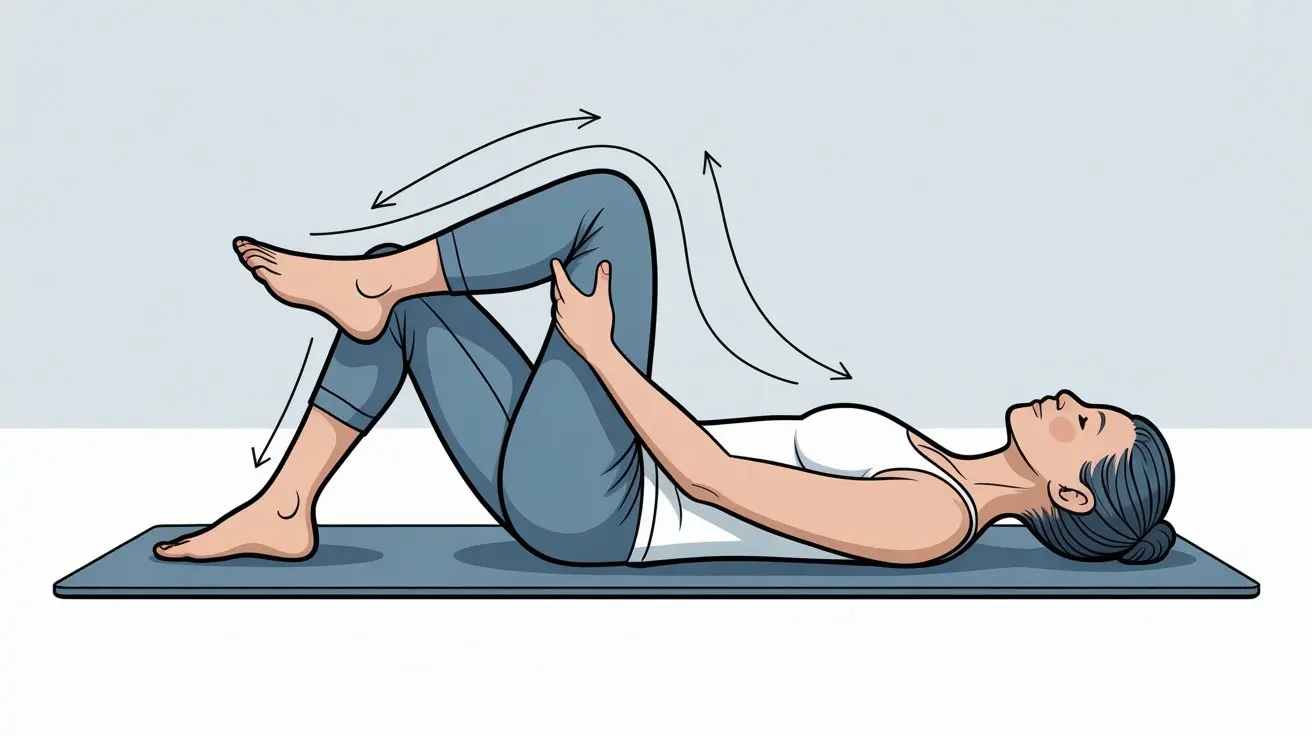
- Lie on your back, knees bent.
- Gently bring one knee toward your chest, holding behind your thigh or in front of the knee.
- Hold 10–15 seconds, then switch legs.
If this increases leg pain, numbness, or sharp back pain when coughing or moving, stop and consult a clinician.
4. Cat–Camel Mobilization
- Start on hands and knees, shoulders over wrists, hips over knees.
- Slowly round your back upward (like an angry cat), then gently sink it down (like a camel) within a comfortable range.
Move smoothly for 8–10 repetitions. This keeps the spine moving without heavy load.
5. Gentle Glute Bridge (Progression)

When pain allows and with professional guidance if possible:
- Lie on your back with knees bent, feet hip-width apart.
- Gently tighten your abdominal muscles.
- Press through your heels to lift your hips until shoulders, hips, and knees are roughly in a line.
- Hold 3–5 seconds, then lower slowly.
Start with 8–10 reps. Stronger glutes and a more coordinated core reduce the odds of the next episode.
How Do You Stop It Coming Back?
Once you’ve calmed the episode, the next goal is keeping it from returning.
Strengthen and Coordinate Your Core
You don’t need extreme “six-pack” workouts. Instead, focus on:
- Regular walking
- Gentle strengthening of hips, glutes, and deep abdominals
- Exercises that train balance and control, not just brute force
Even 10–15 minutes of targeted exercise on most days can make your spine more resilient.
Treat the Cause of the Cough
If coughing keeps setting your back off, it’s worth asking:
- Do you have chronic bronchitis, asthma, allergies, or reflux causing a persistent cough?
- Are you exposed to smoke or irritants?
- Do you have a long-standing unexplained cough?
Addressing the cough itself (with your doctor’s guidance) reduces repetitive strain on the spine.
Practice Spine-Smart Habits
- Use proper technique when lifting: keep objects close, bend at hips and knees, avoid twisting while lifting.
- Break up long sitting with standing or walking breaks.
- Use supportive footwear and a mattress that feels comfortable and supportive.
For the wider evidence base on conservative care, the physical therapy clinical practice guideline Interventions for the Management of Acute and Chronic Low Back Pain: Revision 2021 (George SZ et al., Journal of Orthopaedic & Sports Physical Therapy, 2021) sets out which active treatments are supported and which are not.
Myth vs Fact: What People Get Wrong
| Myth | Fact |
|---|---|
| “If coughing hurts my back, I must need surgery.” | Most people improve with conservative care and never need surgery. |
| “The safest thing is to rest completely until the pain is gone.” | Short periods of rest are fine, but prolonged inactivity usually makes back pain and stiffness worse. Gentle movement is helpful. |
| “If my MRI shows a disc bulge, that’s why coughing hurts and nothing can be done.” | Many people have disc bulges without pain. A tailored program combining education, movement, and lifestyle changes can significantly reduce symptoms. |
| “A painful cough always means a slipped disc.” | Disc issues are one cause, but muscles, joints, SI joints, and even posture can play big roles. |
Special Situations and High-Risk Groups
Certain groups should be especially cautious when coughing.
Older Adults or Those with Osteoporosis
If you have known osteoporosis or are an older adult, a sudden painful cough deserves attention, especially if:
- Pain came on suddenly after a coughing fit
- The pain is sharp and localized
- Standing or walking makes it much worse
In this case, a healthcare professional may consider imaging to rule out compression fractures.
During Pregnancy or After Childbirth
Hormonal changes, increased load on the spine, and altered posture can all contribute to cough-related back pain during pregnancy or after delivery. Because there are additional considerations (like pelvic floor health and joint laxity), it’s wise to seek guidance from a clinician experienced in perinatal care rather than self-treating aggressively.
After Spine Surgery or Recent Injury
If you’ve recently had back surgery or a significant spinal injury, new or worsening pain on coughing should be reported to your surgeon or treating doctor. They can check whether healing is on track and adjust your activity plan or rehabilitation.
FAQ
1. Does back pain when I cough always mean a herniated disc?
No. A herniated disc is one possible cause, but not the only one. Muscle strain, facet joint irritation, SI joint problems, or simple overload can all produce similar pain. Disc-related pain is more likely if coughing also causes sharp, radiating leg pain, tingling, or weakness. Only a proper assessment can tell you for sure.
2. Can it just be a muscle strain?
Yes. In many people it is a muscle or ligament strain, especially after lifting, awkward movements, or prolonged poor posture. Muscles become sensitive and protective, so each cough tugs on already-irritated tissue. The pain can feel intense but often improves within days to weeks with good self-care and gradual return to activity.
3. Should I worry if it only hurts when I cough and not at rest?
Pain that only appears with a cough and not at rest is often mechanical—linked to specific stress on sensitive tissues rather than constant damage. That’s somewhat reassuring. Still, pay attention if:
The pain is severe or worsening
It starts radiating down the leg
You notice numbness, weakness, or any red-flag symptoms
If the pain persists longer than a few weeks, or your daily activities are limited, it’s reasonable to see a healthcare professional for a tailored plan.
4. When do I actually need an MRI?
You don’t automatically need an MRI just because coughing hurts. MRI is more commonly considered when:
There are significant neurological symptoms (marked leg weakness, major numbness)
Red-flag signs suggest serious underlying disease
Pain is severe, persistent, and not improving with appropriate conservative treatment
Surgery or invasive procedures are being discussed
For many people, a combination of good history, physical examination, and a structured rehabilitation plan is enough to manage the problem without immediate imaging.
5. Can coughing make a “slipped disc” worse?
Forceful or repeated coughing can temporarily increase pressure in the spine and may aggravate symptoms of a disc problem, especially if you already have nerve root irritation. That’s why a painful cough is common in people with disc herniations.
However, occasional coughing by itself is unlikely to be the sole cause of a disc herniation. Using supportive positions, improving core strength, and treating chronic coughs can all reduce the strain and help symptoms settle over time.
6. What sleeping position is best if low back pain gets worse when I cough?
The “best” position is the one that reduces your baseline pain and makes coughing more tolerable. Commonly helpful options include:
On your side with a pillow between your knees and your hips roughly stacked
On your back with a pillow under your knees to reduce stress on the lumbar spine
Avoid very soft surfaces that let you sink deeply in one position, and experiment with pillow heights. If coughing at night triggers pain, supporting your midsection with hands or a small pillow when you cough can ease the impact.
7. Is it safe to exercise while my back hurts when I cough?
Often, yes—with the right type and timing of exercise. In the early, very painful phase, focus on:
Gentle walking
Positions of comfort
Breathing and very light core activation
As pain settles, structured exercises for mobility and strength help reduce future episodes. High-impact activities, heavy lifting, and intense twisting movements should usually wait until pain is well controlled and a clinician has cleared you.
8. Why does the pain shoot down my leg when I cough?
When a cough sends pain, tingling, or numbness down the leg, it often suggests nerve involvement—most commonly from a disc herniation or nerve root irritation.
Coughing can briefly increase pressure around the nerve, making symptoms more noticeable. This doesn’t automatically mean you need surgery, but it does mean you should be evaluated by a healthcare professional, especially if:
Leg symptoms are severe or worsening
There is noticeable weakness (e.g., foot drop)
Both legs are involved or red-flag signs appear
9. How do I know if it is coming from my lungs or my spine?
Both lung and spine issues can cause pain that seems worse when you cough, so context matters.
Pain that is mostly in the chest, associated with shortness of breath, fever, or feeling very unwell, is more concerning for lung or heart problems and needs prompt medical attention.
Pain that is localized to the lower back, especially if it changes with posture and is tender to touch or movement, is more likely to be spinal or muscular. However, if you’re unsure, or if cough-related pain comes with breathing difficulty, chest pain, or high fever, seek urgent medical care.
10. Which doctor should I see?
You can usually start with a primary care doctor or general practitioner. They can:
Screen for serious causes
Order tests if needed
Guide initial treatment
Depending on the findings, they may refer you to:
A physiatrist (physical medicine specialist)
An orthopedic spine or neurosurgeon (if surgery is being considered)
A pulmonologist (lung specialist) if the cough itself needs investigation
A physical therapist (physiotherapist) for exercise-based rehabilitation and self-management strategies
The key is not to ignore persistent or worrying symptoms. Early, appropriate guidance can prevent small problems from becoming big ones.
Disclaimer
This article is for educational purposes only and is not a substitute for professional medical advice, diagnosis, or treatment. Always speak with your clinician for personalized guidance.