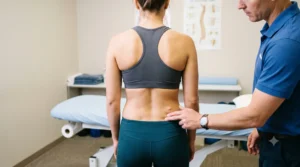
A painless back pop is common. A sound alone cannot identify a cause. Seek assessment if it follows an injury or comes with persistent pain or new neurological symptoms. Research on cracking knuckles does not establish what happens in every spinal joint.
Expert Review: This article includes clinical insights from Dr. Vivek Arora, a physical therapist (physiotherapist) with 20+ years of experience.
A painless pop can happen while moving or stretching. Joint sounds have several possible sources. A sound alone does not show that something moved out of place or that a structure was injured.
Pay attention to what happens with the sound. Pain after trauma, a persistent painful catch, or new leg symptoms can change whether and how quickly you need care.
Key takeaways
- Gas cavity formation in a joint is one possible explanation. The exact cause of a particular lower back sound cannot be identified by listening.
- Seek assessment for ongoing pain, difficulty moving or new leg symptoms after a pop.
- A review of five studies found no evidence that an audible pop improved pain outcomes during spinal manipulation.
- If you often want to crack your back because it feels stiff, try comfortable movement or changing position. Get assessed if stiffness or pain persists.
Is lower back popping normal, or a sign of a problem?
A sound without pain or a change in movement usually needs little attention. If a pop is painful, happens during an injury or brings new neurological symptoms, follow the guidance below.
What to tell a clinician
- When did you first hear the pop, and were you moving, lifting or recovering from an injury?
- Do you have pain, a catch or trouble standing up straight?
- Have you noticed new leg weakness, tripping, tingling or numbness?
- Do you have osteoporosis or a history of fractures or take long-term steroids?
Get emergency care now for new saddle numbness, difficulty passing or controlling urine, new loss of bowel control or sensation, new sciatica on both sides, or severe or worsening weakness or numbness in both legs.
What causes lower back popping?
Back sounds can come from joints or nearby tissues during movement. Rapid changes in the space between joint surfaces may create a gas cavity. This is one possible explanation.
In a real-time MRI study, researchers observed cavity formation while one participant cracked finger joints. The study did not observe lumbar joints. It cannot tell us how often the mechanism explains lower back popping.
A sound during a twist or bend cannot identify a particular joint, muscle or tendon. Report persistent pain, catching or restricted movement if they occur.
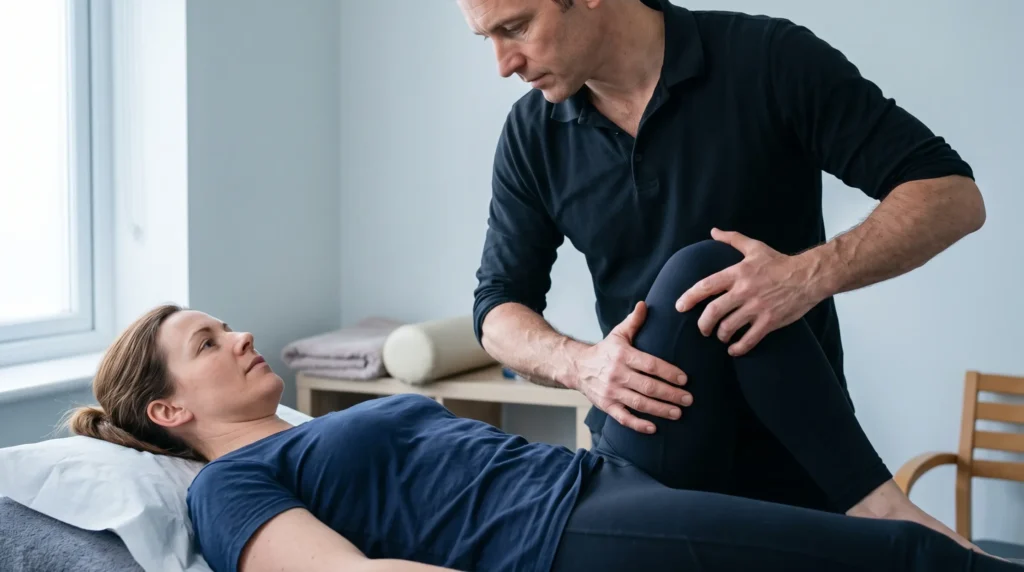
A single pop cannot show which joint or tissue produced the sound.
A click that repeats can still have several causes. The important detail is whether there is pain, loss of function or a recent injury.
| What you notice | What to pay attention to | What to do |
|---|---|---|
| Occasional painless pop | No change in movement or function | Continue usual activity if comfortable |
| Repeated click | Whether the click is painful or affects activity | Arrange assessment if it persists with pain or limits function |
| Grinding sensation | Whether it occurs with pain, swelling or a change in movement | Seek advice if persistent and troublesome |
| Pop with a painful catch when standing up | Difficulty straightening or repeated catching | Arrange an assessment |
| Snap at the front of the hip | Whether it occurs with hip pain or restricted movement | Ask about a hip assessment if persistent |
| Pop while lifting followed by pain | Severity of pain and any signs after the injury | Use the warning signs below to decide how quickly to seek care |
Is it your lower back, your hip or your pelvis?
Sounds felt near the lower back can also come from the hip or pelvis. Note where you feel it, which movement brings it on and whether it is painful.
A painful snap at the front of the hip is worth mentioning during an assessment. Avoid repeatedly trying to reproduce it.
The sacroiliac joint lies where the spine meets the pelvis. Pain nearby has several possible sources, and a clunk cannot identify which one is responsible.
If a catch stops you rising or makes you use your hands for support, report it. The examination can check what is limiting movement.
How often a sound occurs can be useful to report. The sound cannot confirm arthritis or show that a segment of the spine is unstable.
When is a pop in your lower back a red flag?
Seek care based on the injury and associated symptoms. These signs matter even if the sound itself was brief.
- Emergency care now: new numbness around the genitals or anus, trouble passing or controlling urine, loss of bowel control or sensation, new bilateral sciatica, or severe or worsening weakness or numbness in both legs.
- Prompt assessment: a foot that has started dragging or worsening leg weakness. Tell the clinician about associated pain, tingling or numbness.
- Urgent assessment: sudden severe back pain with osteoporosis or long-term steroid use, including after a small movement or minor injury.
- Urgent assessment: severe pain after a fall or collision. Get emergency help after major trauma or with new neurological symptoms.
- Seek urgent medical assessment for fever or feeling very unwell with back pain. Report new persistent pain with unexplained weight loss or a history of cancer promptly.
Do you need an X-ray or MRI for a popping back?
A painless noise is usually insufficient reason for imaging. Imaging may be appropriate if a clinician suspects a fracture, serious illness or a nerve problem and the result would affect your care.
- An X-ray or other imaging may be used if fracture is suspected.
- A clinician may consider other X-rays if the history and examination suggest that the result would guide treatment.
- MRI can help when serious nerve compression or another urgent condition is suspected, or when a specialist needs more information to guide treatment.
Is it bad to crack your own lower back?
Comfortable movement may produce a pop. Avoid forcing a movement to get a sound, especially if you have pain, a recent injury or surgery, or a condition affecting your bones.
An audible pop does not demonstrate that a bone needed to be realigned. A systematic review of spinal manipulation found no evidence of better pain relief when an audible pop occurred.
If a gentle twist is comfortable, keep it within a range you can control. Leave out the jerk or extra leverage.
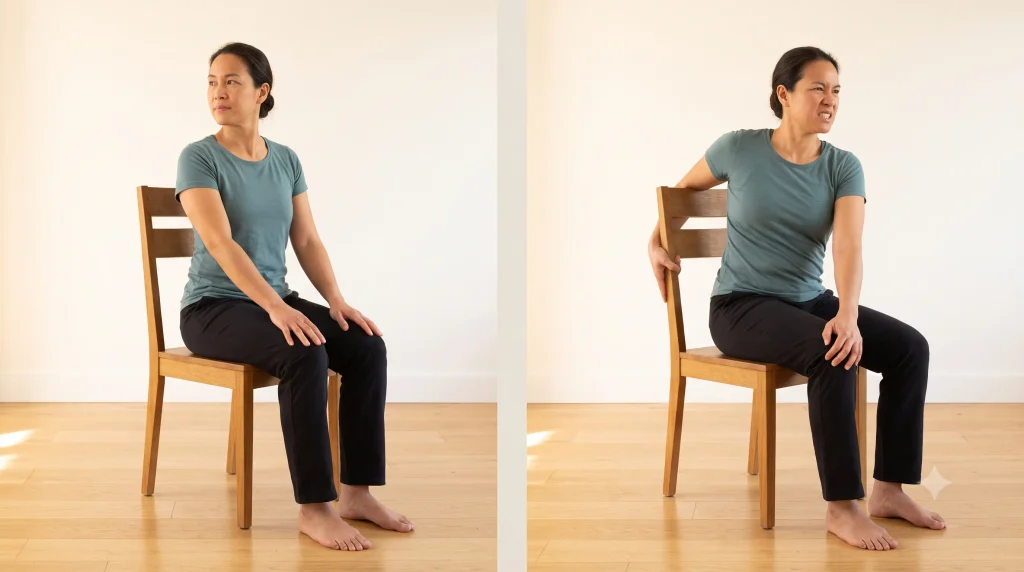
Ask your clinician for individual guidance after spinal surgery or if you have osteoporosis, a recent injury, or symptoms that persist or spread into the leg.
From the Clinic: Dr. Arora’s Expert Insight
Tell the clinician what you were doing when the sound occurred and whether it changed your ability to move.
If it frequently feels like you need to crack your back to move comfortably, an assessment can help identify which activities are difficult and what you can try.
A gentle movement or a position break is one option when you feel stiff. Choose something that feels comfortable.
What should you do if your lower back popped and now hurts?
If pain is mild after a pop and there are no warning signs, avoid repeating the provoking movement and choose comfortable activity. Get emergency care now for new difficulty passing or controlling urine, loss of bowel control or sensation, or numbness around the genitals or anus. New sciatic pain down both legs or severe or worsening weakness or numbness in both legs also needs emergency care. Get urgent medical assessment for new or worsening weakness in one leg.
A painful pop may have several causes, including a strain or irritation of a joint or nerve. Pain, function and any warning signs guide the next step.
What to do today
- Avoid repeatedly provoking the painful movement to check it.
- Try a short, comfortable walk if you can do it safely.
- Use an easy resting position and change it when you want to move.
- If warmth helps, protect your skin and follow the pack instructions. Ask a pharmacist which pain relief, if any, is safe for you.
Seek assessment if symptoms worsen, spread into the leg or interfere with normal activities. Use the urgent guidance above for warning signs.
How do you stop the urge to crack your lower back?
If you are mostly trying to relieve stiffness, try a comfortable movement or position change first. Stop if symptoms worsen.
Gentle movement options
- If comfortable, lie on your back with knees bent and let them move a little to either side.
- Try a small side-lying rotation if it feels comfortable. Move slowly and stay within an easy range.
- A supported hip stretch may suit some people. Avoid it if it increases back or leg symptoms.
- Try a short walk or a break from sitting if that helps.
These are ways to vary your movement. Their effect varies with the cause of stiffness and what you can comfortably do.
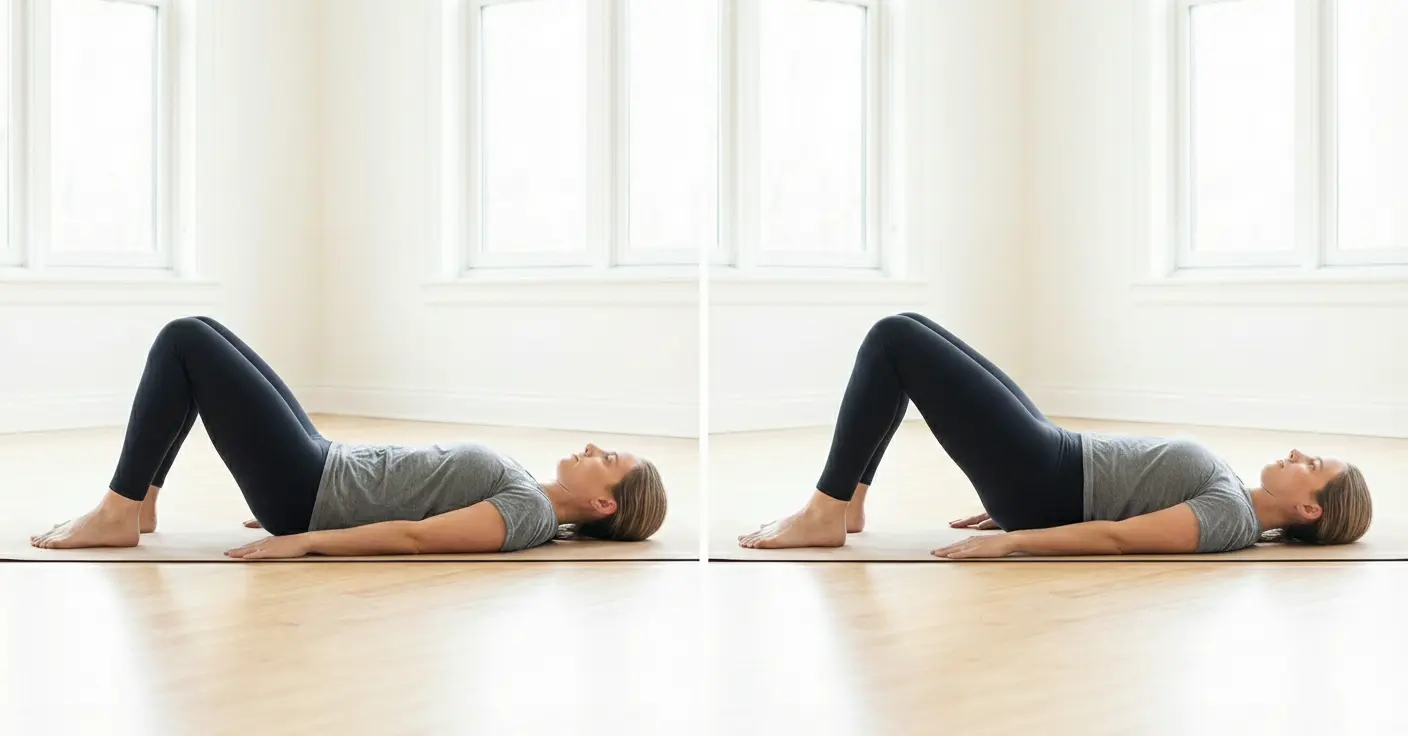
If stiffness keeps recurring, tell your clinician when it occurs and what relieves it. Mention night waking, long-lasting morning stiffness or other joint symptoms.
Returning to usual movement
| Stage | When | Examples | What to look for |
|---|---|---|---|
| Move comfortably | If mild symptoms have no warning signs | Brief walks and comfortable movement breaks | Pain and daily activity are manageable |
| Build activity tolerance | As your usual movements are easier | Gentle strengthening chosen for your needs | You can repeat the current activities without a sustained increase in symptoms |
| Resume normal demands | Individual timing | Gradual return to lifting, exercise or sport | You and your clinician agree on any adaptations you need |
If you want to exercise, pick movements you can do comfortably and that suit your goals. Seek advice if your activity remains limited.
Do’s and don’ts for a back that pops
- Use a comfortable range and move without bouncing or forcing a stretch.
- Don’t lever against a chair back or door frame, or let anyone walk on or bear-hug your back.
- There is no need to repeat a movement just to recreate the sound.
How long until it settles, and when is more needed?
A painless sound does not require a break from normal activity. If pain follows, the return to usual activity depends on the injury, symptoms and what you can safely do.
- For desk work or driving, change position when it helps. Seek advice if pain or weakness makes driving unsafe.
- For gym training, start with comfortable exercises and a manageable load if appropriate.
- For golf or racket sports, try gentle practice and increase demand gradually.
- For heavy lifting, build back gradually and seek advice if pain, weakness or a catch makes the task difficult.
If progress stalls
Ask for assessment if painful catching keeps recurring, symptoms worsen or they continue to limit daily activity.
Is surgery ever needed for a popping back?
A sound by itself does not require surgery. A specialist may consider procedures for certain diagnosed conditions when symptoms and relevant examination or imaging findings warrant them.
The significance of the sound depends on the symptoms that come with it and how they change.
The bottom line on lower back popping
A painless pop by itself usually needs little attention. Seek care if the sound follows a significant injury, comes with persistent pain or is accompanied by any warning signs above.
Frequently asked questions
1. Why does my lower back pop every time I stand up?
A sound during the first movement after sitting can come from a joint or nearby tissues. If it is painful or regularly affects how you stand up, arrange an assessment.
2. Can cracking your lower back cause a herniated disc?
A sound does not show that a disc has herniated. If a forceful movement causes pain or you develop new leg symptoms, follow the assessment guidance above.
3. Why does my back feel tight again an hour after I crack it?
Some people feel brief relief after a pop and stiffness may return. Try changing position or moving comfortably and seek advice if stiffness persists.
4. Is lower back cracking a sign of arthritis?
Cracking alone does not diagnose arthritis. If it occurs with ongoing stiffness, pain or restricted movement, a clinician can assess the symptoms.
5. Is it normal for my lower back to pop during squats or deadlifts?
Painless sounds can occur during a lift. Stop and seek advice if a pop is followed by new pain, weakness or difficulty moving.
6. Will my back get stiffer if I stop cracking it?
There is no need to crack your back to keep it moving. Try comfortable activity and seek an assessment if stiffness affects daily life.
Medical disclaimer
This article provides general information. It cannot assess your symptoms or give you an individual treatment plan. Ask for individual exercise advice after surgery, with osteoporosis or inflammatory spinal disease, or during pregnancy. Get emergency care now for new difficulty passing or controlling urine, loss of bowel control or sensation, or numbness around the genitals or anus. New sciatic pain down both legs or severe or worsening weakness or numbness in both legs also needs emergency care. Get urgent medical assessment for new or worsening weakness in one leg.
References
- Moorman AC, Newell D. Impact of audible pops associated with spinal manipulation on perceived pain: a systematic review. Chiropractic & Manual Therapies. 2022;30(1):42.
- Kawchuk GN, Fryer J, Jaremko JL, et al. Real-time visualization of joint cavitation. PLOS ONE. 2015;10(4):e0119470.