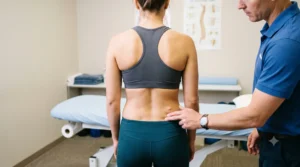
Check your skin before taping. Avoid taping over broken or irritated skin. Remove tape if it causes itching, burning, redness or blistering. Any pain relief can vary.
Kinesiology tape is the brightly colored strapping you see on runners, gym-goers and increasingly on people at desks. Search for low back pain KT tape and you will find hundreds of confident tutorials promising to unload your spine, correct your posture, and fix the disc. Almost none of them mention what the research actually shows, which is a shame, because the honest version is more useful than the sales pitch.
Evidence about kinesiology tape for low-back pain remains uncertain. A 2026 systematic review of randomized trials reported some short-term improvements in pain and function in certain comparisons, but results varied by condition and comparator. Taping has not been shown to provide durable spinal support or replace active rehabilitation.
Related reading: the exercise-based approach to lower-back pain. These explanations are educational and do not replace an individual assessment.
Key takeaways
- The tape does not support your spine. It weighs almost nothing and stretches. It cannot hold a joint, reposition a disc, or brace a lumbar segment, and no application technique changes that.
- The effect, where present, is sensory. Tape on skin gives continuous feedback that appears to reduce perceived pain and guarding for a short window.
- Judge it in minutes, not weeks. Re-test your worst movement immediately after taping. No clear change means the application is not helping you today.
- Less tension is better. The most common self-taping error is stretching the tape hard, which irritates skin and increases protective muscle tone.
- It buys time, it does not build capacity. Loading and graded exercise are what change the trajectory of back pain. Tape is scaffolding while that work happens.
Does low back pain KT tape actually work?
Possibly for short-term comfort. Some randomized trials and meta-analyses report modest improvements in pain or function, while others show little difference from sham taping or active treatment. The clinical relevance and durability are uncertain; KT tape should be considered optional, not a necessary back-pain treatment.
A 2026 systematic review of 54 randomized trials found that taping may reduce pain and improve function over the short term in some low-back-pain groups. The comparisons varied, and durable benefits for chronic or radiating symptoms remain uncertain; the findings do not establish taping as a replacement for exercise-based care.
The trial evidence also has real limitations worth naming. Blinding is close to impossible when the intervention is a visible colored strip on your back, sham taping is an imperfect comparison, and studies use different patterns, tensions and wear times, which makes pooling messy. When you see a confident claim that taping reduces pain by a specific percentage, treat it with suspicion.
Taping may be a comfort option if it does not irritate your skin, but benefits cannot be promised. Continuing useful activity and obtaining appropriate assessment when needed matter more than depending on tape to treat the cause.
How does it work, if not mechanically?
Almost certainly through the skin rather than the spine. A strip of elastic cotton tape weighing a few grams cannot resist the forces travelling through a lumbar segment when you bend or lift. What it can do is stimulate skin receptors continuously, which changes the sensory information reaching the spinal cord and brain, and that appears to influence how much pain you register and how guarded you move.
Three explanations get proposed, and they are worth ranking honestly:
- Sensory input and pain modulation — most plausible. Constant low-level tactile input competes with pain signalling and gives the nervous system something else to attend to. This mechanism fits the observed pattern of small, immediate, short-lived effects.
- Proprioceptive feedback — plausible. Tape stretches as you move, so it acts as a reminder when you drift into a position you were trying to avoid. This is why many people report moving more confidently rather than feeling physically held.
- Lifting the skin to decompress tissue and improve lymphatic flow — weakly supported. This is the mechanism most often cited in marketing and least supported by measurement. Treat it as a hypothesis, not a fact.
Expectation matters too, and that is not a criticism. A visible intervention applied with care, that you can see and feel all day, reliably produces some benefit through belief and reduced threat. For a harmless strip of tape, borrowing that effect is a reasonable trade — as long as it is not the only thing you are doing.
How do you apply KT tape to your lower back?
Clean dry skin, tape applied with the back in a slightly bent position, anchors laid down with zero stretch, and light tension of roughly 15 to 25 percent through the middle only. Round the corners of each strip, rub the tape to activate the adhesive, and re-test your worst movement immediately. That sequence covers most of what separates a useful application from an irritating one.
Before you tape
- Clean and dry the skin. Wipe with soap and water or an alcohol wipe and let it dry fully. Lotions, oils and sweat are the main reason tape peels within hours.
- Trim, do not shave. Dense hair stops adhesion, but shaving immediately before taping irritates the follicles under an occlusive strip. Clip short instead, ideally a day ahead.
- Round the corners of every strip. Square corners catch on clothing and lift. Two quick snips per end roughly doubles how long an application survives.
- Patch test if your skin reacts to plasters. A 5 cm (2 inch) piece on the forearm for 24 hours tells you whether a full application is worth attempting.
- Get into position first. Sit or stand and bend gently forward so the skin over your low back is lengthened. Taping on shortened skin means the tape does nothing once you move.
The tension rule that matters most
Every strip has three parts: two anchors and a middle. Anchors go down with zero stretch — peel the backing, lay the last 3 to 5 cm (1 to 2 inches) flat without pulling. Tension belongs only in the middle section, and light is better. Around 15 to 25 percent of available stretch is plenty for the low back; if the tape looks visibly strained or the skin puckers hard around it, you have used too much.
Excess tension is the single most common self-taping mistake. It creates constant skin drag, which is uncomfortable, tends to increase protective muscle tone rather than reduce it, and substantially raises the chance of blistering where the anchors sit. Once every strip is down, rub briskly along its length for 10 to 15 seconds — the adhesive is heat-activated and this step genuinely affects how long it stays on.
Which pattern to use
| Pattern | Best suited to | How to lay it down | Tension |
|---|---|---|---|
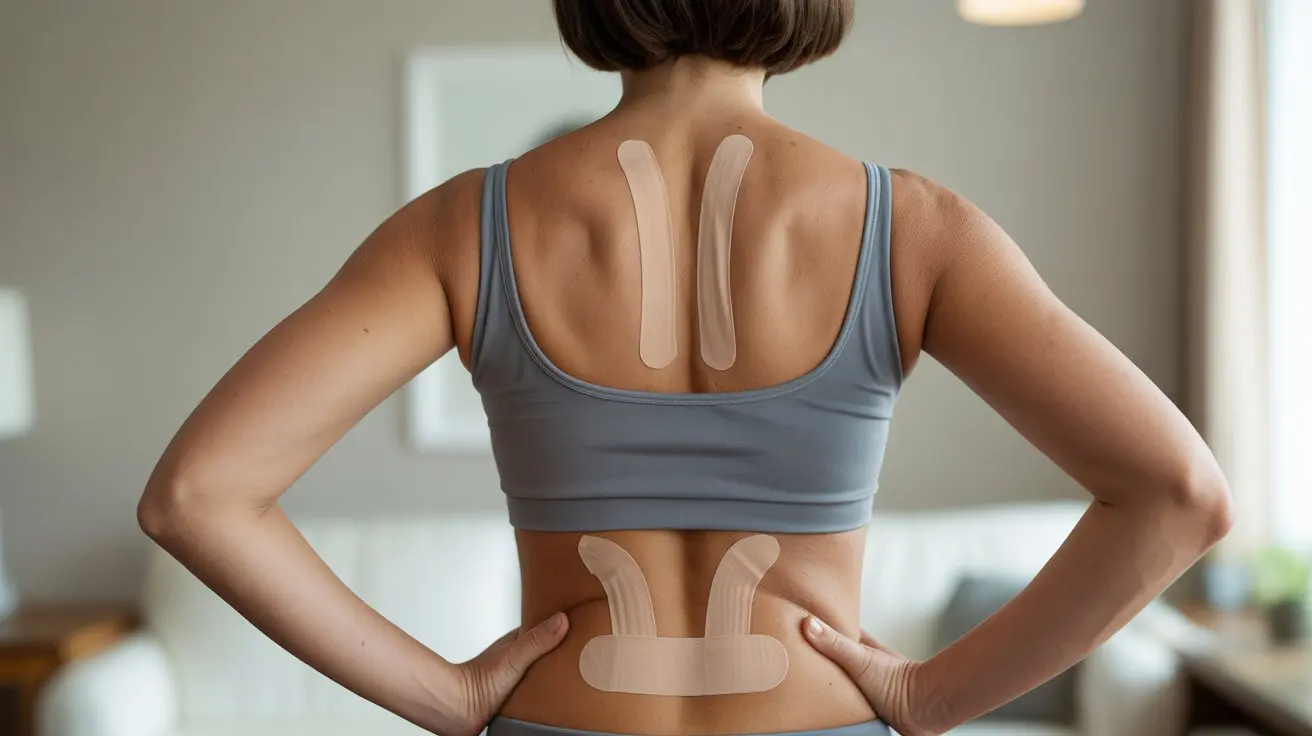
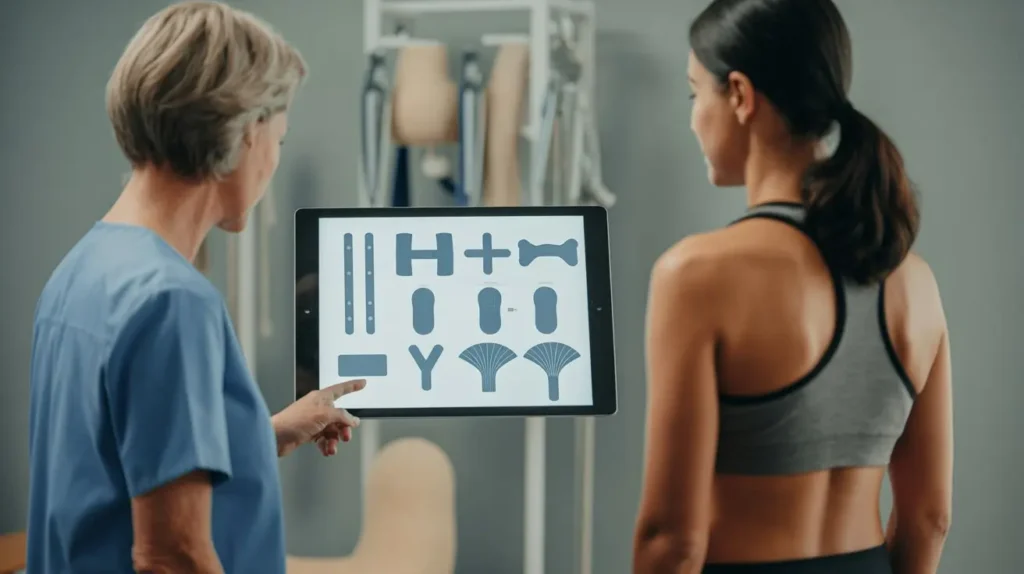
| Two vertical paraspinal strips | Diffuse ache either side of the spine, worse after standing or sitting | Bend forward. Anchor each strip just below the belt line, run upward parallel to the spine about 2 cm (three quarters of an inch) either side, finish above the painful area. Lay the top anchors down as you return upright. | Light, middle only |
| Horizontal strip across the sore spot | One clearly identifiable tender area you can cover with a palm | Bend forward. Anchor at one side, stretch the middle across the tender point, anchor the far side. Often layered over the vertical strips as a second stage. | Light to moderate, middle only |
| Fan or star, four narrow tails | A concentrated painful point with no clear direction of aggravation | Cut one strip lengthwise into four tails leaving a shared base. Anchor the base, fan the tails outward over the area so they cross the sore point at different angles. | Very light |
| Diagonal strip toward the opposite hip | Pain that clearly follows one side, often provoked by twisting or single-leg loading | Anchor near the sacrum on the painful side, run diagonally upward and outward toward the opposite lower ribs, following the direction that feels supportive on testing. | Light, middle only |
Re-test immediately, then decide
Before taping, pick the one movement that reliably provokes your symptoms — standing up from a chair, bending to the floor, getting out of a car, the first ten steps after sitting. Rate it out of ten. Tape, then repeat exactly that movement within a minute or two.
- Clearly better: keep the application and get on with your day. Note the pattern and tension so you can repeat it.
- No change: try one adjustment — usually less tension or a different direction. If a second attempt does nothing either, taping is not your tool today.
- Worse or pinching: take it off. Tape should never sharpen symptoms, and pushing through does not lead anywhere useful.
How long should you wear it, and how do you get it off?
Follow the tape manufacturer’s wear-time guidance and remove it sooner if itching, redness, burning or discomfort occurs. To remove it, soften the adhesive with warm water or suitable oil and peel slowly while supporting the skin. Do not apply over broken or irritated skin.
- First application: one to three days is a sensible trial while you learn how your skin responds.
- Showering: fine. Pat dry rather than rubbing, and avoid running very hot water directly onto the strips, which softens the adhesive and lifts the edges.
- Clothing: loose and breathable over the taped area. Waistbands sitting directly on an anchor are the usual cause of premature peeling.
- Removal aids: baby oil or olive oil worked under the edge for a minute makes stubborn adhesive release with much less pull on the skin.
Mild pink imprint lines after removal are normal and fade within an hour. Itching, burning, raised welts or blistering are not — take the tape off immediately, leave the skin bare, and do not reapply to that area until it has fully recovered. Wearing tape continuously for weeks is not a plan; it is a sign the underlying problem is not being addressed.
Who should not use kinesiology tape?
The risks are minor but real, and they are almost all skin-related. Avoid taping over broken, infected, irritated or sunburned skin, over moles you are monitoring, or anywhere sensation is reduced — if you cannot feel a developing problem, you cannot react to it. Take extra care if any of the following apply:
- Known adhesive or acrylic allergy. Reactions to plasters and dressings usually predict a reaction to kinesiology tape, which uses a similar acrylic adhesive.
- Fragile or thin skin. Long-term corticosteroid use, some connective tissue conditions and older age all reduce skin resilience, and removal is what causes the damage.
- Reduced sensation or circulation. Diabetic neuropathy and peripheral vascular disease both mean skin problems can develop and progress without you noticing.
- Active cancer, deep vein thrombosis, or cellulitis in the region. These need medical management, and applying tape over them delays the right conversation.
- Pregnancy. Taping the low back is common and generally well tolerated, but the pattern should account for changing posture and increased tissue sensitivity, so it is worth having a clinician set it up first.
👨⚕️ Dr. Arora’s Clinical Note
Patients regularly ask whether the tape is supporting the spine the way a belt does. It is not, and I say so, because the honest answer changes how the tape gets used. What it offers is a movement cue, and a cue is only worth having if it changes something you can measure in the room.
The immediate re-test is the whole test. Tape, then repeat the movement that reliably provokes symptoms. If there is no clear reduction in strain or guarding within a couple of minutes, that pattern and tension are not right for that person on that day, and re-taping the same way at home will not change the result.
The second thing worth saying plainly is that more stretch is not better. Excess tension creates constant skin pull, which tends to raise protective muscle tone and leaves people feeling restricted rather than supported. Skilled taping uses light tension and thoughtful placement to nudge you toward a calmer movement pattern — and then you earn your way off the tape by building endurance and control.
When should you stop taping and get assessed?
Some symptoms make taping irrelevant, because they point to problems that need diagnosis rather than comfort measures. Applying tape over any of the following delays care that matters, and the delay is the harm. Seek prompt medical assessment if you have:
- Numbness around the groin or inner thighs, or new difficulty controlling the bladder or bowel. Any of these signs may indicate cauda equina syndrome, where the nerve roots at the base of the spinal cord are compressed. It is a surgical emergency and needs immediate hospital assessment, not an appointment next week.
- Progressive weakness or numbness in one or both legs. Worsening neurological deficit suggests ongoing nerve compression rather than irritation, and the rate of change is what determines how urgently it is investigated.
- Severe pain immediately after a fall, collision or other significant trauma. Fracture risk is the concern, particularly with osteoporosis, long-term steroid use, or in older adults where a modest impact can be enough.
- Unexplained weight loss, night sweats, or fever alongside new back pain. These raise the possibility of infection or malignancy, and both need investigation rather than symptomatic management.
- A previous cancer diagnosis with new or changed back pain. Spinal metastases can present exactly this way, which is why the history changes the threshold for imaging.
- Constant, unrelenting pain that is not eased by any position and wakes you at night. Mechanical back pain usually varies with position and load. Pain that does not is behaving differently and deserves a proper explanation.
Short of those, a first episode of back pain that is not settling after a few weeks, or pain that keeps returning, is worth a physical therapist assessment simply because the tape is treating a symptom while the cause goes unexamined.
What actually changes back pain over time?
Movement, graded loading and staying active. Clinical guidelines put self-management advice and exercise at the centre of low back pain care, and are notably unenthusiastic about passive supports. Tape belongs in the same category as heat: useful for getting through a bad week, irrelevant to where you are in six months.
UK guidance is explicit on this point. The NICE guideline on low back pain and sciatica recommends self-management advice and exercise programs as core treatment, and specifically advises against offering belts, corsets, foot orthotics, rocker sole shoes or traction. Taping is not named either way, but the direction of travel is clear: passive devices strapped to the body are not what moves the needle.
What does move it, in practice:
- Hip and trunk strength. Bridges, hip hinges, side planks and loaded carries build the capacity that determines whether a normal day provokes symptoms.
- Graded exposure to the movement you are avoiding. If bending is the problem, bending in small controlled doses is usually part of the answer, not the thing to avoid forever.
- Breaking up sitting. Standing and moving for a minute every 30 to 45 minutes costs nothing and reliably outperforms buying a new chair.
- Sleep and stress management. Both change pain sensitivity, which changes how much a given load hurts.
Used with that framing, low back pain KT tape has a legitimate place: it can make the first two weeks of a rehab program more tolerable, which helps people start. A fuller picture of what to do instead of taping indefinitely is set out in our complete guide to lower back pain causes and treatment.
Frequently asked questions
Can KT tape replace a back brace?
No. Kinesiology tape does not provide the rigid support of an orthopedic brace, and neither should be used routinely without a clear indication for low-back pain.
How quickly should I feel a difference?
Some people notice a short-term comfort change, but not everyone responds. Evidence does not establish a predictable onset or duration of benefit.
Does low back pain KT tape help sciatica?
KT tape has not been shown to treat nerve-root compression. It may be considered for short-term comfort, but persistent sciatica or weakness needs proper assessment.
Can I train or go to the gym with tape on?
Training may be possible with tape if your skin tolerates it and symptoms are manageable. Tape does not protect a painful spine or justify increasing your usual load.
Does the color or brand make a difference?
Tape color does not establish effectiveness. Adhesive and skin sensitivity matter more than marketing claims.
What if taping makes the pain worse?
Remove the tape if pain, burning, itching, redness or blisters develop. Do not continue or reapply over irritated skin.
Can I apply it to my own back, or do I need help?
Some simple patterns can be applied independently, but avoid twisting into painful positions. Ask for help if application is awkward or if skin sensitivity is a concern.
Is it worth using at all, given the weak evidence?
Possibly as an optional comfort aid. A 2026 systematic review found some short-term effects but uncertain longer-term benefit; do not substitute taping for appropriate activity and treatment.
References
- Inostroza-Quiroz J, Solano-López R, Bascour-Sandoval C, et al. Effectiveness of kinesio tape in people with low back pain: a systematic review with meta-analysis. European Journal of Physical and Rehabilitation Medicine. 2026;62(2):186–198. doi:10.23736/S1973-9087.26.09064-7. PubMed record.
- National Institute for Health and Care Excellence. Low back pain and sciatica in over 16s: assessment and management. NICE guideline NG59. https://www.nice.org.uk/guidance/ng59
This article is for general education and does not replace individual medical assessment. If your symptoms are severe, changing, or accompanied by any of the warning signs above, arrange a proper evaluation.