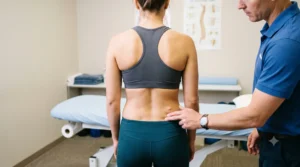
Check for emergency symptoms before trying exercise. Get emergency care now for new difficulty passing or controlling urine, new loss of bowel control or sensation, numbness around the genitals or anus, or new sciatic pain down both legs. Severe or worsening weakness or numbness in both legs also needs emergency care. See the home program with exercise options and stop rules for practical next steps.
Why can exercise help with lower-back pain?
Many people finish their workday feeling tightness and discomfort in the lower back, and it’s a very common experience. Low back pain is one of the most common health problems worldwide—and the large majority of people will experience at least one episode at some point in life.
Sometimes it’s just a dull ache from sitting too long. Other times, it’s sharp, sudden pain after lifting something heavy. For many, it becomes a recurring problem that interferes with work, sleep, and daily activities.
Exercise and usual daily activity can help many people manage lower-back pain, but no single movement prevents every flare. The best starting point depends on symptoms, preferences, ability and response to activity. Build up gradually and seek assessment for new neurological symptoms or other warning signs.
For a structured plan rather than a general overview, our complete physical therapy program for low back pain exercises takes you through a full four-week home progression, with a short self-test to work out which direction of movement your back actually prefers.
Understanding Low Back Pain
Common Causes
Low back pain can have many triggers, including:
- Muscle or ligament strain – lifting, twisting, or sudden awkward movements.
- Disc problems – herniated or bulging discs pressing on nerves.
- Poor posture – sitting slouched at a desk for hours.
- Arthritis and spinal stenosis – narrowing of spinal spaces.
- Sedentary lifestyle – weak muscles fail to support the spine.
Risk Factors
Certain factors increase your likelihood of developing pain:
- Excess body weight → adds pressure on the spine
- Smoking → reduces blood flow to spinal tissues
- Stress & anxiety → increase muscle tension
- Aging → natural wear and tear of joints
When Exercise May Not Help
Get emergency care now for new difficulty passing or controlling urine, loss of bowel control or sensation, or numbness around the genitals or anus. New sciatic pain down both legs or severe or worsening weakness or numbness in both legs also needs emergency care. Get urgent medical assessment for new or worsening weakness in one leg. Stop exercising and follow the NHS back pain guidance.
Why Exercise is Essential for Back Pain Relief
Prolonged bed rest is generally discouraged for uncomplicated low-back pain. Guidelines recommend staying as active as reasonably possible and considering exercise chosen around the person’s needs and capabilities.
Physical Benefits
- Improves flexibility and spinal mobility
- Strengthens supporting muscles (core, hips, glutes)
- Increases circulation → speeds up healing
- Reduces stiffness from inactivity
Psychological Benefits
Chronic pain can affect confidence, sleep and daily activity. Appropriate exercise may help by:
- Releasing endorphins (natural painkillers and mood boosters)
- Reducing anxiety and fear of movement
- Restoring confidence in everyday activities
👉 Balance is key: complete rest weakens muscles, while overdoing it may worsen symptoms. Gentle, consistent movement is the sweet spot.
👨⚕️ Dr. Arora’s Clinical Note:
Many patients ask me if they should “stretch everything” because the back feels tight. Here’s the counter-intuitive truth: that “tightness” is often protective muscle guarding, not a real flexibility problem. If you stretch aggressively in the wrong direction, you can keep the tissues irritated even though the stretch feels satisfying for 30 seconds.
There is no one-minute movement test that can diagnose the source of back pain or safely prescribe exercises for everyone. Try gentle, familiar movements only within a comfortable range; stop if symptoms travel farther down a leg, numbness increases or weakness develops. A physical therapist can assess directional preference when it is relevant.
Rule that prevents flare-ups: an exercise should feel the same or better during the set, and better within 10–15 minutes after. If not, reduce the range or switch the direction—don’t “push through” sharp or radiating pain.
How should you choose a starting movement?
| What you notice | Possible option | Stop and seek advice if |
|---|---|---|
| Gentle movement eases stiffness | Easy walking or comfortable spinal mobility | Pain or leg symptoms increase and stay worse |
| You want to rebuild strength | Gradual sit-to-stand, bridge or supported trunk exercises | A movement repeatedly triggers spreading leg pain |
| Walking causes increasing leg heaviness or numbness | Shorter intervals and assessment of the underlying cause | Weakness progresses or walking capacity declines |
| New bladder or bowel change, saddle numbness | Do not start home exercises | Seek emergency care |
Which exercises might suit your symptoms?
1. Stretching Exercises for Flexibility
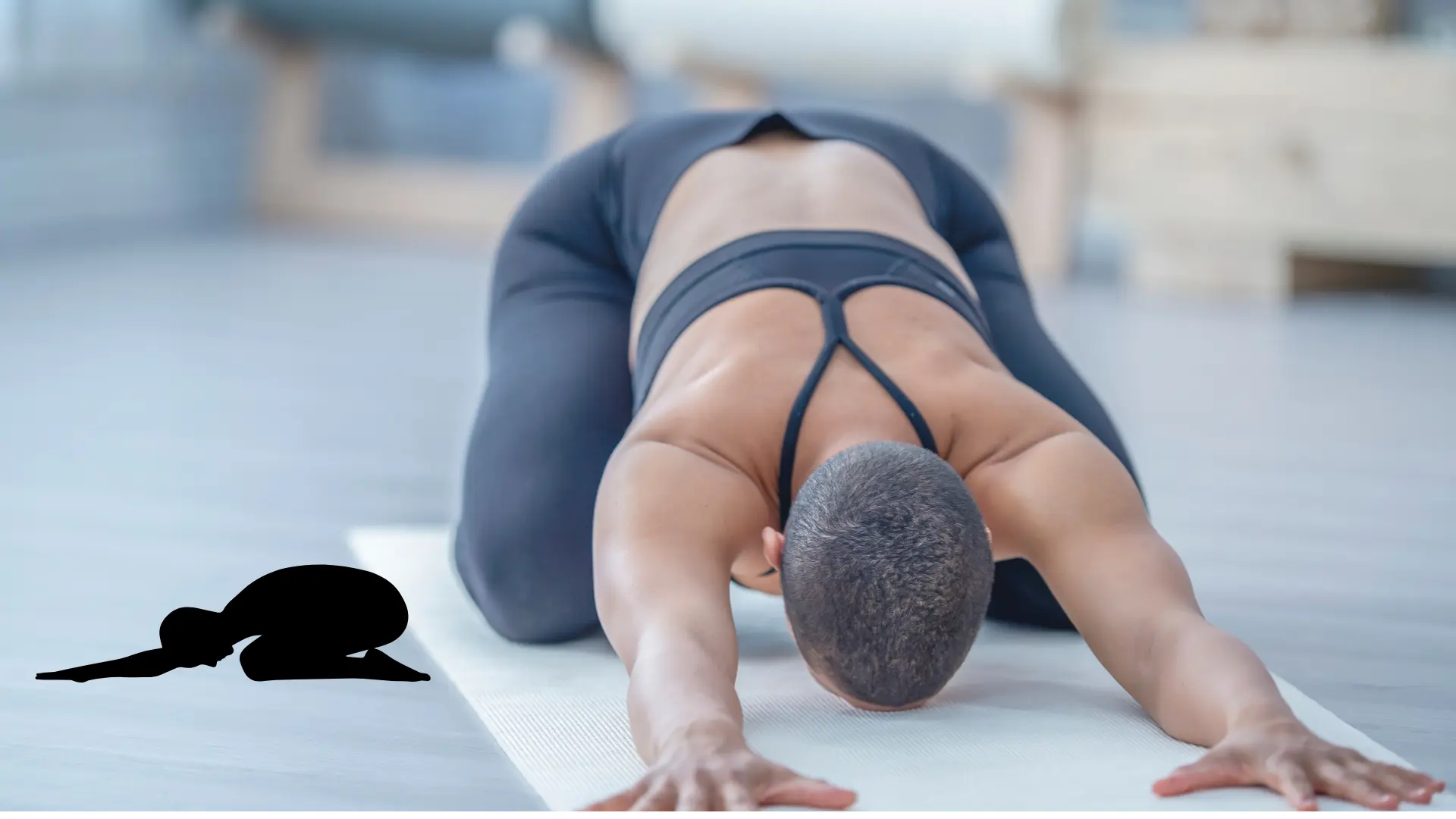
These reduce stiffness and ease tension:
- Knee-to-chest stretch – Lie on your back, pull one knee toward your chest, hold 20–30 seconds, switch sides.
- Child’s pose – Sit back on your heels, stretch arms forward, and lower your chest.
- Cat-cow stretch – Start on your hands and knees, then slowly arch your back upward and round it downward in a gentle flow.
2. Core Strengthening & Stability Exercises
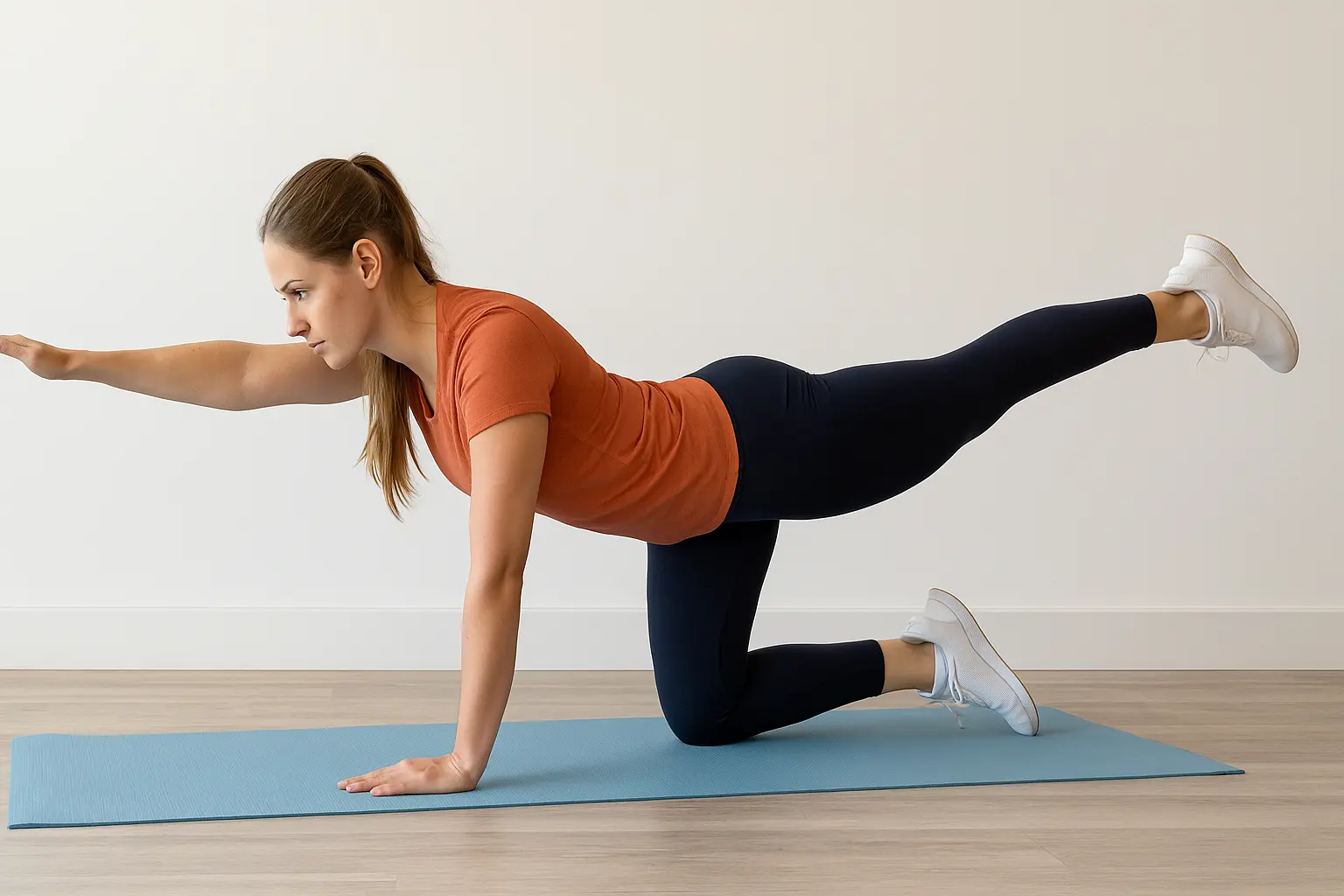
Progressive trunk, hip and general fitness work can improve strength and function, but core weakness is not the proven cause of most lower-back pain. Progression should be guided by what the person can do comfortably.
- Pelvic tilts – Lie on your back, tighten abs, and flatten your spine against the floor.
- Bridges – From the same position, lift hips up while keeping shoulders grounded.
- Bird-dog exercise – On all fours, extend opposite arm and leg, hold, then switch.
- Modified planks – Hold from knees if needed to reduce strain.
3. Low-Impact Aerobic Exercises
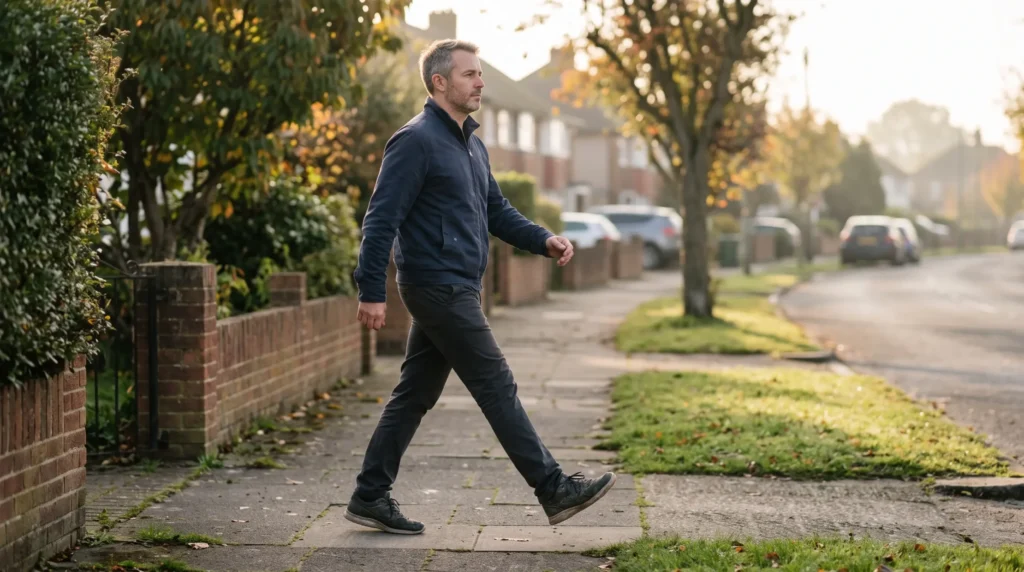
Cardio helps circulation and endurance without jarring the spine:
- Walking – Simple, free, and gentle.
- Swimming – Aquatic exercises help by reducing spinal stress while still allowing effective movement.
- Stationary cycling – Builds endurance and strengthens legs; use upright posture.
When should you modify or stop an exercise?
Not all exercises are safe. Some increase spinal stress:
- High-impact activities – running, jumping, aggressive aerobics.
- Heavy weightlifting – deadlifts, squats, overhead presses with poor form.
- Forward toe touches & sit-ups – can overstretch discs and muscles.
- Twisting with weights – golf swings, jerky movements risk disc injury.
The key rule is simple—never push through sharp pain during exercise.
How to Exercise Safely with Low Back Pain
- Warm up & cool down – prepare muscles before, relax after.
- Your body speaks: mild muscle ache is okay, but sudden sharp pain means stop.
- Progress slowly – increase intensity gradually.
- Focus on form – proper posture prevents injury.
- Start small – 15–20 minutes daily, 3–5 days/week.
Lifestyle Habits That Support Recovery
- Ergonomics matter—choose a chair with good lumbar support and keep your screen at eye level.
- Maintain a healthy weight—extra pounds increase stress on your spine.
- Sleep hygiene – choose a supportive mattress, avoid awkward sleeping positions.
- Stress management – yoga, meditation, or simple breathing exercises.
When should you seek a professional assessment?
If pain persists despite exercise, a physical therapist can design a personalized program. Sometimes, therapy may include:
- Manual therapy
- Heat or cold therapy
- Guided core stabilization
- Injections (for severe, persistent cases)
Frequently Asked Questions About Lower-Back Exercises
1. What is the best exercise for immediate relief?
No single exercise provides immediate relief for everyone. Try a gentle movement you tolerate and stop if symptoms spread down a leg or weakness develops.
2. Can I exercise during acute pain?
Often yes for uncomplicated back pain: comfortable walking and gentle mobility can help. Do not self-exercise through new neurological changes, significant injury or other warning signs.
3. Is yoga good for low back pain?
Gentle yoga can improve comfort for some people. Modify poses to your symptoms and stop movements that cause increasing pain, tingling or weakness.
4. How often should I exercise if I have back pain?
Start with short manageable sessions, then build frequency and duration around recovery and symptom response. A fixed schedule is not necessary for everyone.
5. Can exercise prevent future back pain?
Regular physical activity and strength work may reduce future episodes, but no exercise routine prevents all back pain.
6. Are sit-ups safe for low back pain?
Sit-ups are not universally unsafe. If they aggravate symptoms, select a more comfortable trunk or hip strengthening option and progress gradually.
7. Which cardio exercise is best for bad backs?
Walking, swimming, cycling or another comfortable aerobic activity can be useful. The best choice depends on individual symptoms, fitness and preferences.
8. Can I go to the gym with back pain?
Many people can continue gym activity with modified loads and technique. Stop and arrange assessment for spreading leg symptoms or progressive weakness.
9. How long before I notice improvement?
Response to exercise varies; some people improve over weeks and others need a different plan. Seek clinical advice if pain is worsening or limiting function.
10. Should I stop exercising if it hurts?
Stop for new weakness, spreading leg pain, major neurological symptoms or rapidly worsening pain. Mild familiar soreness may be acceptable if it settles and does not impair next-day function.
11. Does posture matter as much as exercise?
No one posture guarantees protection. Comfortable setups and frequent position changes matter more than rigidly maintaining a single ideal pose.
12. Is cycling safe for low back pain?
Cycling can be suitable if comfortable; adjust equipment and duration to symptoms. Stop for worsening numbness, weakness or pain that does not settle.
Conclusion: Motion is Medicine
Managing lower-back pain is not about doing more exercises; it is about choosing tolerable movement and progressing gradually. Gentle mobility, strengthening and aerobic activity may help function, but no exercise prevents every recurrence.
If you are unsure where to begin, try short periods of comfortable movement and build gradually according to your symptoms and ability. Stop if pain spreads down the leg, weakness develops or symptoms persistently worsen, and seek assessment when needed.
Remember: movement is medicine, but only when done wisely.